.webp&w=384&q=75)

Loading, please wait...
Loading, please wait...

A massive paradigm shift is currently reshaping the Indian healthcare landscape. Consumers across the country are rapidly prioritizing preventive wellness over reactive illness management. Consequently, India's nutraceutical market is experiencing unprecedented expansion. According to a comprehensive CareEdge Ratings report, this thriving sector will expand significantly in the coming years. Specifically, the market is set to nearly double from approximately $29-30 billion in 2024 to $55-57 billion by 2030. This robust projection reflects a compound annual growth rate of approximately 10.5%. Furthermore, analysts expect the industry to reach $37-38 billion by 2026. This rapid growth highlights a critical transition where nutritional science merges with pharmaceutical precision to meet consumer needs.
Modern healthcare in India is undergoing a fundamental structural transformation. For decades, the system focused primarily on diagnosing and treating existing ailments. However, consumers are now actively adopting a proactive stance toward long-term wellness. This transition places nutraceuticals directly at the center of the clinical ecosystem. Indeed, these products bridge the gap between daily nutrition and advanced medical therapies. The COVID-19 pandemic acted as a major turning point in this behavior, shifting these items to essential dietary components. Today, households routinely invest in proactive measures to bolster immunity and prevent chronic disease. As a result, medical practitioners must adapt to a patient base that is increasingly self-educated and focused on health optimization. Consequently, clinicians must guide patients on safe supplement integration. Moreover, this proactive mindset reduces the overall healthcare burden by preventing acute clinical events before they occur. Therefore, this shift challenges traditional prescribing habits and encourages holistic patient care.
Several powerful factors are accelerating the development of India's nutraceutical market at an extraordinary pace. First, the rapid expansion of digital health platforms and e-commerce has democratized access to wellness products. Patients in tier-2 and tier-3 cities can now easily purchase premium formulations online. Furthermore, India possesses a highly competitive bio-agricultural base. This diverse agricultural landscape provides a reliable, cost-effective source of natural raw materials. Consequently, domestic manufacturers can produce high-quality extracts without relying excessively on expensive imports. Additionally, rising disposable incomes allow families to allocate more funds to proactive wellness products. Major fast-moving consumer goods companies are also entering the space by acquiring emerging wellness brands. This corporate interest injects significant capital and research capabilities into the sector. Therefore, the market benefits from both robust distribution networks and advanced product innovation. As a result, the entire supply chain is evolving rapidly to meet modern consumer preferences.
The dramatic rise of chronic lifestyle diseases and nutritional deficiencies in India represents a major health challenge. For instance, data from the National Family Health Survey (NFHS-5) highlights a severe burden of anemia and micronutrient deficiencies. Specifically, about 67% of children under five and 57% of women aged 15–49 suffer from anemia. Moreover, a profound “hidden hunger” persists across various socioeconomic strata. Approximately 61% of the Indian population is deficient in vitamin D, while 53% lacks adequate vitamin B12. Nutraceutical products offer a highly effective and practical mechanism to bridge these critical dietary gaps. Clinicians can recommend functional foods and fortified beverages to combat these widespread deficiencies. Furthermore, functional foods and beverages currently dominate the Indian market, accounting for approximately 70% of total consumption. Consequently, they play an essential role in managing long-term metabolic health. By using these targeted supplements, patients can successfully manage their risk profiles and improve their overall quality of life.
Despite the positive outlook, India's nutraceutical industry faces several significant challenges. Chief among these issues is the prevalence of misleading product claims and limited scientific validation for certain ingredients. Additionally, the rapid influx of new brands creates a highly fragmented marketplace. This fragmentation often confuses consumers and raises safety concerns. To address these problems, the Food Safety and Standards Authority of India (FSSAI) is actively strengthening regulatory compliance. Along with the Ministry of Food Processing Industries (MoFPI), the FSSAI is implementing stricter quality control measures. These collaborative initiatives encourage standardization and foster greater consumer trust. However, physicians must remain highly vigilant. Doctors must teach patients to identify certified products and avoid unverified supplements. Furthermore, emerging regulations will continue to shape how manufacturers formulate and market their products. Consequently, a transparent and scientifically validated environment is essential for the long-term success of the sector. By prioritizing evidence-based formulations, the industry can protect consumers.
For medical practitioners in India, the expansion of the nutraceutical sector offers a unique opportunity to enhance patient care. Doctors should actively incorporate nutritional counseling into their daily clinical practices. For example, clinicians can recommend evidence-based supplements to manage early-stage metabolic syndrome. This integration supports a comprehensive approach to patient wellness. However, physicians must also educate themselves on potential herb-drug interactions and proper dosing strategies. Because patients often consume supplements without a prescription, comprehensive medication history taking is now more critical than ever. Additionally, doctors must guide patients toward products with verified raw materials and recognized regulatory approvals. By doing so, healthcare professionals can prevent adverse events and maximize the therapeutic benefits of these supplements. Ultimately, the integration of nutraceuticals into standard treatment guidelines will help bridge the gap between traditional medicine and modern preventive healthcare. Consequently, the medical community will play a pivotal role in steering this nutritional revolution in a safe and effective direction.
Q1: What are the main growth drivers for India's nutraceutical market towards 2030?
Rising health consciousness and a growing prevalence of chronic lifestyle diseases primarily drive this market expansion. Additionally, increased disposable incomes and India's strong bio-agricultural base for sourcing raw materials support this positive trend. Furthermore, the rapid expansion of digital healthcare platforms and e-commerce makes wellness products highly accessible. Consequently, this digital reach accelerates overall industry growth across urban and rural regions.
Q2: How are regulatory authorities in India addressing the challenges in the nutraceutical sector?
To ensure consumer safety, the Food Safety and Standards Authority of India (FSSAI) is actively strengthening regulatory compliance and quality control standards. In addition, the FSSAI encourages product innovation in functional foods alongside the Ministry of Food Processing Industries. These comprehensive policy measures effectively eliminate misleading product claims. Consequently, this robust framework bolsters investor confidence and accelerates long-term industry growth across India.
Q3: What specific clinical role should doctors play regarding patient use of dietary supplements?
Physicians must play a proactive role by integrating evidence-based nutritional counseling into standard clinical care. Specifically, they must educate patients about safe dosages, potential drug-herb interactions, and the critical importance of choosing certified products. Furthermore, doctors should routinely record comprehensive supplement histories. This clinical habit helps patients navigate the fragmented market safely while maximizing their overall therapeutic outcomes.
Disclaimer: This content is for informational and educational purposes only. It does not constitute medical advice or replace professional judgment. Refer to the latest local and national guidelines for clinical practice.
References

Read summarized clinical updates, watch expert medical content, and earn CME certifications right from your smartphone.
Open your smartphone camera to scan and install.





India's nutraceutical sector is projected to hit $57 billion by 2030, marking a structural shift toward preventive healthcare. Driven by rising wellness awareness, malnutrition gaps, and regulatory progress, this article outlines what this expansion means for healthcare professionals and clinical practice.
3 months ago
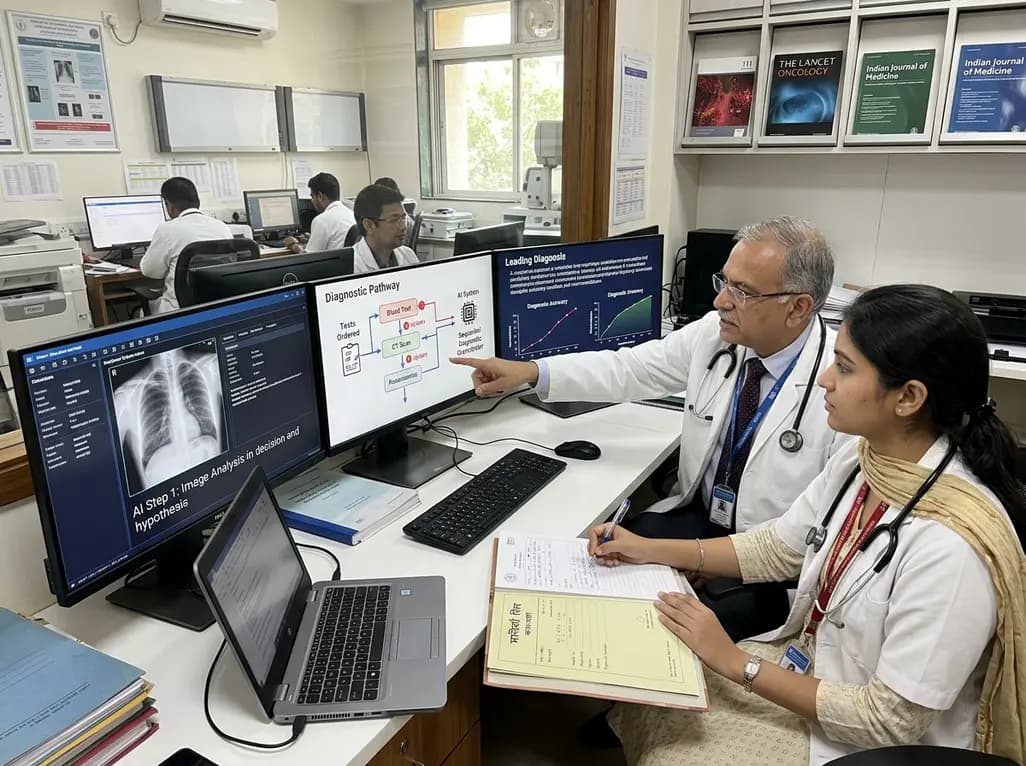
A breakthrough peer-reviewed study demonstrates that a sequential AI diagnosis system can mirror real-world clinical reasoning. By ordering stepwise tests and updating hypotheses dynamically, this multi-agent orchestrator achieved superior diagnostic accuracy while reducing investigative costs.
Today

A prenatal case highlights severe glutaric acidemia type II presenting as bilateral hyperechoic cystic kidneys at 18 weeks. Whole-exome sequencing revealed a novel homozygous ETFDH frameshift variant, demonstrating the power of rapid genetic testing in fetal renal anomalies.
Today

Review how tailored exercise programs benefit frail older patients with heart failure. Explore pathophysiological mechanisms, individualized training prescriptions, and strategies to overcome adherence barriers in clinical practice.
Yesterday

This comparative study evaluates posterior labral tears with and without glenohumeral instability, highlighting distinct demographic patterns, MRI underestimation in stable shoulders, and successful arthroscopic repair outcomes.
Yesterday

A clinical study demonstrates that early intervention with tocilizumab, either as monotherapy or bridged with corticosteroids, achieves significant proptosis reduction and resolves active inflammation in treatment-naive thyroid eye disease.
Yesterday
