.webp&w=384&q=75)

Loading, please wait...
Loading, please wait...

Recent research highlights a critical gap in cardiovascular care for South Asian populations. Specifically, many clinicians rely on Western calculators for Indian heart risk assessment. However, these tools often fail to identify high-risk individuals before a major cardiac event occurs. According to a new study, nearly 80% of patients who suffered a heart attack were previously categorized as low or moderate risk. This mismatch creates significant barriers to effective preventive treatment in the country.
Cardiovascular disease manifests differently in the Indian population compared to Western cohorts. For instance, Indians often experience an earlier onset of heart issues. Furthermore, a unique mix of risk factors exists in this group. These include a higher prevalence of diabetes and distinct fat distribution patterns. Consequently, standard global tools frequently underestimate the actual physiological danger. Therefore, relying solely on international scores can lead to delayed clinical intervention and preventable mortality.
The study evaluated five major global models on a cohort of 4,975 patients. These included the Framingham Risk Score and the ACC/AHA ASCVD 2013 model. Additionally, researchers tested WHO risk charts and the newer PREVENT score. Notably, the ASCVD 2013 model flagged only 12.3% of eventual heart attack patients as high-risk. While the PREVENT score performed better at categorizing patients, it still missed a significant portion of those at risk. Therefore, doctors must exercise caution when interpreting results from these calculators.
Expert cardiologists emphasize that South Asian ethnicity is an independent risk factor. Factors such as genetics, pollution, and lifestyle stress play substantial roles in disease progression. Currently, most Western models cluster Indian patients into a broad moderate-risk category. This lack of clarity makes it difficult for practitioners to decide on aggressive lipid-lowering therapies. As a result, the medical community urgently advocates for indigenous calculators tailored to local metabolic profiles and environmental factors.
Q1: Why do Western heart risk models fail for Indian patients?
Indian patients often present with heart disease at a younger age. They also have higher rates of diabetes and different fat distribution patterns that Western models do not fully capture.
Q2: Which models were evaluated in the recent South Asian cohort study?
Researchers compared the Framingham Risk Score, ACC/AHA ASCVD 2013, WHO risk charts, JBS-3 calculator, and the Predicting Risk of Cardiovascular Disease Events (PREVENT) score.
Q3: Is the PREVENT score reliable for Indian heart risk assessment?
While the PREVENT score showed a clearer distribution across risk categories, it still failed to identify many patients who later suffered an acute myocardial infarction.
Disclaimer: This content is for informational and educational purposes only. It does not constitute medical advice or replace professional judgment. Refer to the latest local and national guidelines for clinical practice.
References

Read summarized clinical updates, watch expert medical content, and earn CME certifications right from your smartphone.
Open your smartphone camera to scan and install.





Study shows 80% of Indian heart attack patients missed by global risk models. Experts call for indigenous Indian heart risk assessment tools for better care...
6 months ago
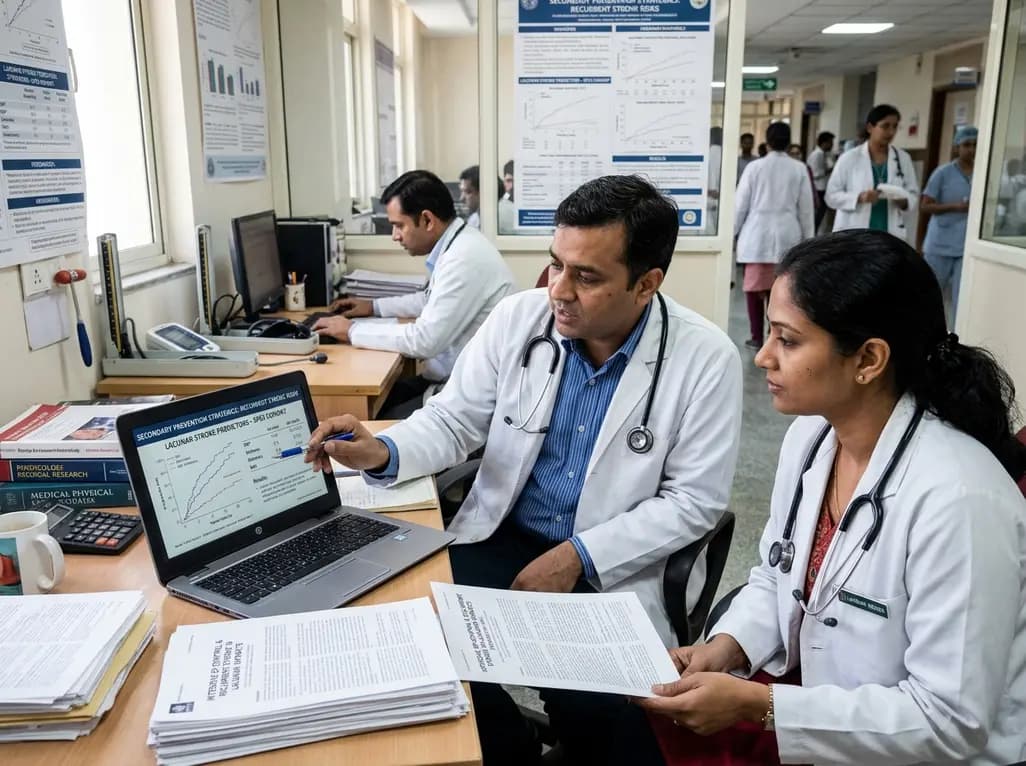
Explore vital recurrent stroke predictors in lacunar stroke patients managed with intensive blood pressure lowering. This analysis examines trial findings from SPS3 to uncover residual vascular risks, metabolic factors, and targeted secondary prevention strategies for high-risk neurological patients.
Today

Recent advances in fetal hematopoiesis reveal that embryonic progenitor waves establish permanent immune compartments. Prenatal stressors like maternal inflammation alter developmental trajectories, predisposing offspring to immune dysfunction and preleukemic transformation.
Today

The Directorate General of Health Services directs Indian states to halt the hazardous reuse and reprocessing of single-use medical devices. Discover regulatory implications under the Drugs and Cosmetics Act, critical infection risks, legal liabilities, and operational changes required across clinical specialties.
Today
Mitochondria-targeted nanoparticles self-assembled from EGCG and L-glutamic acid effectively restore mitochondrial homeostasis, suppress synovial inflammation, and attenuate chondrocyte senescence in osteoarthritis, offering a promising disease-modifying nanotherapy.
Today

India is advancing preventive healthcare by integrating genomics, artificial intelligence, and quantum technologies. With the SANGAM programme sequencing one million Indian genomes, clinicians can unlock personalized therapies, detect cardiometabolic risks early, and curb the burden of diabetes and heart disease.
Today
