

Loading, please wait...
Loading, please wait...

Circadian biology exerts substantial influence over the mammalian immune system. In recent years, translational researchers discovered that leukocyte trafficking, antigen presentation, and cytokine secretion follow distinct 24-hour rhythmic oscillations. Consequently, oncologists have hypothesized that synchronizing drug delivery with these biological cycles could optimize immunotherapeutic efficacy. Prior retrospective investigations in metastatic melanoma suggested that morning infusions led to superior patient outcomes compared with late afternoon dosing. Because immune checkpoint inhibitors serve as the bedrock of first-line therapy for advanced non-small cell lung cancer, clinicians have actively questioned whether ICI infusion timing impacts disease progression or overall survival. However, real-world data in thoracic oncology have produced conflicting conclusions. Busy cancer centers, especially in high-volume regions across India and globally, frequently struggle to accommodate restricted infusion schedules. Understanding whether administration timing truly dictates patient outcomes is therefore critical for clinical workflow, resource optimization, and patient convenience.
To address this clinical dilemma, investigators conducted a robust retrospective cohort study across multiple Mayo Clinic sites. The study evaluated 778 adult patients diagnosed with metastatic non-small cell lung cancer who received first-line systemic regimens containing immune checkpoint inhibitors between January 2021 and March 2024. Researchers stratified the patient population into two distinct cohorts based on the specific clock hour of their initial treatment delivery. Specifically, the team defined early administration as infusions starting between 07:00 and 12:00, whereas late administration encompassed infusions given between 12:01 and 24:00. Among the 778 enrolled individuals, 277 received their first treatment dose during the morning window, while 501 received their initial infusion in the afternoon or evening. Primary clinical endpoints focused on overall survival and progression-free survival. In addition, investigators evaluated the secondary endpoint of immune-related adverse events. Multivariable Cox proportional hazards models meticulously adjusted for age, performance status, histology, and other relevant prognostic variables.
The study results revealed no clinically meaningful or statistically significant survival differences between early and late administration groups. Patients in the early morning administration group achieved a median overall survival of 1.48 years, whereas patients in the late administration cohort experienced a median overall survival of 1.33 years. Multivariable analysis confirmed that initial delivery timing lacked an independent association with overall survival, yielding an adjusted hazard ratio of 1.01. Similarly, median progression-free survival was nearly identical between cohorts, measuring 0.67 years in early recipients and 0.65 years in late recipients, with an adjusted hazard ratio of 1.03. Furthermore, extensive sensitivity analyses examined cumulative infusion exposure over the entire treatment course. Even after evaluating the cumulative proportion of afternoon treatments, researchers observed no survival decrement. Spline analyses also failed to demonstrate any discrete threshold cutoff during the 24-hour day where infusion delivery altered disease control.
Evaluating potential chronotherapeutic toxicity represents an equally essential clinical priority when optimizing immunotherapy. Interestingly, some preclinical models previously suggested that administering checkpoint blockers during peak circadian cytokine surges might provoke severe off-target auto-inflammatory reactions. In this large clinical cohort, however, rates of immune-related adverse events remained remarkably consistent between groups. Overall, immune-related toxicities occurred in 24.2% of patients receiving morning infusions and in 26.9% of those receiving afternoon infusions. This modest numerical difference did not achieve statistical significance, generating a p-value of 0.40. Consequently, late administration neither heightened autoimmune risks nor spared patients from typical checkpoint-mediated side effects like pneumonitis, colitis, or endocrinopathies. Because treatment-related toxicities can interrupt life-extending therapy, these real-world safety findings provide vital reassurance to medical oncologists. Clinicians can confidently proceed with standard symptom vigilance regardless of the specific hour an infusion occurs.
These findings carry immediate practical significance for oncology practice, particularly across India, where public and private cancer centers handle immense patient volumes. Operating oncology daycare units under rigid time restrictions frequently causes severe logistical bottlenecks. When clinical teams prioritize morning slots based on unverified chronotherapy hypotheses, chemotherapy chairs remain overburdened early in the day while afternoon capacity sits underutilized. This study, supported by international multicenter evidence from the ETOP-Roche i-TIMES collaborative analysis, indicates that scheduling flexibility does not compromise long-term oncologic efficacy. Indian clinicians can safely expand chemotherapy and immunotherapy appointment schedules into late afternoon hours without risking therapeutic failure. Therefore, oncologists can allocate appointment times based on operational efficiency, patient comfort, and transit considerations rather than artificial biological cutoffs. Meanwhile, future prospective trials incorporating personal chronotype profiling and circadian rhythm biomarkers may eventually clarify nuanced biological interactions.
Current high-quality retrospective evidence shows that afternoon immunotherapy administration does not decrease therapeutic efficacy in metastatic lung cancer. The large Mayo Clinic cohort demonstrated virtually identical overall survival and progression-free survival between morning and afternoon groups. Therefore, clinicians can schedule infusions throughout standard working hours without compromising antitumor responses or clinical outcomes.
Evidence confirms that the incidence of immune-related toxicities remains similar regardless of infusion timing. In the evaluated clinical cohort, immune-related adverse events occurred in 24.2% of morning recipients compared with 26.9% of afternoon recipients, showing no statistical difference. Consequently, infusion timing does not increase auto-inflammatory toxicity risks for patients.
Cancer centers should not restrict scheduling to early morning hours based on existing data. Because rigorous clinical analyses failed to demonstrate survival differences across time cutoffs, oncologists can maintain flexible day-care scheduling. This operational flexibility prevents clinic congestion, optimizes chair utilization, and reduces travel distress for cancer patients.
Disclaimer: This content is for informational and educational purposes only and does not constitute medical advice. Healthcare professionals should rely on their clinical judgment and review relevant institutional protocols and prescribing information before initiating any treatment. Refer to the latest local and national guidelines for clinical practice.
References

Read summarized clinical updates, watch expert medical content, and earn CME certifications right from your smartphone.
Open your smartphone camera to scan and install.





A multicenter Mayo Clinic cohort of 778 metastatic NSCLC patients reveals that initial and cumulative ICI infusion timing does not affect progression-free survival, overall survival, or immune-related adverse events, providing reassuring scheduling flexibility for busy oncology day-care units.
Today

Delhi is undergoing a major healthcare overhaul with enhanced Ayushman Bharat insurance up to ₹10 lakh, increased MBBS and PG medical training seats, expanded primary network mandirs, new tertiary neuro-ICUs, and public-private reproductive technology initiatives to build a resilient, preventative healthcare model.
Today
A 78-year-old patient with high-grade aneurysmal subarachnoid hemorrhage complicated by refractory Takotsubo cardiogenic shock achieved full recovery following microaxial flow pump (Impella 5.5) rescue, demonstrating the safety and feasibility of advanced mechanical circulatory support during dual antiplatelet therapy.
Today

Non-union fractures occur in 2-5% of cases, causing significant disability and cost. Conservative modalities such as LIPUS, PEMF, and focused ESWT offer non-surgical healing options for defects up to 5-10 mm when adequate mechanical stability exists without infection.
Yesterday
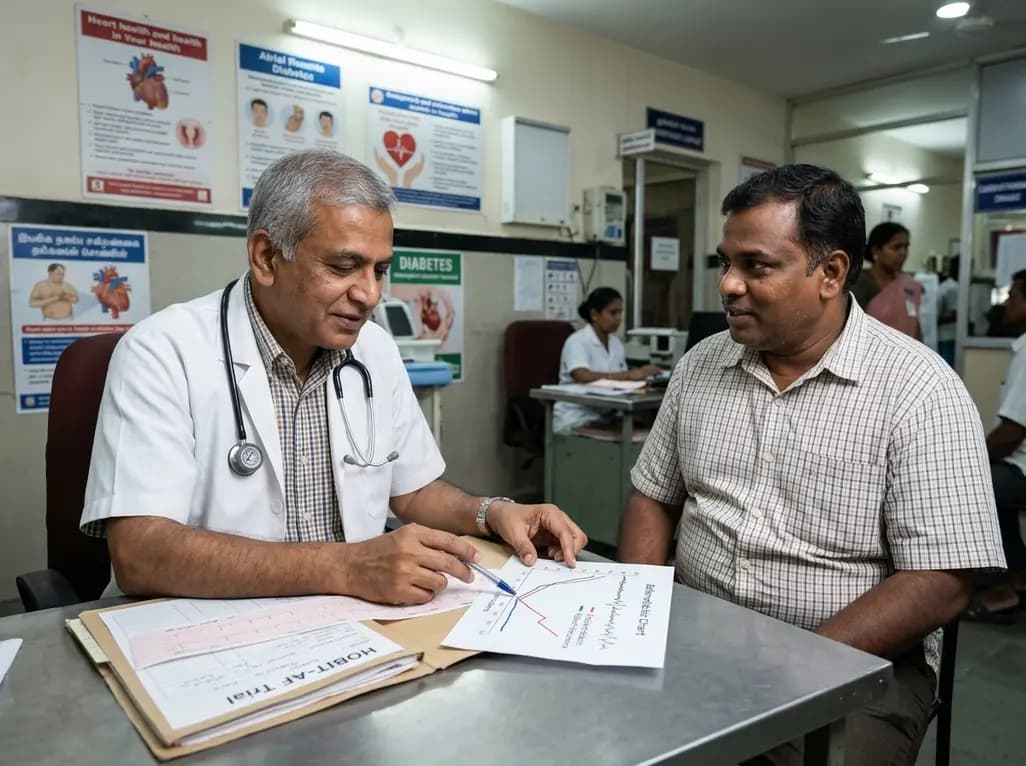
The randomized HOBIT-AF trial reveals that while structured weight loss after catheter ablation significantly improves cardiometabolic health in obese patients with paroxysmal atrial fibrillation, it does not reduce arrhythmia recurrence compared to standard care.
Today
