.webp&w=384&q=75)

Loading, please wait...
Loading, please wait...

India is rapidly emerging as a premier destination for international patients seeking high-quality care. Experts project that Medical Value Travel India will nearly double in value over the next few years. Specifically, the market value is estimated to grow from $8.7 billion in 2025 to an impressive $16.2 billion by 2030. This growth aligns with a global trend where rising healthcare costs and long waiting times drive patients to look beyond their borders for medical solutions.
Several key factors contribute significantly to India's ascent in the global medical tourism rankings. First, the country offers a unique blend of advanced clinical infrastructure and traditional wellness systems. This integration allows India to address complex surgical needs while catering to the global demand for preventive healthcare. Consequently, hospitals across the nation are adopting rigorous quality benchmarks. Most facilities now seek accreditation from the National Accreditation Board for Hospitals and Healthcare Providers (NABH) to ensure patient safety. Furthermore, the competitive pricing of procedures remains a primary draw for patients from countries like Bangladesh, Iraq, and Uzbekistan.
India's medical ecosystem stands on two robust pillars: curative interventions and wellness tourism. The wellness segment is centered on the AYUSH systems, which include Yoga and Ayurveda. Therefore, many international patients visit India not just for surgery, but for holistic recovery and lifestyle management. The government has recognized this potential by introducing the AYUSH Visa to facilitate smoother travel for wellness seekers. In addition, these traditional systems provide a cost-effective alternative for managing chronic lifestyle diseases, which are currently a major burden on global healthcare systems.
The government is actively strengthening the healthcare ecosystem through digital facilitation and infrastructure investment. For instance, the Union Budget 2026-27 proposed the creation of five Regional Medical Hubs. These hubs will integrate medical, educational, and research facilities to provide comprehensive care. Moreover, the Medical Value Travel India framework is supported by initiatives like 'Heal in India,' which aims to position the country as a global wellness leader. Finally, the establishment of MVT facilitation centers will streamline the experience for the hundreds of thousands of foreign tourists who arrive annually for treatment.
Q1: Why is India a top choice for medical tourists?
India offers high-quality clinical treatments at a fraction of the cost found in Western nations. Additionally, the presence of NABH-accredited hospitals and the integration of AYUSH wellness systems make it a comprehensive destination for both surgery and recovery.
Q2: Which countries send the most medical tourists to India?
According to recent data, Bangladesh is the primary source of medical tourists. Other significant contributors include Iraq, Uzbekistan, Somalia, Turkmenistan, Oman, and Kenya.
Q3: What role does the AYUSH Visa play in medical tourism?
The AYUSH Visa is a specialized category designed to simplify the entry process for foreign nationals seeking treatment under traditional Indian systems like Ayurveda and Yoga, thereby boosting the wellness tourism sector.
Disclaimer: This content is for informational and educational purposes only. It does not constitute medical advice or replace professional judgment. Refer to the latest local and national guidelines for clinical practice.
References

Read summarized clinical updates, watch expert medical content, and earn CME certifications right from your smartphone.
Open your smartphone camera to scan and install.





India's medical tourism market is projected to reach $16.2 billion by 2030, driven by AYUSH integration and policy support. Learn about the growth drivers....
5 months ago
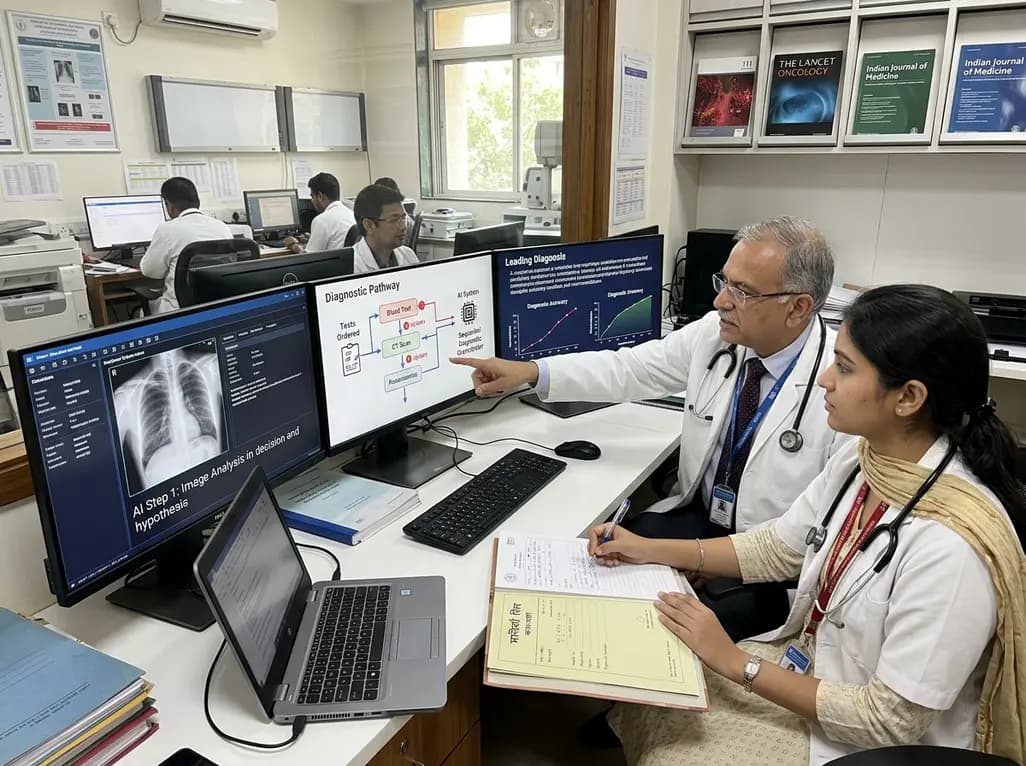
A breakthrough peer-reviewed study demonstrates that a sequential AI diagnosis system can mirror real-world clinical reasoning. By ordering stepwise tests and updating hypotheses dynamically, this multi-agent orchestrator achieved superior diagnostic accuracy while reducing investigative costs.
Today

A prenatal case highlights severe glutaric acidemia type II presenting as bilateral hyperechoic cystic kidneys at 18 weeks. Whole-exome sequencing revealed a novel homozygous ETFDH frameshift variant, demonstrating the power of rapid genetic testing in fetal renal anomalies.
Today

Review how tailored exercise programs benefit frail older patients with heart failure. Explore pathophysiological mechanisms, individualized training prescriptions, and strategies to overcome adherence barriers in clinical practice.
Yesterday

This comparative study evaluates posterior labral tears with and without glenohumeral instability, highlighting distinct demographic patterns, MRI underestimation in stable shoulders, and successful arthroscopic repair outcomes.
Yesterday

A clinical study demonstrates that early intervention with tocilizumab, either as monotherapy or bridged with corticosteroids, achieves significant proptosis reduction and resolves active inflammation in treatment-naive thyroid eye disease.
Yesterday
