.webp&w=384&q=75)

Loading, please wait...
Loading, please wait...

India and Japan recently exchanged a Memorandum of Cooperation (MoC) to strengthen their relationship in the healthcare sector. This initiative specifically focuses on enhancing India-Japan health cooperation through medical research and device innovation. Consequently, the agreement involves the Indian Council of Medical Research (ICMR) and the Japan Agency for Medical Research and Development (AMED).
During a high-level meeting, Union Minister Jitendra Singh and Japan's Minister Kimi Onoda signed these strategic agreements. Japan offers advanced technological capabilities, while India provides a vast pool of talented human resources. Therefore, the partnership aims to accelerate innovation in frontier areas and translate research into societal outcomes.
The cooperation extends beyond traditional health research to include quantum science and technology. For instance, the Cabinet Office of Japan and India's Department of Science and Technology (DST) signed a letter of intent. This move facilitates deeper collaboration in quantum computing and secure communication systems. Additionally, the discussions covered researcher mobility and joint innovation platforms.
In the medical technology field, both nations plan to expand joint research programs and capacity building. Japan’s strengths in advanced manufacturing and AI align with India’s growing technology ecosystem. Furthermore, structured funding arrangements will support these collaborative projects. These agreements represent a significant step toward deeper industrial deployment and application.
Q1: Which Indian departments are involved in the MoC with Japan?
A1: The memorandum involves the Indian Council of Medical Research (ICMR) and the Department of Science and Technology (DST).
Q2: What is the role of quantum science in this health cooperation?
A2: The collaboration includes a letter of intent for quantum science and technology, aiming to leverage advanced computational tools for medical research and innovation.
Disclaimer: This content is for informational and educational purposes only. It does not constitute medical advice or replace professional judgment. Refer to the latest local and national guidelines for clinical practice.
References

Read summarized clinical updates, watch expert medical content, and earn CME certifications right from your smartphone.
Open your smartphone camera to scan and install.





India and Japan signed an MoC to enhance cooperation in health and medical devices, focusing on research, innovation, and quantum technology....
5 months ago
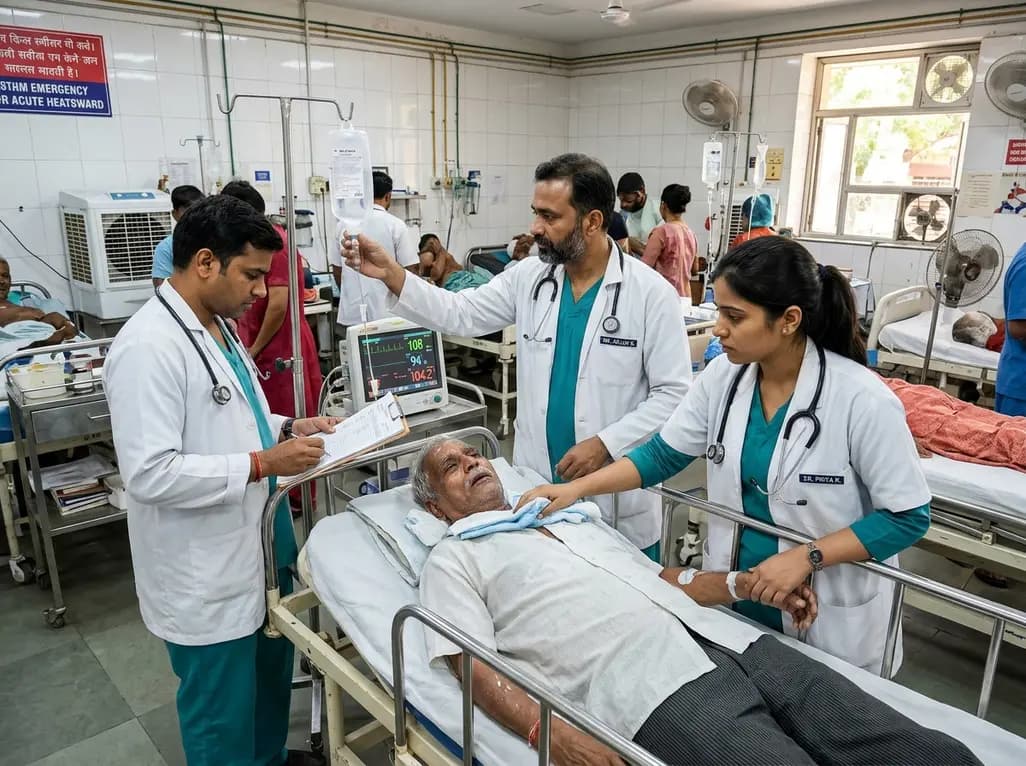
Recent epidemiological data reveals a dramatic surge in summer heat mortality driven by human-induced climate warming. This analysis explores the pathophysiological impacts on cardiac and renal systems, diagnostic dilemmas in death certification, and essential emergency cooling protocols for acute clinical care.
Today

Odisha has established India's first state-level clinical protocol specifically tailored for pregnant women with sickle cell disease. Developed with NHM and UNICEF, the framework provides structured antenatal screening, crisis mitigation, standardized referral pathways, and specialized interdisciplinary care.
Today

India is advancing preventive healthcare by integrating genomics, artificial intelligence, and quantum technologies. With the SANGAM programme sequencing one million Indian genomes, clinicians can unlock personalized therapies, detect cardiometabolic risks early, and curb the burden of diabetes and heart disease.
Today
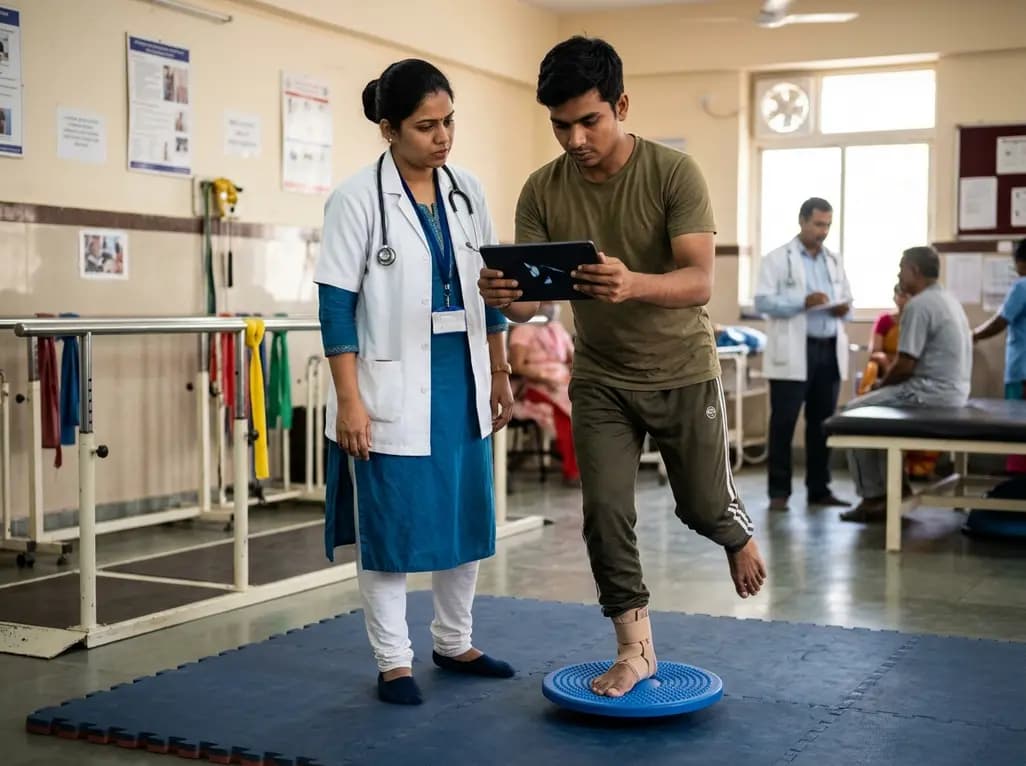
A randomized controlled trial demonstrates that an eight-week dual-task training intervention significantly improves static and dynamic postural control over standard balance exercises in individuals with chronic ankle instability, addressing critical neurocognitive deficits during athletic and daily activities.
Today

A retrospective cohort study of 7,716 ICU patients from the MIMIC-IV database demonstrates that Gradient Boosting Decision Trees significantly outperform traditional SOFA scores in predicting in-hospital mortality among patients with sepsis and diabetes, with SHAP analysis providing clinical interpretability.
Today
