.webp&w=384&q=75)

Loading, please wait...
Loading, please wait...
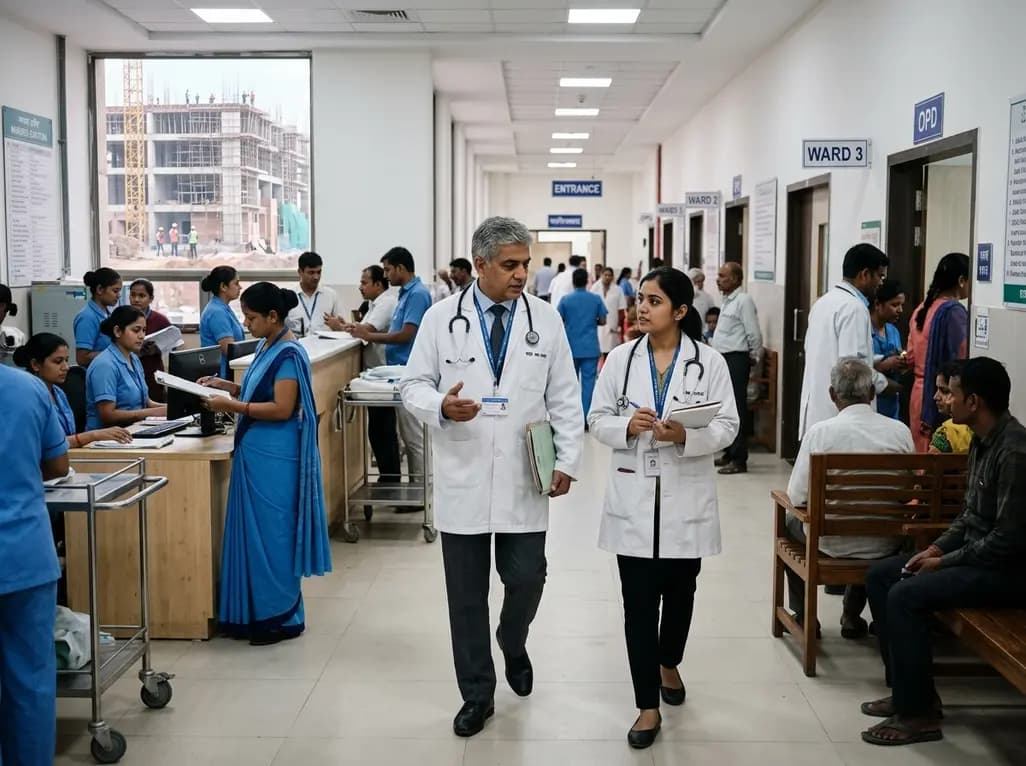
CBRE South Asia recently highlighted a severe capacity deficit facing India's medical sector. Currently, healthcare real estate represents an indispensable pillar for expanding patient access and modernizing clinical delivery systems nationwide. However, India must rapidly accelerate hospital construction to meet expanding healthcare requirements. According to latest industry projections, the nation requires an additional 2.6 billion square feet of medical infrastructure by 2035. This massive physical expansion will bridge persistent inpatient bed shortages and support emerging healthcare delivery models across diverse demographic groups.
India currently maintains approximately 1.6 hospital beds per 1,000 citizens. In comparison, the global benchmark averages around 3.3 hospital beds per 1,000 individuals. Therefore, the country faces a substantial structural deficit in clinical inpatient capacity. To achieve parity with international healthcare standards, domestic providers must add nearly 2.9 million beds nationwide. Consequently, this expansion requires the total clinical footprint to more than double over the next decade.
As of 2025, India possessed roughly 2.1 billion square feet of total healthcare facilities. By 2035, developers, institutional investors, and hospital networks must build 2.6 billion additional square feet of clinical space. Furthermore, rapid population growth and demographic aging compound this critical requirement. The steep rise in chronic conditions places immense stress on existing medical infrastructure. Many tertiary centers in urban metros operate above optimal inpatient occupancy throughout the entire year. As a result, critical patients frequently encounter delayed admissions, diverted ambulances, and overburdened intensive care units. Thus, expanding physical infrastructure has become an urgent public health and economic priority for the entire country.
The massive requirement for healthcare real estate unlocks unprecedented opportunities for developers, hospital chains, and institutional investors. However, successful execution requires a strategic shift away from ad hoc facility development. Instead, stakeholders are adopting built-to-suit medical models that meet rigorous clinical, structural, and regulatory standards. In addition, specialized clinical buildings offer superior energy efficiency, patient-centric circulation, and streamlined infection control systems.
Modern medical facilities require advanced structural engineering to support heavy imaging equipment, linear accelerators, and robotic surgical suites. Furthermore, medical operators increasingly prefer long-term lease arrangements rather than heavy upfront capital land purchases. Consequently, asset-light expansion strategies allow healthcare organizations to deploy clinical capital directly into advanced technology and physician staffing. Meanwhile, institutional private equity funds and domestic real estate investment trusts actively evaluate specialized clinical assets. Healthcare properties provide attractive long-term yields, low tenant turnover, and resilient cash flows across economic cycles. Therefore, structured institutional partnerships will finance much of this projected building boom across primary and secondary urban centers.
Healthcare access across Indian states demonstrates stark geographic inequality. For instance, central and eastern states like Chhattisgarh, Odisha, Madhya Pradesh, and Jharkhand record very low hospital bed density. Moreover, these populous regions bear a rapidly escalating burden of non-communicable diseases, including cardiovascular disorders, diabetes, chronic respiratory illnesses, and malignancies. Consequently, millions of families in these underserved states face severe deficits in secondary and tertiary medical infrastructure.
Critically ill patients must routinely travel hundreds of kilometers to distant metropolitan centers for routine oncological chemotherapy or advanced surgical interventions. Conversely, southern states like Tamil Nadu, Kerala, Karnataka, and Telangana boast comparatively robust healthcare networks. These southern regions benefit from higher household disposable incomes, progressive public health policies, and decades of sustained private medical investments. In addition, southern states have established mature clinical ecosystems that attract patients from across the globe. Therefore, national healthcare planners and private hospital operators must deliberately prioritize central and eastern regions. Expanding regional hospital capacity will decentralize advanced clinical specialties, eliminate regional health inequities, and substantially reduce out-of-pocket medical expenditures for vulnerable populations.
Future healthcare development will extend far beyond conventional tertiary hospitals. Instead, modern medical providers are embracing agile hub-and-spoke models to optimize patient flow and capital efficiency. Specifically, operators are opening decentralized outpatient clinics, ambulatory surgery centers, and specialized diagnostic suites closer to residential communities. Day-care surgical centers represent an increasingly viable model for elective laparoscopic, ophthalmic, and orthopedic procedures.
Consequently, these dedicated ambulatory facilities lower inpatient stay durations, optimize physician time, and minimize hospital-acquired infections. Furthermore, standalone oncology day-care centers provide chemotherapy infusions and supportive clinical services without requiring overnight hospitalization. In addition, single-specialty centers focusing on nephrology, hemodialysis, and outpatient cardiology are multiplying rapidly across tier-2 and tier-3 cities. Telemedicine platforms and home monitoring systems integrate smoothly with these local clinical touchpoints. However, digital health tools cannot replace physical hospital beds during acute medical crises. Therefore, distributed physical healthcare networks must work synergistically with digital health systems. This integrated delivery approach ensures rapid clinical triage, continuous disease monitoring, and prompt critical care interventions whenever acute emergencies arise.
Bridging a 2.9 million bed gap demands coordinated policy reforms and productive public-private collaboration. First, state governments should streamline statutory approvals for hospital construction. Complex zoning laws, rigid floor-space indices, and protracted environmental clearances often stall vital medical infrastructure projects. Furthermore, policymakers should introduce targeted viability gap funding, subsidized land parcels, and tax holidays for greenfield hospital development in underserved districts.
Second, practicing clinicians must actively participate in architectural planning. Doctors and nurses understand clinical workflows, triage logistics, and barrier nursing protocols far better than traditional commercial developers. Therefore, physician-led hospital design ensures functional, patient-centric healing environments that elevate safety standards. Third, allied health training programs and medical residency seats must expand alongside physical infrastructure. Modern hospital beds remain completely ineffective without skilled intensivists, specialized critical care nurses, and certified biomedical engineers. Consequently, medical education reform must proceed in lockstep with infrastructure investments. Through these decisive interventions, India can construct a resilient, equitable, and world-class healthcare system for the coming decade.
Q1: Why does India need 2.6 billion square feet of healthcare space by 2035?
India needs this extensive physical space to add nearly 2.9 million hospital beds over the next decade. Currently, the country possesses only 1.6 hospital beds per 1,000 citizens, falling far behind the global benchmark of 3.3 beds. Consequently, expanding clinical real estate is essential to accommodate rising population numbers, combat increasing chronic disease prevalence, and bridge substantial gaps in secondary and tertiary inpatient care.
Q2: Which Indian states face the most severe shortage of hospital beds?
Central and eastern states, including Chhattisgarh, Odisha, Madhya Pradesh, and Jharkhand, face the most acute hospital bed deficits relative to their disease burden. Although non-communicable diseases are rising rapidly in these areas, secondary and tertiary healthcare facilities remain severely underdeveloped. Consequently, patients in these states must frequently travel vast distances to southern or northern urban medical hubs to receive specialized clinical treatments.
Q3: What role will alternative healthcare formats play in addressing infrastructure deficits?
Alternative clinical formats offer cost-effective, decentralized options that reduce pressure on primary tertiary hospitals. Specifically, day-care surgery centers, dedicated diagnostic hubs, single-specialty surgical clinics, and standalone dialysis units can handle routine elective care efficiently. Furthermore, these distributed facilities shorten patient recovery times, minimize hospital-acquired infections, and improve geographic healthcare access across underserved tier-2 and tier-3 regional markets.
Disclaimer: This content is for informational and educational purposes only. It does not constitute medical advice or replace professional judgment. Refer to the latest local and national guidelines for clinical practice.
References

Read summarized clinical updates, watch expert medical content, and earn CME certifications right from your smartphone.
Open your smartphone camera to scan and install.





A landmark report from CBRE highlights an urgent imperative for Indian healthcare infrastructure. The country must build 2.9 million incremental hospital beds and expand secondary and tertiary medical networks across underserved regions to tackle rising disease burdens and match global care standards.
Today

A comparative study evaluates three ambient listening systems across Dutch outpatient consultations, examining their accuracy, completeness, and speed when facing dialect variations, multispeaker dynamics, and conversational interruptions.
Today

A recent cohort study reveals that reproductive-age women with cerebral venous thrombosis have nearly double the odds of developing intracranial hypertension compared to older women. Superior sagittal and lateral sinus occlusions heighten this risk, predisposing patients to persistent visual impairment.
Today
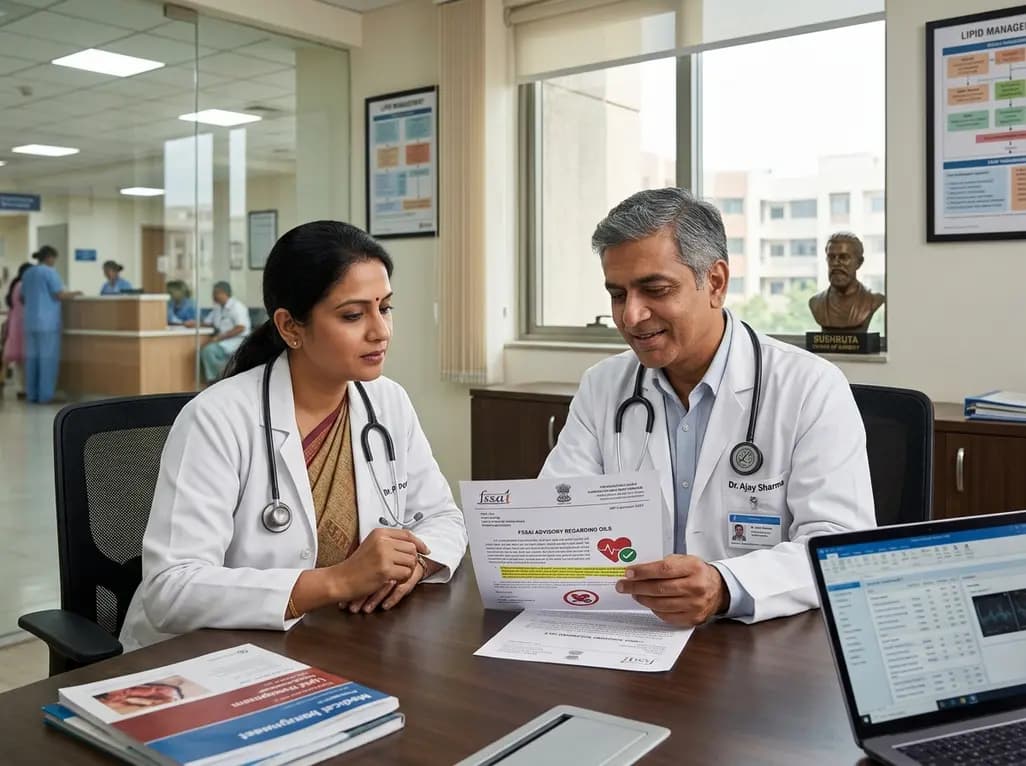
India's food safety authority FSSAI has issued show-cause notices to Gemini Edibles, BigBasket, and Flipkart for unpermitted cardiovascular claims regarding Freedom Rice Bran Oil. This regulatory move highlights the strict enforcement of advertising standards and the clinical necessity of evidence-based lipid care.
Today

Diagnostic data shows that nearly one in four spine investigations now involve patients younger than 40 years. This comprehensive overview explores the drivers behind this demographic trend, evaluates ergonomic hazards, clarifies red-flag signs, and highlights clinical indications for judicious diagnostic imaging.
Today
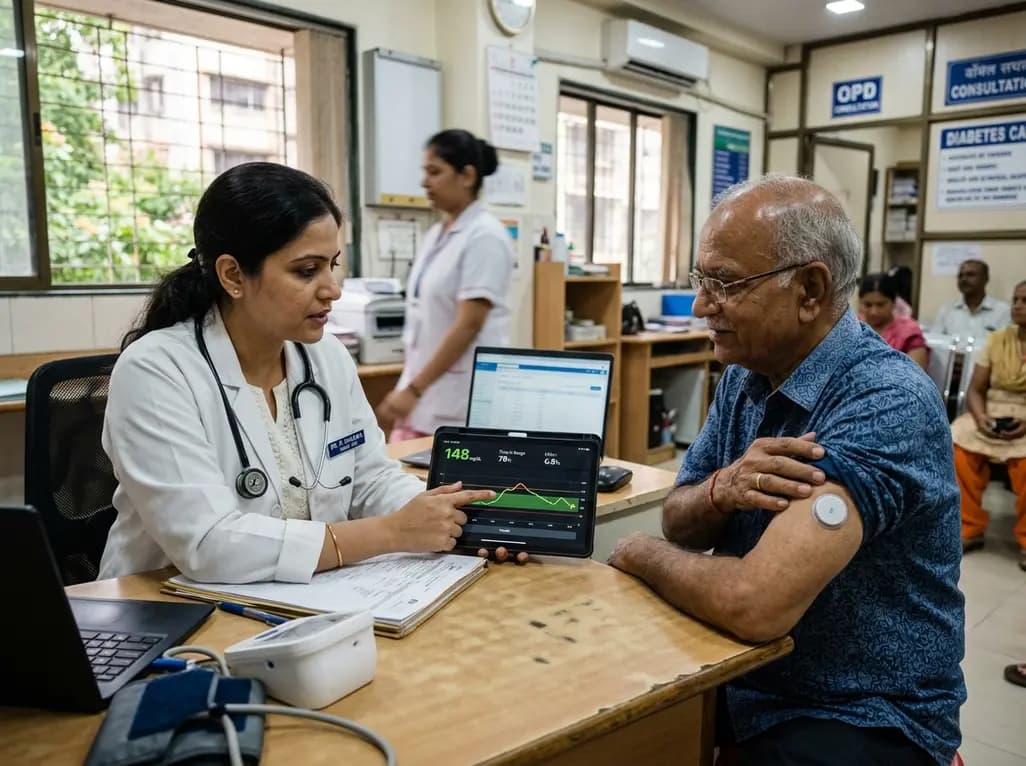
A landmark randomized clinical trial demonstrates that real-time continuous glucose monitoring significantly reduces HbA1c and enhances time in range for individuals with type 2 diabetes who do not take insulin, paving the way for broader clinical adoption and personalized metabolic therapy in primary care.
Today
