.webp&w=384&q=75)

Loading, please wait...
Loading, please wait...

A proactive **India Cancer Prevention** strategy offers the best opportunity to curb the nation’s rising cancer burden. The current reliance on treatment alone is insufficient, a sentiment strongly voiced by Dr. Pankaj Chaturvedi, Director of ACTREC, Tata Memorial Centre. Clinicians in India estimate that prevention holds a far greater impact than international studies suggest, potentially averting up to 70 per cent of cases for certain high-prevalence cancers like oral and breast cancer. Prevention, therefore, is an inevitable call to action to protect the population from late-stage interventions.
India is seeing a rapid expansion of hospital infrastructure across the country. However, patient waiting lists continue to grow, underscoring the fact that infrastructure alone cannot curb the mounting cancer burden. Dr. Chaturvedi argues that while most patients now possess some form of insurance coverage, cancers like oral, cervical, and breast cancer are largely preventable, unlike chronic conditions such as diabetes or hypertension. Consequently, early intervention and awareness are significantly more critical. The primary focus must shift from a relentless pursuit of treatment to advancing a comprehensive preventive strategy. Furthermore, integrating cancer prevention and control into the primary healthcare system is considered the most appropriate and cost-effective strategy for the Indian context.
Prevention finds its strongest footing in India because the most prevalent cancers—oral and breast—are highly responsive to early detection strategies. For instance, oral cancer typically takes between 10 to 15 years to develop, offering a wide window for prevention or early detection. Similarly, a study led by Dr. Chaturvedi in Dharavi, Mumbai, successfully demonstrated that mass breast cancer screening among women reduced mortality by a notable 30 per cent. Yet, fear of diagnosis remains a major barrier. Despite numerous government-run screening programmes nationwide, the uptake remains dismally low, hovering at around just 3 per cent.
To bridge the vast gap in screening uptake, Dr. Chaturvedi stressed the crucial importance of integrating technology. This includes implementing mobile-based screening tools to detect cancer at a reversible stage, especially in low-resource settings. At the Tata Memorial Centre, screening initiatives have shown a 93 per cent concurrence rate across 40,000 patients. Consequently, the institute is now developing advanced AI-based tools to further reduce the diagnostic burden on physicians. Moreover, the National Programme for Prevention and Control of Non-Communicable Diseases (NCD) is expanding its services, advocating for nationwide screening programs, and increasing accessibility to services for early detection.
Beyond institutional and technological interventions, sustainable impact hinges on fundamental lifestyle changes. Clinicians emphasise that addressing tobacco, alcohol, and areca nut consumption is essential, as these are major cancer risk factors and drivers of other non-communicable diseases. Additionally, oral hygiene is equally critical, playing a significant role in preventing oral cancers. While tobacco use is declining across generations, Dr. Chaturvedi cautioned that a sharp rise in alcohol consumption could keep the cancer burden elevated. Alcohol metabolises into acetaldehyde, a banned substance in India, which damages DNA and demonstrably increases cancer risk. Ultimately, shifting decisively towards prevention and early detection is no longer optional; it is an inevitable step to reverse India's rising cancer burden.
Q1: What is the estimated preventability of common Indian cancers?
Indian clinicians estimate that prevention could avert up to 70 per cent of cases for highly prevalent cancers like oral and breast cancer.
Q2: What is the main barrier to successful cancer screening in India?
The major barrier is the fear of diagnosis, which has resulted in a dismally low uptake of government-run screening programmes, currently around just 3 per cent.
Disclaimer: This content is for informational and educational purposes only. It does not constitute medical advice or replace professional judgment. Refer to the latest local and national guidelines for clinical practice.
References

Read summarized clinical updates, watch expert medical content, and earn CME certifications right from your smartphone.
Open your smartphone camera to scan and install.





Dr. Pankaj Chaturvedi stresses prevention over treatment to curb India's cancer burden, noting oral and breast cancers are highly preventable through early ...
8 months ago
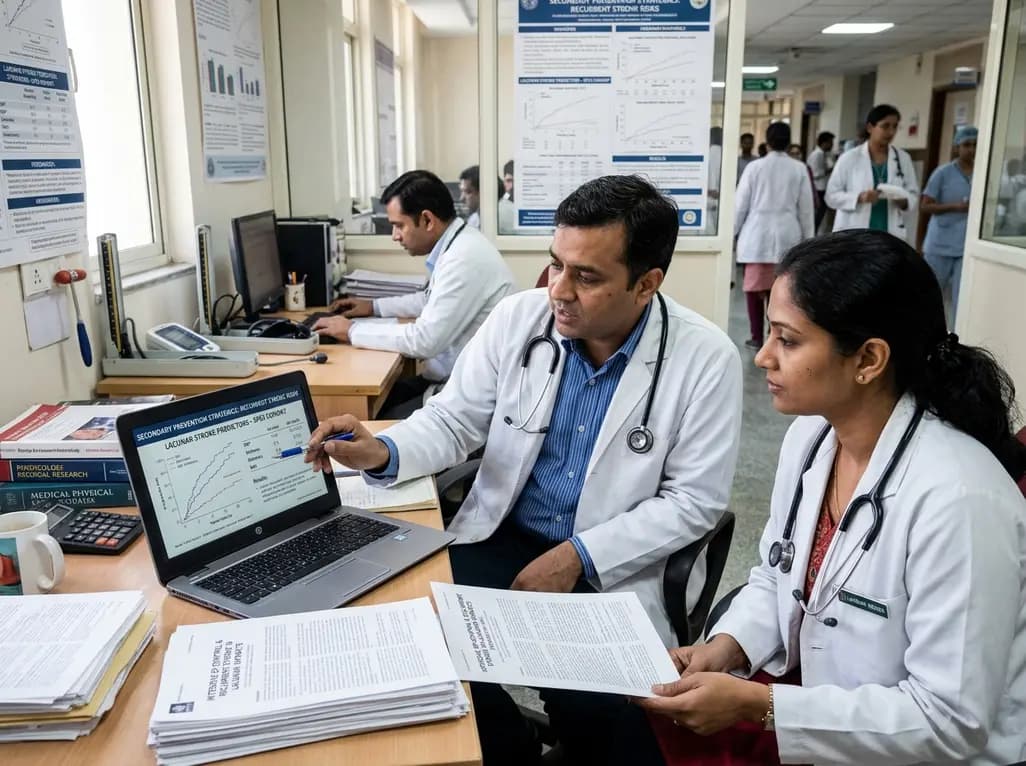
Explore vital recurrent stroke predictors in lacunar stroke patients managed with intensive blood pressure lowering. This analysis examines trial findings from SPS3 to uncover residual vascular risks, metabolic factors, and targeted secondary prevention strategies for high-risk neurological patients.
Today

Odisha has established India's first state-level clinical protocol specifically tailored for pregnant women with sickle cell disease. Developed with NHM and UNICEF, the framework provides structured antenatal screening, crisis mitigation, standardized referral pathways, and specialized interdisciplinary care.
Today

The Directorate General of Health Services directs Indian states to halt the hazardous reuse and reprocessing of single-use medical devices. Discover regulatory implications under the Drugs and Cosmetics Act, critical infection risks, legal liabilities, and operational changes required across clinical specialties.
Today

Mitochondria-targeted nanoparticles self-assembled from EGCG and L-glutamic acid effectively restore mitochondrial homeostasis, suppress synovial inflammation, and attenuate chondrocyte senescence in osteoarthritis, offering a promising disease-modifying nanotherapy.
Today

India is advancing preventive healthcare by integrating genomics, artificial intelligence, and quantum technologies. With the SANGAM programme sequencing one million Indian genomes, clinicians can unlock personalized therapies, detect cardiometabolic risks early, and curb the burden of diabetes and heart disease.
Today
