.webp&w=384&q=75)

Loading, please wait...
Loading, please wait...

Navigating clinical trials alongside daily patient care presents substantial operational hurdles for healthcare professionals. In particular, investigative teams often struggle to reconcile routine clinical documentation with the stringent demands of IND safety reporting. While bedside care prioritizes immediate patient stabilization and diagnostic evaluation, clinical research operates under rigid, legally binding pharmacovigilance frameworks. Consequently, site personnel frequently experience operational friction and cognitive overload when switching between these divergent environments. Addressing these systemic disparities requires robust site-level training and practical workflow integration.
Modern clinical practice and regulatory safety surveillance pursue fundamentally distinct objectives. In routine hospital practice, clinicians record symptoms, test results, and therapeutic plans to support individual patient recovery. Their notes emphasize immediate diagnostic reasoning, differential diagnoses, and ongoing therapeutic adjustments. Conversely, clinical research protocols demand exhaustive documentation of any untoward medical occurrence, irrespective of suspected causality.
Regulatory agencies enforce standardized reporting pathways, explicit accountability structures, and precise terminology. When an adverse event occurs during an investigational trial, investigators must evaluate seriousness, severity, and potential relatedness to the investigational product. Furthermore, regulatory rules mandate accelerated submission timelines for serious, unexpected suspected adverse reactions. Routine medical record systems rarely capture these structured variables naturally. As a result, healthcare workers cannot simply translate ordinary progress notes into regulatory submissions without manual restructuring. This conceptual gap creates administrative strain and frequently delays critical safety disclosures.
Physicians and research nurses constantly navigate two competing mindsets during trial execution. When treating patients, clinicians focus their cognitive resources on urgent clinical decisions, bedside empathy, and diagnostic troubleshooting. However, when documenting trial visits, they must instantly transition into a meticulous regulatory auditor mindset. This abrupt context switching imposes a severe cognitive burden on investigators.
Moreover, clinicians must decipher specialized research taxonomies, such as standardized adverse event criteria, which differ significantly from everyday medical jargon. For example, a minor elevation in liver enzymes might seem clinically trivial during an outpatient clinic visit. Nevertheless, that same laboratory value may fulfill specific protocol definitions for dose modification or expedited safety reporting. When clinical staff balance high patient volumes with complex clinical research obligations, cognitive fatigue quickly sets in. Consequently, omissions and classification errors arise, not from negligence, but from mental exhaustion caused by alternating between conflicting operational demands.
Initial safety notifications represent only the first phase of regulatory compliance. Once a site reports a serious adverse event, sponsors and regulatory authorities routinely issue extensive follow-up queries. These requests demand granular timelines, comprehensive concomitant medication logs, discharge summaries, and specialized diagnostic reports. However, investigative sites face severe operational friction when retrieving and compiling this supplementary data.
In most academic medical centers, clinical source data remain locked within fragmented electronic health records and external laboratory portals. Research coordinators must manually track down attending physicians, hospital records departments, and outside facilities to obtain missing documents. Meanwhile, regulatory clocks continue to tick relentlessly. Therefore, sites often struggle to resolve sponsor inquiries within strict twenty-four-hour or seven-day windows. Additionally, unstandardized communication channels between sponsor medical monitors and investigative teams exacerbate these delays. Without streamlined digital workflows, the administrative burden of follow-up reporting can overwhelm site staff and delay essential pharmacovigilance analyses.
Traditional clinical research training often fails because it delivers generic, compliance-driven slide decks that lack practical relevance. Site staff complete annual certifications, yet they rarely learn how to handle ambiguous, real-world adverse events. Fortunately, the modernized ICH E6(R3) guideline advocates a transformative shift toward proportionate, risk-based governance. This modernized approach encourages institutions to customize oversight and training based on the specific risks of the study design.
Rather than treating every minor paperwork discrepancy with equal urgency, sites should direct resources toward critical-to-quality factors that directly affect participant safety. Furthermore, educational programs must incorporate role-based modules tailored to distinct responsibilities. For instance, principal investigators require deep training in causality assessment, product safety profiles, and medical attribution. In contrast, study coordinators require practical instruction in source document verification, timeline tracking, and secure portal navigation. Consequently, role-specific training aligned with proportionality principles establishes sustainable competencies without overwhelming site personnel with irrelevant regulatory dogma.
Investigators must ultimately reframe their perspective on pharmacovigilance documentation. Far too often, clinical research teams perceive safety reporting merely as a defensive, bureaucratic exercise designed to satisfy sponsor audits. However, timely adverse event tracking serves as the primary mechanism for identifying emergent drug toxicities. When sites report events swiftly, pharmacovigilance teams can aggregate multinational data and detect critical safety trends that no single investigator could identify alone.
Therefore, robust reporting directly protects trial participants from preventable harm and informs global drug development decisions. Clinical investigators hold an ethical obligation to maintain clear, transparent safety records throughout the life of a trial. Moreover, institutional leadership must recognize safety reporting as an essential component of quality healthcare delivery. By investing in dedicated site personnel, comprehensive simulation-based training, and integrated informatics, medical centers can elevate trial quality. Ultimately, bridging the gap between clinical practice and regulatory demands upholds participant trust and ensures patient safety.
In routine clinical practice, physicians record medical complications primarily to guide immediate therapy and diagnostic workups. In contrast, clinical trial protocols define an adverse event as any untoward medical occurrence, regardless of whether a causal relationship with the investigational product exists. Therefore, site investigators must systematically document every symptom, laboratory anomaly, and intercurrent illness. This regulatory standard demands structured attribution, severity grading, and timeline tracking far beyond conventional bedside medical notes.
Investigative sites face severe operational bottlenecks due to fragmented communication channels and overlapping clinical responsibilities. Physicians frequently prioritize emergency bedside duties over administrative research portals. Furthermore, sponsor queries often demand extensive medical details, pathology records, and concurrent medication histories that reside across disparate hospital electronic health record systems. Consequently, research coordinators experience substantial delays when retrieving source records, synthesizing clinical timelines, and resolving complex safety queries within tight regulatory deadlines.
The updated ICH E6(R3) guideline emphasizes risk-proportionate approaches to clinical trial governance and safety monitoring. Rather than enforcing generic, burdensome administrative checklists, it urges institutions to design targeted, role-based safety workflows that focus on critical-to-quality factors. Consequently, site training shifts from passive compliance toward practical participant protection. Investigators learn to prioritize significant safety signals, establish standardized data capture pathways, and maintain robust communication with sponsors and ethics committees without disrupting patient care.
Disclaimer: This content is for informational and educational purposes only. It is not intended to provide medical advice, diagnosis, or treatment. Always seek the advice of a qualified healthcare provider with any questions you may have regarding a medical condition. Clinical trial procedures and pharmacovigilance practices should be conducted in compliance with relevant institutional and national regulatory standards. Refer to the latest local and national guidelines for clinical practice.
References

Read summarized clinical updates, watch expert medical content, and earn CME certifications right from your smartphone.
Open your smartphone camera to scan and install.





Investigative sites face significant cognitive and operational friction when transitioning between routine clinical practice and IND safety reporting. Role-based training aligned with ICH E6(R3) principles can bridge this divide and transform compliance into active participant protection.
Today
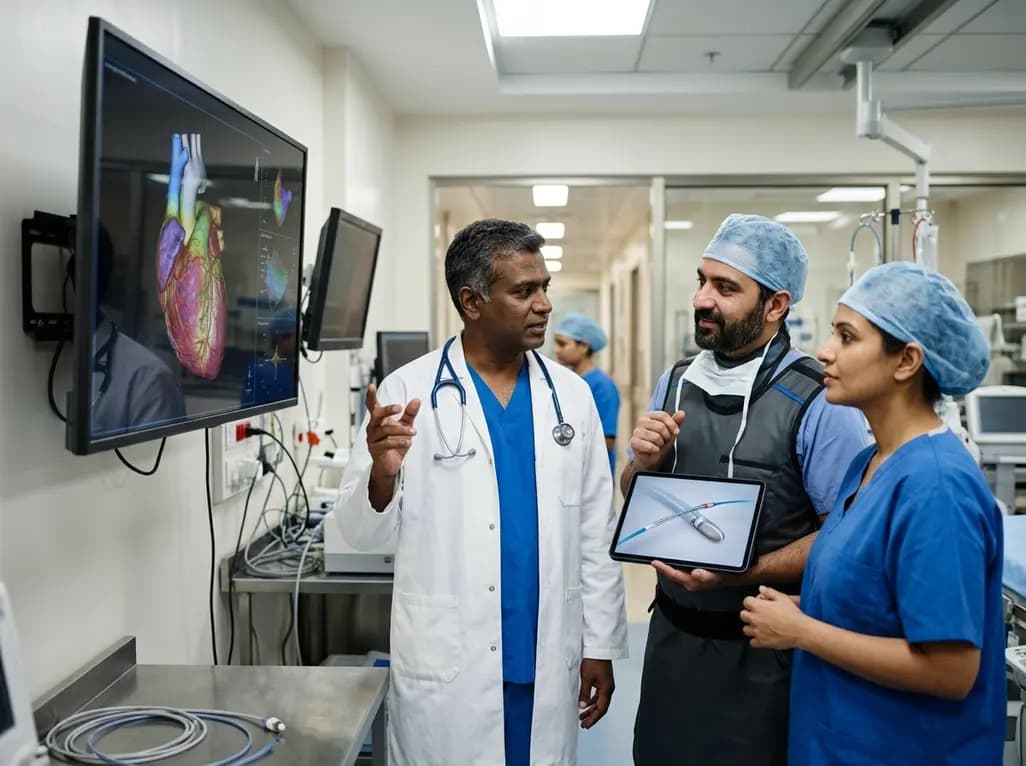
Cardiovascular disease remains a primary health threat in India, where heart attacks strike a decade earlier than in Western nations. Through multidisciplinary heart teams, expanded diagnostic access, and breakthrough interventions like pulse field ablation, modern cardiology offers renewed survival and clinical recovery.
Today

The FEBE study investigates the prevalence of post-traumatic stress disorder symptoms in women receiving high-dose-rate brachytherapy for cervical cancer, highlighting the critical role of procedural sedation and trauma-informed clinical care.
Today

Aortic root aneurysms often develop silently, yet timely intervention provides a critical window to salvage the native aortic valve. Preserving the patient's own anatomy avoids lifelong anticoagulation, provided clinicians identify root dilatation before secondary leaflet distortion and ventricular failure occur.
Today

A Level I trauma center study shows a brief bedside mental health intervention boosts 30-day follow-up screening adherence by 84% in nonviolent injury patients. However, outcomes for violence survivors reveal critical care gaps, underscoring the urgent need for specialized community violence intervention programs.
Today
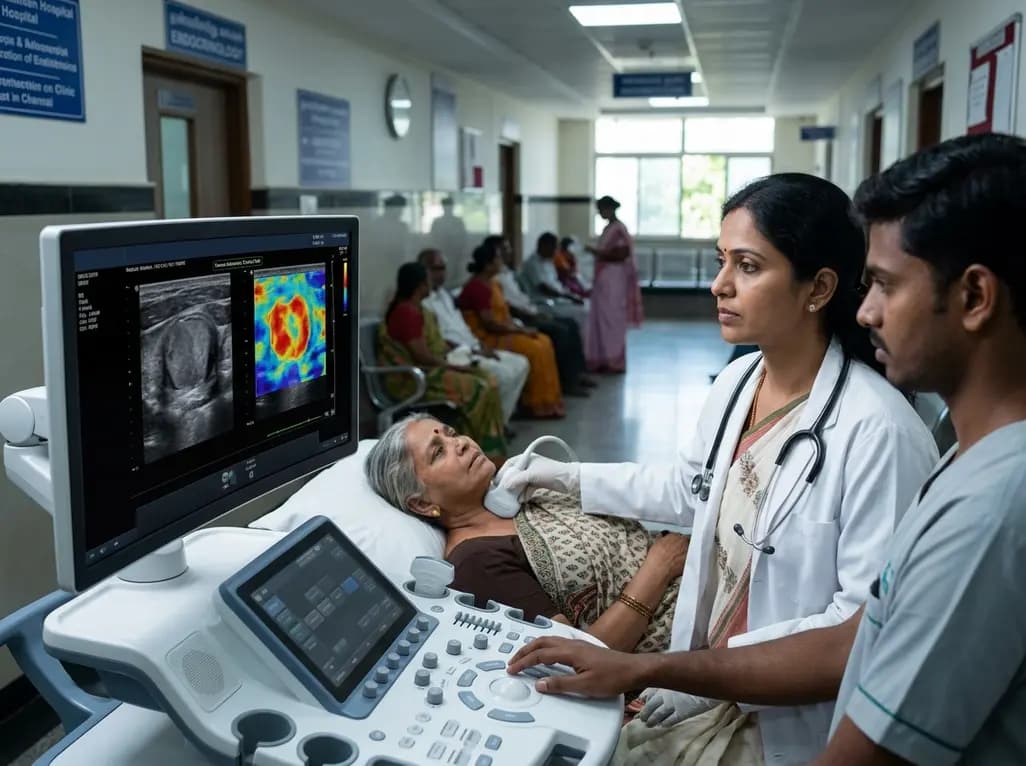
A study introduces a dual-discriminator generative adversarial network (DD-GAN) capable of generating virtual elastography ultrasound from standard B-mode images. The tool matches real elastography performance and improves thyroid nodule risk stratification when combined with TI-RADS.
Today
