.webp&w=384&q=75)

Loading, please wait...
Loading, please wait...

Intracranial pressure monitoring represents a clinical cornerstone in managing severe traumatic brain injury, acute hydrocephalus, and malignant stroke. However, conventional liquid-filled transducers impose substantial burdens due to percutaneous tethers and infection risks. Recent technological breakthroughs in implantable ICP sensors now offer miniaturized, high-precision alternatives. These emerging diagnostic platforms facilitate continuous neurocritical telemetry while minimizing invasive physiological disruption.
For decades, neurosurgeons have relied on external ventricular drains as the gold standard for intracranial monitoring. Although ventricular drains provide therapeutic cerebrospinal fluid diversion, they create direct pathways for bacterial colonization. In addition, physical tethers restrict patient positioning and complicate intensive care management. Consequently, clinical researchers have accelerated the development of solid-state transducers that fit directly into parenchymal or subdural spaces.
Modern implantable systems replace cumbersome fluid columns with compact micro-electro-mechanical architectures. Furthermore, these compact units maintain baseline calibration across extended monitoring intervals without requiring frequent manual re-zeroing. Clinicians can therefore assess acute intracranial dynamics with greater diagnostic reliability. Moreover, miniaturized probes reduce mechanical trauma during surgical cannulation through cranial burr holes. As a result, patients experience fewer secondary hemorrhages and diminished wound complications. In addition, continuous pressure tracing identifies compliance failure prior to herniation. Ultimately, this structural evolution transforms neurotrauma workflows and broadens continuous diagnostic surveillance across diverse clinical settings.
Implantable pressure sensors depend on sophisticated transduction principles to convert cerebral tissue stress into quantifiable electrical signals. Piezoresistive mechanisms represent the most prevalent modality in current clinical practice. Specifically, applied pressure deforms a thin silicon diaphragm, altering the internal resistance of integrated piezoresistors. Engineers configure these elements in Wheatstone bridge formations to maximize signal sensitivity and cancel thermal drift. Consequently, piezoresistive architectures deliver remarkable linearity across physiological ranges between zero and thirty millimeters of mercury.
Alternatively, capacitive sensing mechanisms offer distinct advantages for ultra-low-power biomedical devices. These transducers gauge pressure by measuring capacitance changes between an elastic diaphragm and a fixed backplate. Because capacitive systems draw minimal operating current, they generate negligible heat within sensitive neural tissues. Furthermore, optical Fabry-Perot interferometers provide an attractive electromagnetic alternative. These optical sensors direct coherent light through flexible fiber cavities to detect mechanical displacement. Because optical signals resist radiofrequency interference, they permit artifact-free intracranial monitoring during diagnostic magnetic resonance imaging. Thus, each transduction mechanism presents unique engineering advantages that clinicians can tailor to specific acute neurological pathologies.
The intracranial cavity presents a uniquely aggressive physiological environment that demands meticulous material engineering. Implanted sensors must withstand continuous exposure to cerebrospinal fluid, ionic solutes, and enzymatic degradation. Therefore, packaging materials must provide absolute hermeticity while preserving mechanical compliance. Manufacturers frequently utilize medical-grade titanium alloys and ceramic substrates for outer device capsules. These robust housings prevent fluid ingress that would otherwise trigger electrical short circuits or severe signal drift.
In addition, flexible interfaces require specialized organic polymers such as polyimide, parylene-C, and polydimethylsiloxane. These compliant polymers match the mechanical impedance of soft brain parenchyma, thereby reducing shearing forces during patient movement. Consequently, the surrounding cerebral cortex exhibits minimal foreign-body reactions and attenuated glial scar formation. Furthermore, engineers apply atomic layer deposition to coat internal silicon transducers with ultrathin silicon dioxide barriers. Similarly, anti-fouling surface treatments inhibit protein adsorption and cellular adhesion across the active sensing area. Thus, advanced materials science protects delicate electronic components while safeguarding surrounding brain architecture against inflammatory injury.
Eliminating percutaneous wires represents one of the most critical objectives in modern neurosensor development. Percutaneous leads create direct physical routes for microbial invasion, increasing ventriculitis and meningitis risks. In contrast, wireless communication modules allow safe data transmission across an intact scalp. Engineers employ near-field communication and radiofrequency telemetry to broadcast continuous real-time data to external receivers. Consequently, clinical teams can monitor intracranial waveforms without tethering patients to rigid bedside equipment.
Furthermore, passive inductive coupling strategies eliminate the need for bulky internal chemical batteries. In these configurations, an external primary coil emits electromagnetic energy that powers the implanted secondary circuit across the cranial bone. The implanted sensor then modulates its resonant frequency in direct proportion to intracranial pressure shifts. Alternatively, active wireless systems incorporate ultra-low-power Bluetooth microchips to support continuous telemetry across wider ambulatory distances. These platforms stream pressure data directly to secure hospital monitors or tablet computers. As a result, physiotherapists can safely mobilize neurotrauma patients during early rehabilitation phases. Thus, wireless system integration provides unprecedented mobility while preserving rigorous diagnostic vigilance.
Although permanent wireless implants dramatically improve clinical workflow, their eventual management poses surgical dilemmas. Non-resorbable foreign bodies require secondary extraction procedures, which expose recovering patients to avoidable anesthesia risks. To resolve this challenge, researchers have pioneered transient bioresorbable electronics that dissolve completely into native biofluids. These innovative sensors utilize silicon nanomembranes, biodegradable polymers, and metabolizable metals such as magnesium and zinc. Consequently, the device degrades via natural hydrolysis after the acute neurotrauma window, eliminating secondary explantation surgeries entirely.
However, significant technical hurdles must be resolved before widespread clinical adoption occurs. For example, maintaining accurate calibration and minimizing sensor baseline drift across extended implantation windows remain difficult challenges. In addition, biofluid permeation can degrade sensing membranes unpredictably. Future engineering efforts must refine hermetic encapsulation techniques and establish automated in vivo recalibration protocols. Furthermore, standardized animal trials and rigorous human clinical investigations must confirm long-term biocompatibility and biosafety. Ultimately, overcoming these translational barriers will establish long-term, minimally invasive intracranial surveillance as a routine neurocritical standard.
Implantable sensors significantly lower infection risks by eliminating percutaneous catheters and transcutaneous hardware. Traditional external ventricular drains establish a continuous physical corridor that allows skin pathogens to migrate directly into cerebral ventricles. In contrast, fully internalized telemetry modules communicate wirelessly through an intact scalp barrier. Consequently, this closed configuration preserves anatomical defenses and minimizes biofilm colonization. Furthermore, it curtails hospital-acquired ventriculitis and secondary meningitis during extended neurocritical monitoring.
Bioresorbable pressure sensors eliminate the clinical necessity for secondary surgical retrieval procedures. Standard permanent devices carry ongoing risks of mechanical dislodgement, localized immune rejection, and late hematogenous seeding. In contrast, bioresorbable platforms naturally dissolve into biocompatible molecules via hydrolysis once the diagnostic period concludes. Consequently, patients avoid repeat craniotomies and general anesthesia exposures. Furthermore, this transient approach reduces overall neurosurgical costs and relieves psychological stress for recovering patients and their families.
Wireless intracranial monitoring liberates neurological patients from restrictive bedside tethering and cumbersome fluid drainage columns. Continuous digital telemetry transmits real-time waveform data directly to remote central monitors or portable hospital tablets. Consequently, neurocritical care teams can monitor intracranial compliance while patients mobilize during early physical therapy. In addition, ambulatory surveillance enables early detection of positional pressure spikes in chronic hydrocephalus and craniosynostosis. Ultimately, untethered monitoring promotes faster rehabilitation and shortens intensive care stays.
Disclaimer: This content is for informational and educational purposes only and does not constitute medical advice or establish a doctor-patient relationship. Qualified healthcare professionals should make all clinical decisions based on their judgment and individual patient circumstances. Refer to the latest local and national guidelines for clinical practice.
References

Read summarized clinical updates, watch expert medical content, and earn CME certifications right from your smartphone.
Open your smartphone camera to scan and install.





Recent innovations in implantable ICP sensors offer wireless telemetry and bioresorbable designs. These advances minimize infection risks, eliminate retrieval surgery, and improve continuous intracranial monitoring in neurotrauma and stroke management.
Today
CURGET is an innovative oral five-node metabolic regimen combining four polyphenols—curcumin, urolithin A, resveratrol, and EGCG—with trimetazidine. By simultaneously blocking critical bioenergetic pathways, it aims to counter tumor metabolic plasticity and offer an affordable cancer care adjunct.
Today

A retrospective cohort study of 5,481 children aged 3–6 years evaluated whether surgical sperm retrieval for ICSI affects offspring cognitive and physical growth compared with ejaculated sperm and IVF. Results demonstrate comparable IQ scores and growth parameters, providing reassuring safety evidence for clinical practice.
Today
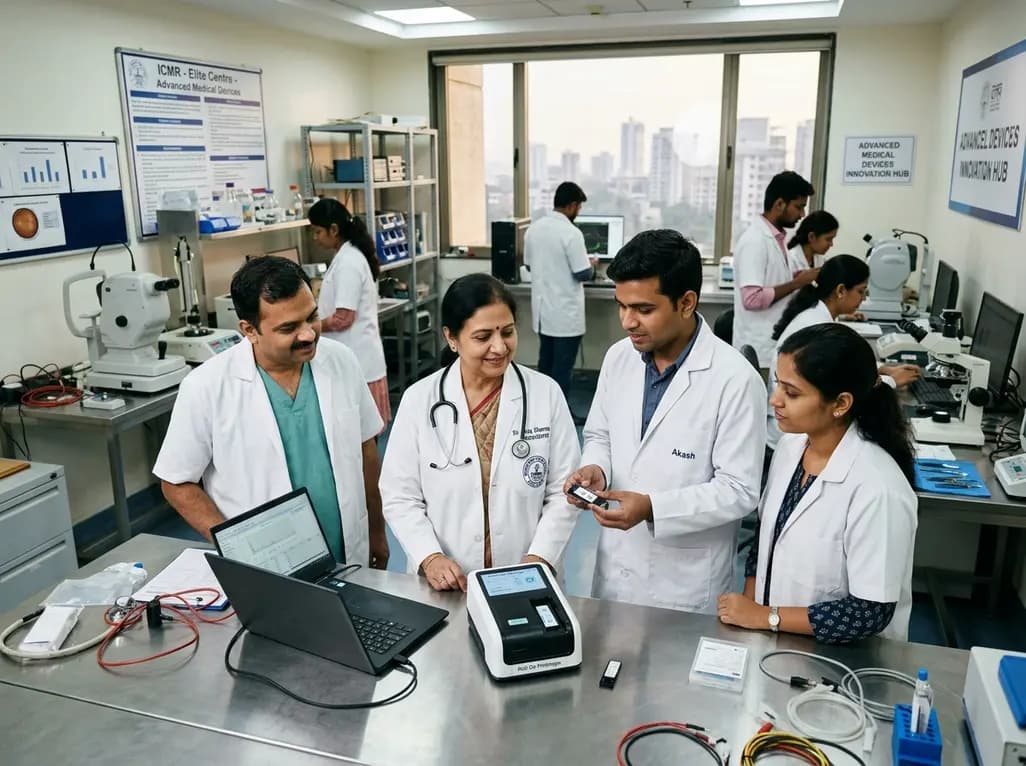
The Indian Council of Medical Research has funded seven top academic hubs to build indigenous healthcare technologies. Targeting point-of-care diagnostics, biomaterials, and ophthalmology, these multidisciplinary centres aim to tackle unmet clinical needs and make medical care affordable across India.
Today

Diagnostic data shows that nearly one in four spine investigations now involve patients younger than 40 years. This comprehensive overview explores the drivers behind this demographic trend, evaluates ergonomic hazards, clarifies red-flag signs, and highlights clinical indications for judicious diagnostic imaging.
Today

A multicenter cross-sectional study of 1,315 adults with type 1 diabetes reveals that the GMI/HbA1c ratio does not independently predict microvascular complications. Clinicians should prioritize sustained time in range and blood pressure management over glycation discordance metrics.
Today
