.webp&w=384&q=75)

Loading, please wait...
Loading, please wait...
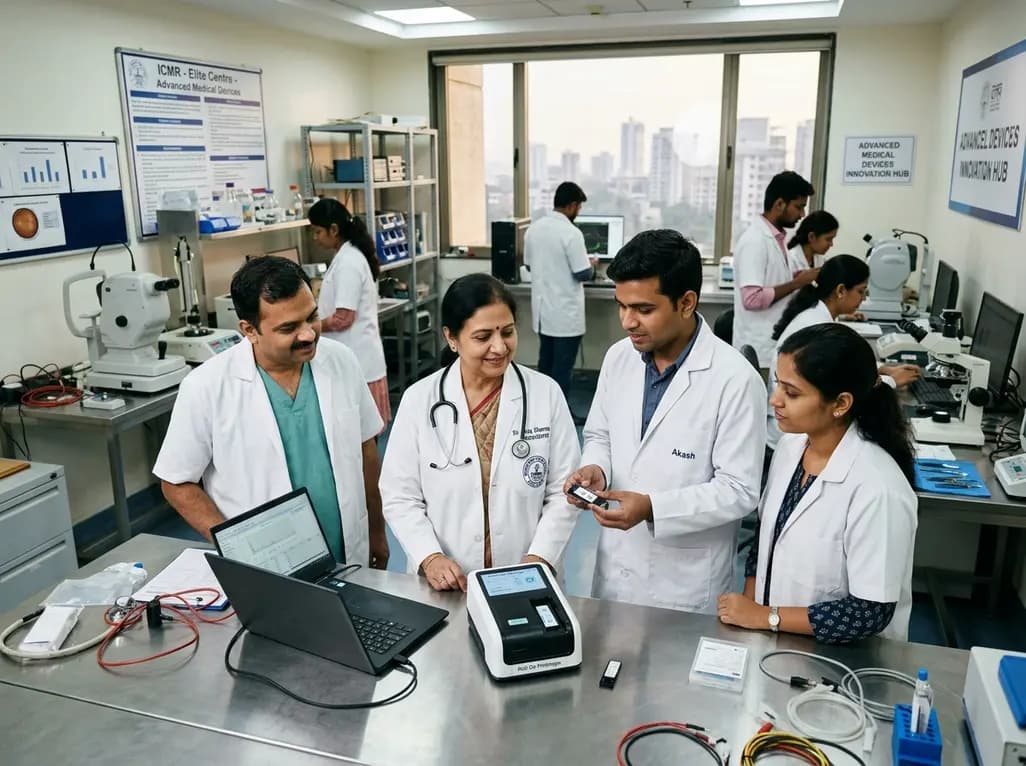
The Indian Council of Medical Research has officially selected seven premier academic institutions to pioneer indigenous healthcare technologies. This landmark initiative concentrates on developing priority medical devices and next-generation diagnostic tools to solve pressing healthcare challenges. Currently, India imports more than seventy-five percent of its advanced biomedical hardware. Consequently, this heavy import reliance inflates treatment costs and restricts modern clinical care in resource-limited settings. To counter this vulnerability, the apex research agency is establishing dedicated Centres for Advanced Research. These hubs will operate at leading Indian Institutes of Technology, the Indian Institute of Science, and Amrita Vishwa Vidyapeetham. Ultimately, the program seeks to convert domestic engineering breakthroughs into robust, accessible bedside interventions.
To anchor this mission in real-world clinical realities, research administrators initiated extensive nationwide consultations. Clinicians from tier-one medical colleges, district hospitals in tier-two cities, and rural primary centers shared their everyday challenges. As a result, the council compiled a definitive catalog of roughly one hundred unmet clinical priorities. This curated catalog directly reflects practical hurdles encountered during patient care, rather than theoretical academic goals.
Furthermore, participating research centres must address at least eight to ten technologies drawn directly from this national priority list. These technological targets deliberately span both low-risk screening apparatus and high-risk therapeutic systems. Therefore, the mandate prevents academic teams from focusing solely on incremental diagnostic modifications. Instead, investigators must formulate comprehensive engineering solutions that survive harsh environmental conditions in peripheral clinics.
Moreover, clinicians in peripheral settings frequently operate without consistent electrical grids or climate-controlled laboratory environments. For that reason, engineers must optimize these systems for rugged durability, thermal stability, and user-friendly operation. By systematically aligning engineering workflows with frontline medical requirements, the council hopes to overcome historical barriers in clinical translation. Ultimately, this structured alignment promises to deliver reliable medical solutions tailored specifically for diverse Indian demographic cohorts.
The designated centres bring distinct technical proficiencies to develop vital priority medical devices for public health. At the Indian Institute of Technology Bombay, Dr. Abhijit Majumder directs research on portable screening platforms and point-of-care diagnostics. Consequently, these portable diagnostic tools will empower community health workers to detect chronic non-communicable diseases much earlier. Meanwhile, Amrita Vishwa Vidyapeetham concentrates on ophthalmic and vascular technologies under the leadership of Professor Gopal S. Pillai. Their investigators will validate and commercialize specialized devices for preventing avoidable blindness and managing peripheral vascular trauma.
Simultaneously, scientists at the Indian Institute of Science Bengaluru are pioneering novel biocompatible materials and implantable hardware. In addition, the PRAGATICAR project at IIT Kharagpur, spearheaded by Professor Suman Chakraborty, emphasizes frugal diagnostic tools and digital health systems. Their teams integrate artificial intelligence with regenerative medicine to deliver affordable testing assays.
At the Indian Institute of Technology Delhi, Professor Vivekanandan Perumal guides the CAR-PATH team toward applied healthcare solutions. Furthermore, Professor Amitabha Bandyopadhyay at IIT Kanpur directs an ambitious multidisciplinary pipeline to produce ten distinct therapeutic devices. Finally, the TARaNGaM hub at IIT Madras, led by Professor Mohanasankar Sivaprakasam, accelerates translational diagnostics. Together, these complementary programs construct a formidable domestic barrier against prohibitive imported technologies.
Historically, Indian academic laboratories generated exceptional scientific literature but struggled to navigate the complex pathway to market launch. To dismantle these institutional silos, this initiative mandates genuine convergence between clinical medicine and biological engineering. Furthermore, the selection criteria strictly favored institutions with verified credentials in rapid prototyping and technology incubation. Participating centers must leverage established facilities while simultaneously creating sustainable educational pipelines for biomedical engineers.
In addition, each selected centre receives funding support of up to fifteen crore rupees across a five-year lifecycle. However, institutional leadership must guarantee that these facilities continue functioning permanently after this initial extramural grant expires. Therefore, host universities are institutionalizing these research hubs within their core operational frameworks.
Moreover, clinical mentorship forms an indispensable pillar of every sponsored engineering team. Engineers routinely collaborate with practicing surgeons, intensivists, and general physicians to validate ergonomic handling and clinical utility. This close collaboration guarantees that technical designs suit rapid triage scenarios and high-volume outpatient clinics. As a result, technical developers can rectify critical functional flaws during preliminary design stages rather than during costly clinical trials. Such collaborative vigor strengthens domestic innovation ecosystems while training future leaders in translational medicine.
Navigating stringent regulatory governance often presents the most daunting hurdle for medical device developers in emerging economies. Recognizing this obstacle, the council emphasizes strict alignment with the Medical Device Rules established by Indian regulatory authorities. Consequently, participating investigators must formulate design dossiers that fulfill rigorous safety, bio-compatibility, and electrical standards from inception. This upfront emphasis eliminates subsequent delays when seeking formal manufacturing licenses and marketing approvals.
Furthermore, academic teams must actively partner with industrial manufacturers and established medtech enterprises early in development. Such commercial linkages guarantee that laboratory prototypes smoothly transition into scalable assembly lines without loss of manufacturing precision. Therefore, public funds directly stimulate indigenous manufacturing capabilities rather than terminating merely at academic proofs-of-concept.
However, significant translational hurdles remain before these medical products reach routine clinical practice across hospital wards. Most notably, developers must conduct rigorous, multi-centre clinical evaluations to demonstrate diagnostic concordance and therapeutic non-inferiority against established international standards. In addition, innovators must negotiate complex patent rights, licensing contracts, and delicate supply chain logistics. Nevertheless, by embedding regulatory scientists and industrial partners within research advisory boards, the initiative creates an unprecedented accelerated framework for domestic medical technology.
For practicing clinicians across India, this nationwide initiative heralds transformative practical changes in daily patient management. Currently, specialized diagnostic investigations and advanced therapeutic interventions remain confined largely to metropolitan tertiary facilities. Consequently, rural and semi-urban patients incur ruinous travel costs and endure prolonged diagnostic delays. The successful introduction of indigenous point-of-care devices will decentralize essential diagnostic workups directly to primary health clinics.
Furthermore, affordable domestic alternatives will significantly reduce overall treatment expenditures for underprivileged patient populations. Clinicians can confidently recommend necessary diagnostic surveillance without inducing severe financial toxicity. In addition, point-of-care ophthalmic and cardiovascular screening tools will facilitate immediate risk stratification in outpatient settings. Thus, physicians can initiate guideline-directed medical therapies during initial patient visits, preventing catastrophic disease progression.
Moreover, indigenous devices designed specifically for domestic demographic profiles enhance diagnostic accuracy across diverse physiological characteristics. Local manufacturing also mitigates global supply chain interruptions that frequently jeopardize hospital operations during international crises. Therefore, medical practitioners should actively follow these technological advancements and participate in prospective clinical validation registries. Ultimately, clinician engagement remains the vital catalyst that transforms engineering innovations into measurable public health victories.
Q1: Why did ICMR establish specialized research centres for priority medical devices?
India currently imports the overwhelming majority of its high-end biomedical equipment, which drives up healthcare delivery costs significantly across the nation. To overcome this critical vulnerability, ICMR selected seven premier research institutions to design, validate, and commercialize indigenous technologies. Consequently, this targeted initiative addresses approximately one hundred urgent clinical priorities identified through consultations with medical doctors practicing across all tiers of the Indian healthcare system.
Q2: Which institutions were selected under this national healthcare technology scheme?
The selected institutions comprise five leading Indian Institutes of Technology, namely IIT Bombay, IIT Delhi, IIT Kanpur, IIT Kharagpur, and IIT Madras. In addition, the Indian Institute of Science in Bengaluru and Amrita Vishwa Vidyapeetham in Coimbatore secured competitive selection. These elite academic centres possess sophisticated prototyping infrastructure, multidisciplinary research faculty, and demonstrable track records in translating laboratory research into commercialized clinical products.
Q3: How will these new medical technologies directly benefit rural primary healthcare?
Several selected projects focus specifically on rugged, battery-operated point-of-care screening devices and rapid diagnostic tools tailored for harsh environments. These portable diagnostic instruments will empower community health workers and rural practitioners to screen for chronic disorders directly at village clinics. As a result, peripheral healthcare centers can identify ophthalmological, cardiovascular, and metabolic abnormalities early, dramatically reducing diagnostic delays and catastrophic complications for rural patients.
Disclaimer: This content is for informational and educational purposes only. It does not constitute medical advice or replace professional judgment. Refer to the latest local and national guidelines for clinical practice.
References

Read summarized clinical updates, watch expert medical content, and earn CME certifications right from your smartphone.
Open your smartphone camera to scan and install.





The Indian Council of Medical Research has funded seven top academic hubs to build indigenous healthcare technologies. Targeting point-of-care diagnostics, biomaterials, and ophthalmology, these multidisciplinary centres aim to tackle unmet clinical needs and make medical care affordable across India.
Today

A narrative review evaluates outcomes following anti-CGRP mAb discontinuation in migraine. Findings indicate frequent relapse within three months, cumulative benefits from 2- to 3-year therapy, and successful retreatment, challenging mandatory reimbursement pauses.
Today
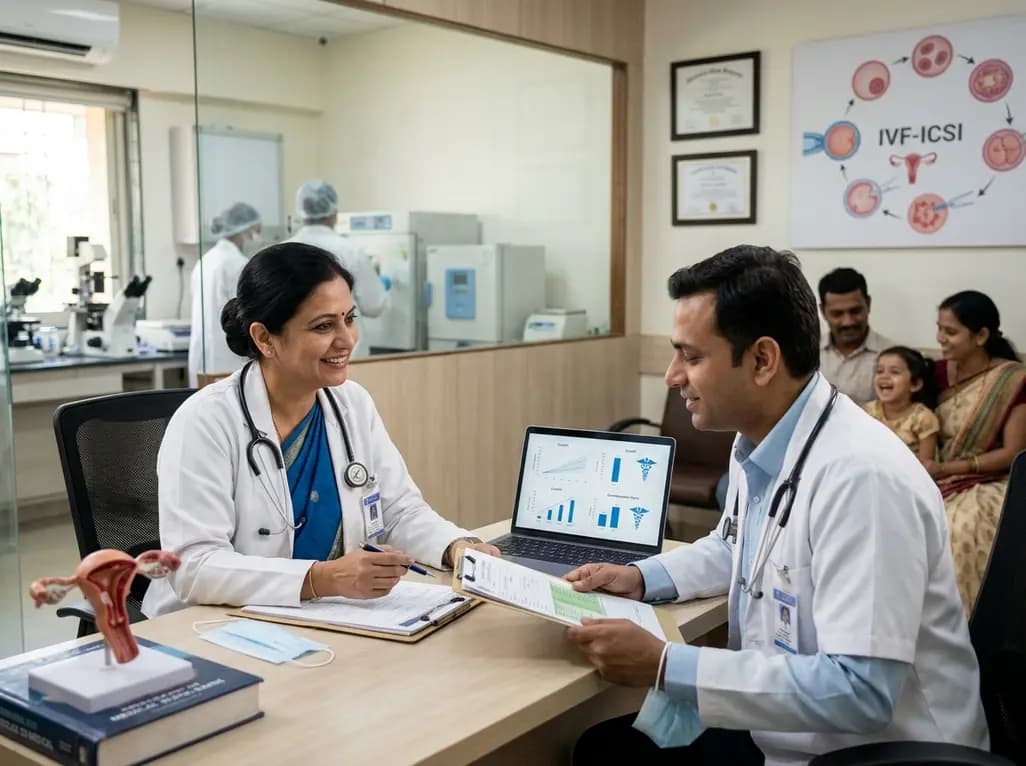
A retrospective cohort study of 5,481 children aged 3–6 years evaluated whether surgical sperm retrieval for ICSI affects offspring cognitive and physical growth compared with ejaculated sperm and IVF. Results demonstrate comparable IQ scores and growth parameters, providing reassuring safety evidence for clinical practice.
Today

A meta-analysis evaluates the impact of preoperative transthoracic echocardiography on surgical delay and hospital stay in geriatric hip fracture patients. Evidence emphasizes balancing cardiac workups against operative urgency and adhering to clinical guidelines.
Today

A multicenter cross-sectional study of 1,315 adults with type 1 diabetes reveals that the GMI/HbA1c ratio does not independently predict microvascular complications. Clinicians should prioritize sustained time in range and blood pressure management over glycation discordance metrics.
Today
