.webp&w=384&q=75)

Loading, please wait...
Loading, please wait...
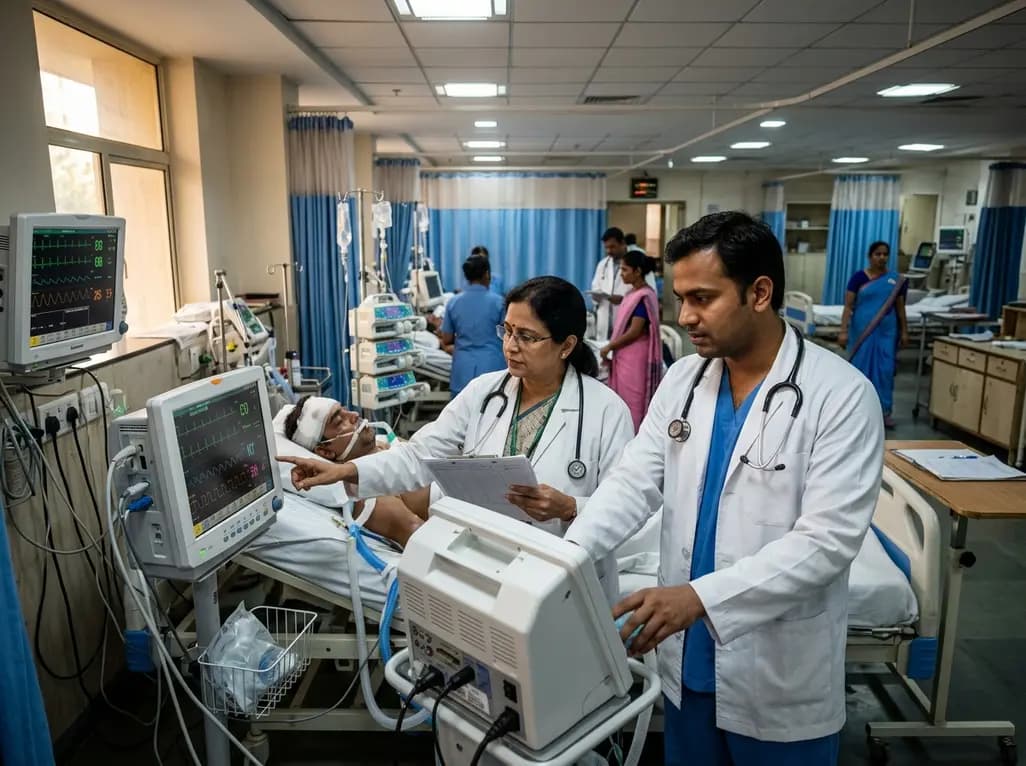
Managing invasive mechanical ventilation represents one of the most complex challenges in modern neurocritical care. Clinicians worldwide must navigate delicate decisions regarding airway liberation, intracranial dynamics, and systemic neuroprotection. However, significant resource variations across global healthcare systems directly influence acute brain injury outcomes. The landmark ENIO study provides critical international insights into these disparities by analyzing extubation strategies, weaning pathways, and patient prognoses across high-income and middle-income countries.
Consequently, understanding how socioeconomic and institutional environments shape critical care delivery is vital for improving clinical standards globally. Invasive mechanical ventilation supports life-sustaining cerebral oxygenation during acute crises. Yet, prolonged intubation significantly increases the risk of ventilator-associated pneumonia, tracheal injury, and secondary neurological insults. Therefore, intensive care teams require evidence-based benchmarks that reflect diverse operational environments. This comprehensive secondary analysis of 1,512 critically ill neuro-ICU patients highlights profound differences in baseline characteristics, diagnostic neuromonitoring, and survival rates between distinct economic settings.
The ENIO registry evaluated detailed clinical data from 73 intensive care units across 18 countries between 2018 and 2020. Notably, the study revealed stark demographic divergences between patient cohorts. In middle-income countries, patients admitted with acute brain injury were substantially younger, presenting with a median age of 35 years compared to 58 years in high-income countries. Severe traumatic brain injury and acute neurovascular emergencies disproportionately affect younger, productive individuals in developing nations, creating profound socioeconomic burdens.
Furthermore, marked contrasts emerged regarding the adoption of advanced diagnostic neuromonitoring tools. In high-income intensive care units, clinicians utilized invasive intracranial pressure monitoring in 51.5% of patients and external ventricular drains in 35.6%. Conversely, intensive care units in middle-income countries deployed intracranial pressure monitors in only 12.0% of cases and external ventricular drains in 7.6%. As a result, critical care teams in resource-limited settings frequently rely on serial neurological examinations and repeated computed tomography imaging rather than continuous invasive intracranial telemetry to guide therapeutic decisions.
Because invasive intracranial pressure monitoring remains less accessible in resource-limited settings, clinicians frequently employ alternative interventional strategies to manage refractory intracranial hypertension. Consequently, surgical intervention rates differed significantly between economic tiers. Patients in middle-income countries underwent neurosurgical procedures substantially more often than their high-income counterparts, with intervention rates of 47.7% versus 38.2% respectively.
Specifically, neurosurgeons performed decompressive craniectomy in 30.7% of middle-income patients, compared to only 15.9% in high-income cohorts. In addition, this twofold increase in surgical decompression reflects a proactive therapeutic strategy when continuous intracranial telemetry is unavailable to guide medical hyperosmolar therapy. Therefore, neurosurgical teams in middle-income nations often utilize early decompressive surgery to prevent fatal brain herniation and relieve intracranial hypertension. However, surgical decompression carries intrinsic operative risks and demands meticulous postoperative intensive care. Thus, early surgical interventions significantly alter subsequent weaning trajectories, complication profiles, and long-term recovery pathways in these critical patients.
The primary finding of the multivariable analysis highlights a concerning survival gap between healthcare systems. After adjusting for baseline neurological severity, comorbidities, age, body mass index, and intensive care management, patients in middle-income countries faced 2.27 times higher odds of ICU mortality compared to those in high-income nations. This statistically significant disparity underscores the profound impact of institutional infrastructure, nurse-to-patient staffing ratios, and specialized post-resuscitation bundles on overall patient survival.
Moreover, these mortality differences persisted despite the younger age profile of patients treated in middle-income intensive care units. In high-income countries, advanced neurocritical care infrastructure facilitates rapid detection and prompt correction of secondary cerebral insults, including hypoxia, hypotension, and intracranial hypertension. Conversely, resource-limited units often encounter delays in neuroimaging, limited nurse-led monitoring, and constrained pharmacological options. Consequently, addressing these systemic disparities requires targeted quality improvement initiatives, enhanced bedside monitoring protocols, and standardized neurocritical care training across global intensive care networks.
Notable variations also characterized airway liberation and tracheostomy practices between economic regions. Patients in middle-income countries demonstrated 3.38 times higher odds of receiving a tracheostomy during their admission. Interestingly, their mean intensive care unit stay was 5.59 days shorter than high-income patients. Critical care units facing severe bed shortages often perform early tracheostomy to facilitate ventilator liberation and transfer patients safely to step-down wards.
Furthermore, weaning patients with acute brain injury from invasive ventilation requires meticulous clinical assessment. Clinicians must evaluate airway protection reflexes, bulbar function, and neurological stability alongside standard pulmonary parameters. While unadjusted data suggested lower extubation failure rates in middle-income settings, this difference became non-significant after controlling for arterial blood gas values and ventilatory settings. Thus, physiological weaning success remains consistent globally when patients meet standardized extubation criteria. Therefore, establishing structured extubation protocols helps clinicians avoid both premature extubation failure and unnecessary tracheostomy delays.
For intensive care practitioners and neurosurgeons in India, these international findings provide vital clinical validation. India's healthcare landscape features high volumes of young trauma patients alongside variable access to invasive neuromonitoring in non-tertiary hospitals. Accordingly, Indian intensive care units frequently manage severe traumatic and vascular brain injuries using clinical acumen, non-invasive assessment tools, and early surgical decompression.
To bridge outcome gaps, healthcare institutions across India must prioritize scalable, cost-effective neurocritical care strategies. Implementing protocolized sedation weaning, enhancing nurse-led neurological monitoring, and optimizing tracheostomy timing can substantially reduce ICU mortality without requiring prohibitive capital investments. In addition, establishing multidisciplinary neurocritical care teams improves patient triage and post-extubation care. Ultimately, expanding national multicenter registries will generate robust indigenous data to inform evidence-based guidelines tailored specifically to Indian socioeconomic realities and healthcare resource allocations.
Higher mortality stems from systemic resource constraints, including lower nurse-to-patient ratios, reduced access to continuous multimodal neuromonitoring, and delays in pre-hospital emergency transport. These structural disparities limit early detection of secondary neurological injury, despite aggressive surgical interventions like decompressive craniectomy.
High-income intensive care units routinely deploy continuous invasive monitors, using intracranial pressure telemetry in over 51% of patients. In contrast, middle-income facilities use invasive intracranial pressure monitoring in only 12% of cases, relying more frequently on serial neurological examinations, neuroimaging, and surgical decompression.
Intensivists in middle-income settings often perform early tracheostomies to expedite ventilator liberation, prevent extubation failure, and transfer patients to intermediate care. This proactive strategy helps alleviate severe critical care bed shortages and manages prolonged airway protection needs in younger cohorts with severe neurological deficits.
Disclaimer: This content is for informational and educational purposes only. It does not constitute medical advice, diagnosis, or treatment recommendations. Healthcare professionals must exercise their independent clinical judgment when evaluating and treating patients. The findings discussed reflect observational research and should not replace standard institutional protocols or clinical guidelines. Refer to the latest local and national guidelines for clinical practice.
References

Read summarized clinical updates, watch expert medical content, and earn CME certifications right from your smartphone.
Open your smartphone camera to scan and install.





A secondary analysis of the ENIO study reveals that patients with acute brain injury in middle-income countries face 2.27 times higher odds of ICU mortality, higher tracheostomy rates, and lower neuromonitoring access compared to high-income nations, highlighting significant global critical care disparities.
last month

A study reveals that salivary cortisone correlates more strongly with serum cortisol than salivary cortisol during dynamic adrenal testing, while salivary dexamethasone accurately confirms compliance. This provides a non-invasive, precise alternative to venipuncture for diagnosing adrenal disorders.
Today

Prenatal evaluation of fetal growth restriction requires an integrated diagnostic approach. While chromosomal microarray remains fundamental, exome sequencing offers significant diagnostic yield in isolated and syndromic cases, especially when ultrasound shows skeletal anomalies or normal placental function.
Today

Evaluating disagreement among Friedewald, Martin-Hopkins, and Sampson LDL-C equations reveals diagnostic uncertainty at statin cutoffs. An interpretable regime-aware calibration model rescues patient misclassifications without extra testing costs.
Today

A randomized controlled trial compared ultrasound-guided intra-articular injections of PRP, hydrolyzed type I collagen, and hyaluronic acid in knee osteoarthritis. All therapies demonstrated significant improvements in WOMAC and pain scores at six months, supporting hydrolyzed collagen as a viable biological option.
Today

A groundbreaking review highlights mitochondrial quality control as a pivotal gating layer between metabolite signaling and regulated cell death, offering transformative therapeutic avenues across cardiology, oncology, and critical care.
Today
