.webp&w=384&q=75)

Loading, please wait...
Loading, please wait...
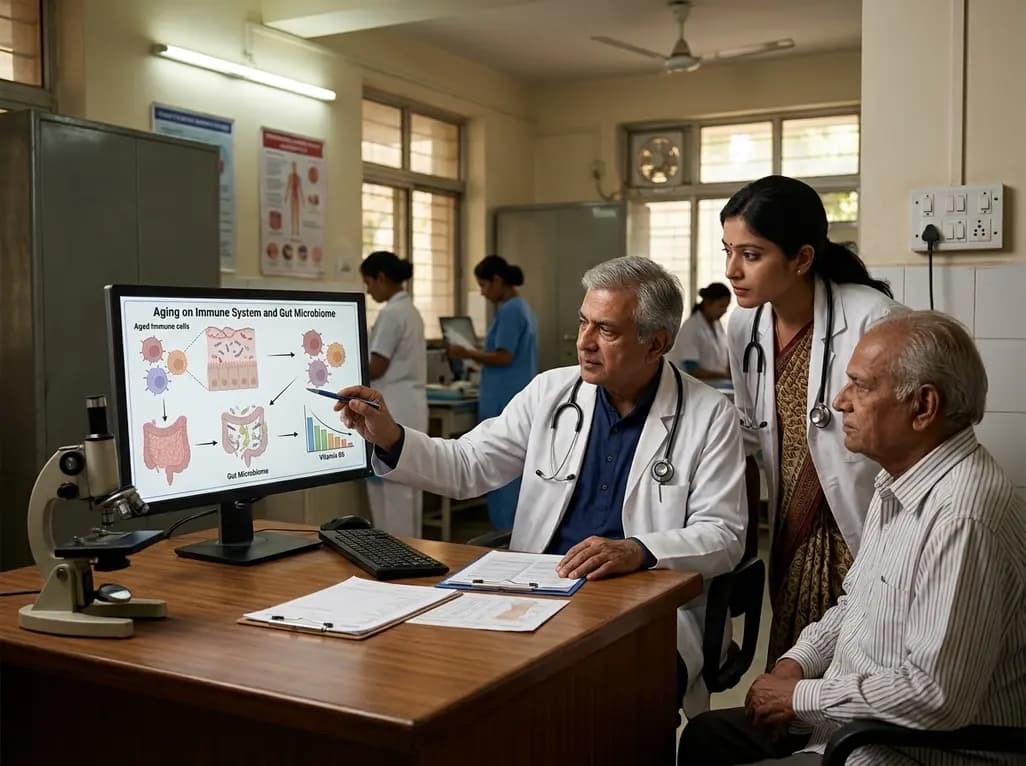
As the global population ages, understanding the biological hallmarks of senescence becomes increasingly critical. Recent research has identified a significant link between Immune Aging and Vitamin B6 levels. Specifically, aging-associated immune remodeling (AAIR) appears to be a primary driver of dysbiosis in the gut microbiota. This imbalance subsequently impacts the body's ability to produce and maintain essential vitamins. Consequently, these findings provide a fresh perspective on why nutritional deficiencies often arise in the elderly, despite adequate dietary intake.
Aging is accompanied by a progressive decline in immune function, known as AAIR. This process involves widespread changes, including a reduction in naïve T cell populations and an expansion of memory and regulatory T cells. Interestingly, researchers used hematopoietic stem cell (HSC) transplantation models to demonstrate that these immune changes are intrinsic to the hematopoietic system. Furthermore, the study revealed that these alterations in the ileal lamina propria directly influence the composition of the gut microbiome. In addition, the reduced presence of certain taxa impairs the metabolic pathways responsible for synthesizing vital nutrients.
One of the most striking results of the study was the identified decline in Vitamin B6 biosynthesis. The researchers found a reduced abundance of microbial taxa associated with VB6 salvage and biosynthesis pathways in subjects with aged immune systems. Because the gut microbiome contributes significantly to systemic vitamin levels, this reduction leads to lower serum Vitamin B6 availability. Therefore, clinicians should consider that age-related B6 deficiency may not just be a matter of diet but a consequence of an aging immune-microbiome axis. This discovery suggests that targeting the microbiome could be a viable therapeutic strategy to restore vitamin levels in aging patients.
AAIR reduces the variety of immune cells in the gut lining, which allows specific opportunistic bacteria to thrive while beneficial, vitamin-producing bacteria decline.
Vitamin B6 is essential for over 100 enzymatic reactions, including those involving protein metabolism and cognitive function. Lower levels can exacerbate age-related decline and chronic inflammation.
While the study suggests an immune-microbiome-VB6 association, further clinical trials are necessary to confirm if specific probiotic strains can effectively increase systemic B6 levels.
Disclaimer: This content is for informational and educational purposes only. It is not intended as medical advice or a substitute for professional healthcare. Refer to the latest local and national guidelines for clinical practice.
References
Stahl S et al. Aging of the adaptive immune system affects the gut microbiome and systemic levels of vitamin B6. Microbiome. 2026 Jun 05. doi: 10.1186/s40168-026-02428-3. PMID: 42249511.
Leibniz Institute on Aging - Fritz Lipmann Institute (FLI). Aging immune system may destabilize the gut microbiome balance. News-Medical.Net. 2026 May 27.
Barron M. Aging and the Gut: The Microbiome's Second Act. American Society for Microbiology. 2025 Jul 30.
"
Read summarized clinical updates, watch expert medical content, and earn CME certifications right from your smartphone.
Open your smartphone camera to scan and install.





A study highlights how aging-associated immune remodeling (AAIR) drives gut microbiome changes, leading to reduced Vitamin B6 biosynthesis and availability....
4 months ago
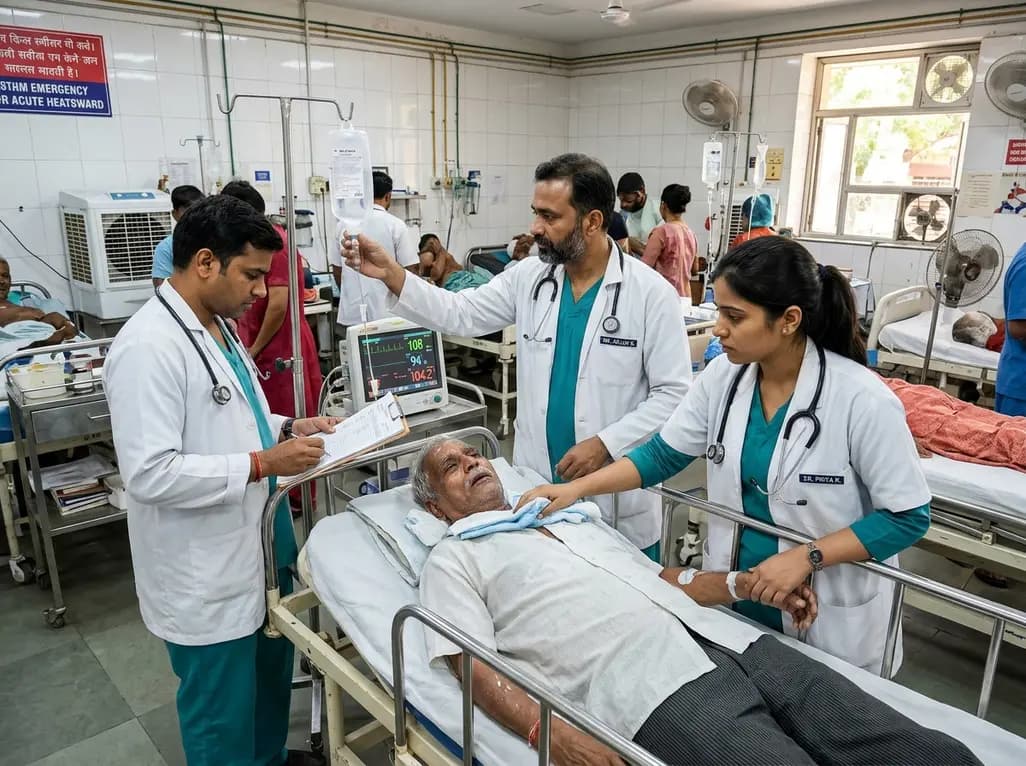
Recent epidemiological data reveals a dramatic surge in summer heat mortality driven by human-induced climate warming. This analysis explores the pathophysiological impacts on cardiac and renal systems, diagnostic dilemmas in death certification, and essential emergency cooling protocols for acute clinical care.
Today

Odisha has established India's first state-level clinical protocol specifically tailored for pregnant women with sickle cell disease. Developed with NHM and UNICEF, the framework provides structured antenatal screening, crisis mitigation, standardized referral pathways, and specialized interdisciplinary care.
Today

India is advancing preventive healthcare by integrating genomics, artificial intelligence, and quantum technologies. With the SANGAM programme sequencing one million Indian genomes, clinicians can unlock personalized therapies, detect cardiometabolic risks early, and curb the burden of diabetes and heart disease.
Today

A randomized controlled trial demonstrates that an eight-week dual-task training intervention significantly improves static and dynamic postural control over standard balance exercises in individuals with chronic ankle instability, addressing critical neurocognitive deficits during athletic and daily activities.
Today

A retrospective cohort study of 7,716 ICU patients from the MIMIC-IV database demonstrates that Gradient Boosting Decision Trees significantly outperform traditional SOFA scores in predicting in-hospital mortality among patients with sepsis and diabetes, with SHAP analysis providing clinical interpretability.
Today
