.webp&w=384&q=75)

Loading, please wait...
Loading, please wait...

The rehabilitation of completely edentulous maxillary arches represents one of the most challenging disciplines in implant dentistry. Clinicians routinely evaluate immediate loading protocols to reduce treatment timelines and satisfy patient desires for rapid aesthetic function. However, the unique anatomy of the maxilla introduces notable clinical risks. Specifically, lower trabecular bone density and thin cortical plates frequently hinder primary fixture stability. Consequently, clinicians must balance patient desires for rapid restoration against biological healing principles. A newly published five-year randomized clinical trial provides pivotal insights into this ongoing debate. The researchers investigated whether delivering prostheses immediately compromises long-term clinical predictability compared to early loading strategies. In addition, the study evaluated tissue preservation, mechanical prosthetic integrity, and patient-reported satisfaction. By examining hard tissue stability over five full years, practitioners can establish evidence-based treatment plans. Ultimately, selecting the ideal loading protocol requires balancing immediate functional demands with lasting peri-implant health.
To ensure robust clinical comparisons, investigators conducted a prospective randomized controlled trial involving 24 edentulous patients. In total, surgeons placed 144 Bone Level Tapered SLActive implants across the cohort. The team randomly allocated participants into two distinct treatment cohorts of 12 individuals each. Consequently, each group received 72 implants supporting full-arch fixed dental prostheses. The first group underwent immediate loading protocols, receiving temporary fixed prostheses shortly after surgical fixture insertion. Conversely, the early loading group received restorations following an established healing window without immediate occlusal stress. Throughout the five-year trial, researchers systematically recorded implant and prosthesis survival rates. Additionally, they quantified peri-implant marginal bone loss and buccal plate thickness using standardized imaging. Over the five-year monitoring period, three participants discontinued study involvement. Therefore, the long-term findings reflect twenty-one fully followed patients.
The five-year trial results revealed comparable survival outcomes between the two treatment pathways. Specifically, the immediate loading cohort achieved a cumulative implant survival rate of 98.6 percent. In comparison, the early loading cohort demonstrated a 97.2 percent implant survival rate. Statistically, this marginal difference was not significant. Furthermore, prosthesis survival exhibited a similar trend across both patient cohorts. The early loading protocol demonstrated complete prosthetic success with a 100 percent survival rate. Meanwhile, the immediate loading cohort achieved a 91.67 percent prosthesis survival rate. Therefore, both clinical workflows provide reliable five-year structural durability when clinicians achieve primary stability. However, prosthetic maintenance demands differed substantially between the two arms. Patients in the immediate loading cohort experienced significantly more mechanical complications over five years. These complications included screw loosening, provisional fracture, and prosthetic wear. Consequently, clinicians must prepare patients for frequent maintenance visits when choosing immediate restoration pathways.
Although implant survival rates remained equivalent, radiographic evaluations revealed critical differences in bone stability. Most notably, buccal marginal bone loss was significantly greater in the immediate loading group. Implants subjected to immediate loading exhibited an average buccal bone loss of -1.15 millimeters. In contrast, early loaded fixtures maintained superior marginal levels, showing an average loss of only -0.36 millimeters. This biological discrepancy reached strong statistical significance. Therefore, early functional loading appears far more protective of fragile buccal cortical plates. In addition, biological complications differed between the cohorts over the five-year evaluation. Researchers diagnosed five total cases of peri-implantitis during long-term monitoring. Remarkably, four of these five inflammatory events occurred in immediately loaded implants. However, peri-implant mucositis affected 55.32 percent of all implants, showing equal distribution across groups. As a result, clinicians must carefully measure local bone volume before deciding on immediate temporization.
Despite the higher biological and mechanical hurdles observed with immediate restoration, patient-reported metrics remained exceptionally high. The researchers administered the Oral Health Impact Profile-19 to evaluate functional limitation, physical pain, and psychological discomfort. Interestingly, both cohorts showed sustained improvements in oral health-related quality of life from baseline to the five-year mark. Furthermore, visual analog scale evaluations revealed excellent overall patient satisfaction across both groups. Patients in both arms reported significant enhancements in masticatory efficiency, aesthetics, and social confidence. Therefore, receiving fixed restorations reliably restores patient quality of life regardless of the timing protocol. However, clinicians must recognize that patient satisfaction does not always correlate directly with underlying bone stability. Unnoticed buccal bone resorption can progress asymptomatically. Consequently, routine professional radiographic monitoring remains vital for detecting early peri-implant bone resorption. Dental teams must continue rigorous recall maintenance to safeguard long-term tissue support.
The definitive findings from this randomized trial provide crucial clinical guidance for restorative dental practices. Clinicians can confidently recommend either protocol, provided that implants achieve sufficient primary stability at surgical insertion. However, early loading emerges as the safer biological choice whenever buccal plate thickness appears vulnerable. By allowing an initial healing interval, early loading protocols preserve crestal bone and substantially reduce mechanical prosthetic repairs. Conversely, clinicians selecting immediate loading protocols must exercise heightened surgical precision. Specifically, surgeons should verify high insertion torque and implant stability quotient values before delivering immediate provisional restorations. Moreover, dental teams must construct robust provisional prostheses to withstand masticatory forces and avoid premature component loosening. Ultimately, thoughtful case selection, meticulous risk assessment, and surgical experience dictate long-term success in full-arch maxillary rehabilitation.
Clinical trial evidence demonstrates that immediate loading causes significantly greater buccal marginal bone loss compared to early loading protocols. At five years, immediately loaded implants exhibited an average loss of 1.15 millimeters, whereas early loaded implants showed only 0.36 millimeters of resorption. This disparity occurs because immediate occlusal forces irritate healing bone around thin cortical plates, leading to accelerated bone remodeling. Therefore, clinicians must assess buccal bone thickness carefully prior to loading.
Yes, long-term clinical data indicates that both loading protocols achieve comparable implant survival rates over five years. The trial reported a 98.6 percent survival rate for immediately loaded fixtures and 97.2 percent for early loaded fixtures, showing no statistically significant difference. Similarly, cumulative prosthesis survival remained comparable across groups. Consequently, clinicians can achieve predictable full-arch restoration with either protocol, provided that adequate primary fixture stability is achieved during implant insertion.
Mechanical complications happen more frequently with immediate loading because provisional prostheses absorb early masticatory stress during bone healing. In this five-year study, immediately loaded restorations experienced significantly higher rates of component loosening, acrylic fractures, and prosthetic wear. In contrast, early loading permits optimal initial osseointegration before full functional loading occurs. Clinicians managing immediate cases must therefore fabricate reinforced provisional frameworks, adjust dynamic occlusal contacts, and schedule frequent prosthetic maintenance visits to mitigate risks.
Disclaimer: This content is for informational and educational purposes only and should not be considered professional medical or dental advice. Clinicians must exercise independent judgment and refer to the latest local and national guidelines for clinical practice.
References

Read summarized clinical updates, watch expert medical content, and earn CME certifications right from your smartphone.
Open your smartphone camera to scan and install.





A 5-year randomized clinical trial evaluates immediate versus early loading protocols for full-arch maxillary fixed prostheses. While both protocols achieve comparable implant survival, immediate loading causes significantly greater buccal marginal bone loss and mechanical complications.
Today
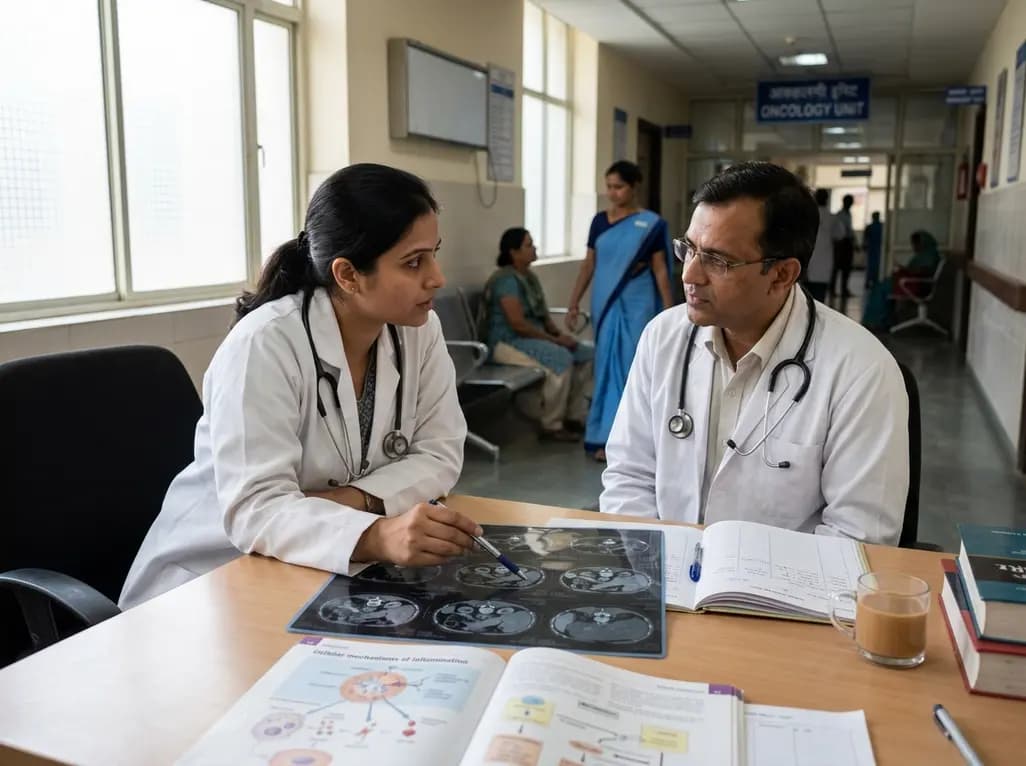
Pancreatic cancer cachexia affects over 80% of patients, driving severe muscle wasting, systemic inflammation, and treatment intolerance. This review highlights key pathophysiological drivers, exocrine insufficiency, objective CT imaging, and emerging therapies like GDF-15 inhibitors to improve clinical outcomes.
Today
A retrospective cohort study evaluated 1,000 low-risk singleton births to assess maternal and neonatal outcomes during office-hours versus off-hours. Off-hours deliveries were significantly associated with higher odds of intrapartum cesarean sections and episiotomies, highlighting critical obstetric staffing considerations.
Today
Procedural success in panvascular intervention does not guarantee vessel stability. The tri-ecological framework introduces vascular device suitcordance and the Suitcordance Score, matching mechanical, cellular, and physicochemical-immune dynamics to restore true vessel homeostasis and prevent late failures.
Today
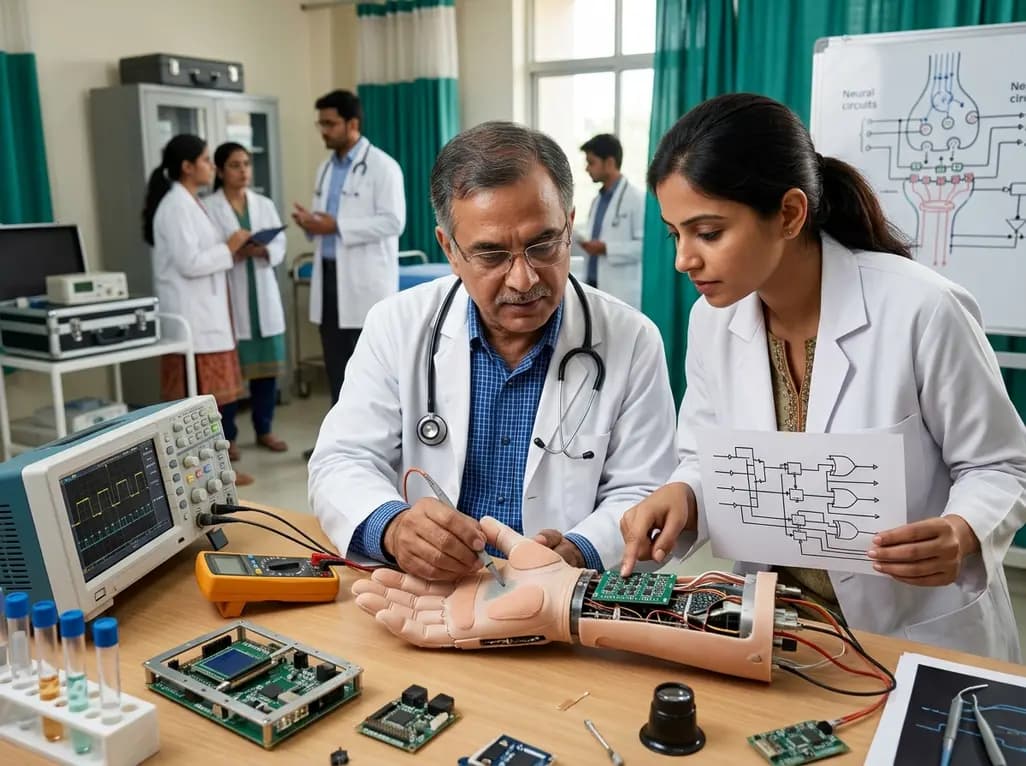
Researchers have engineered an artificial sensory-pain integrated receptor using a multi-threshold organic synaptic transistor. The system distinguishes benign touch from noxious stimuli, enabling safer, more responsive prosthetic limbs with built-in memory and simplified hardware architecture.
Today
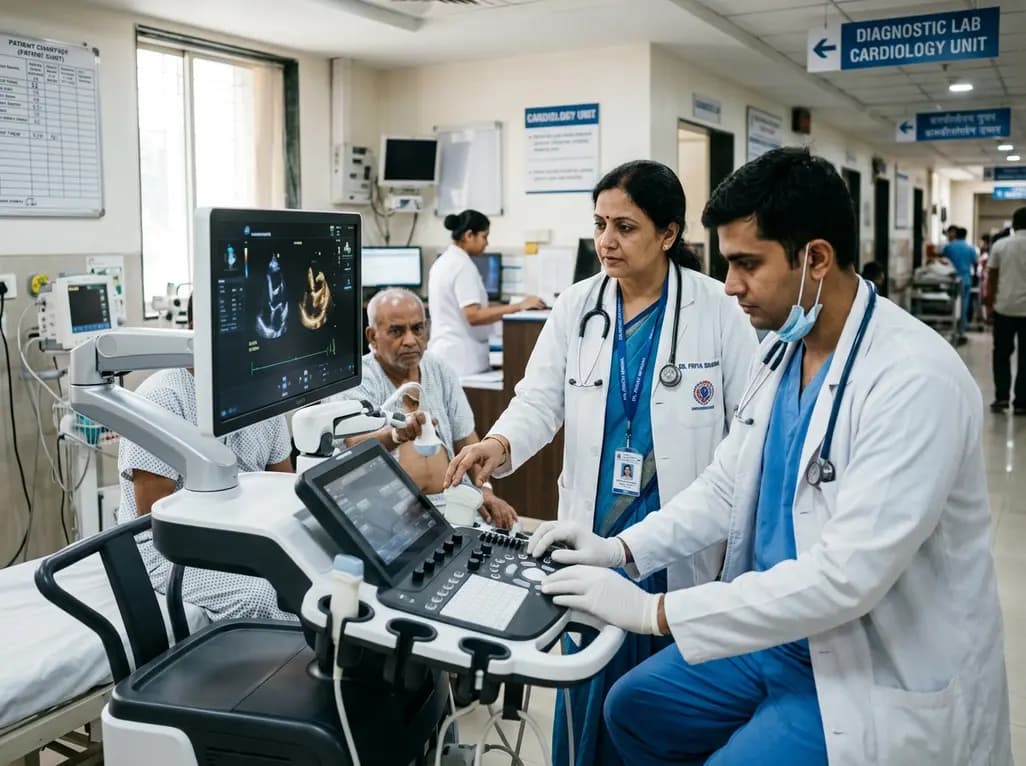
Medical robotics is transitioning beyond operative suites into diagnostics, cardiology, and endocrinology. Explore how innovations in tele-robotics, AI integration, and nanomedicine are overcoming geographical barriers and transforming precision healthcare delivery across India's evolving disease landscape.
Today
