.webp&w=384&q=75)

Loading, please wait...
Loading, please wait...

Imidacloprid is a ubiquitous neonicotinoid insecticide that poses significant environmental and clinical challenges due to its persistence. In India, where agrochemical exposure is a common emergency, imidacloprid forensic toxicology has become essential for identifying the origins of toxic substances. Traditional concentration-based methods often fail to distinguish between different commercial sources. However, a recent study has demonstrated that high-resolution mass spectrometry can provide a unique isotopic fingerprint for this chemical.
Researchers explored electrospray ionization Orbitrap isotope ratio mass spectrometry (IRMS) to analyze carbon, nitrogen, and chlorine isotopologue ratios at natural abundance. This approach allowed the team to distinguish between seven different commercial sources of imidacloprid. Moreover, by using principal component analysis (PCA), scientists could exploit an expanded set of isotopic variables to maximize manufacturer discrimination. Such precise identification is vital for forensic investigations involving pesticide misuse or environmental contamination.
The study also shed light on the degradation of imidacloprid through alkaline hydrolysis. By measuring carbon and nitrogen fractionation, researchers confirmed that the primary pathway involves an initial hydroxyl (OH) attack at the nitroimine carbon. Understanding these transformation mechanisms is critical for predicting how the chemical persists in soil and water. Consequently, this technology can elucidate complex pathways in analytes that were previously considered analytically challenging.
For healthcare providers in India, these developments represent a significant step forward in forensic medicine. While clinical management of poisoning remains largely supportive, the ability to trace chemical fingerprints enhances regulatory oversight. Furthermore, it aids in the discovery of contamination patterns in rural agricultural belts. Therefore, integrating advanced MS/MS data into forensic protocols could revolutionize how we monitor agrochemical safety and public health risks.
Orbitrap IRMS provides isotopic fingerprints by measuring stable isotope ratios of elements like carbon and nitrogen. This allows forensic experts to trace a chemical back to its specific manufacturer or source, even when concentrations are low.
Imidacloprid is an emerging cause of poisoning in India, often replacing older organophosphates. It can lead to severe complications such as seizures, respiratory failure, and metabolic acidosis, requiring vigilant monitoring and critical care.
Disclaimer: This content is for informational and educational purposes only. It does not constitute medical advice or a professional forensic opinion. Refer to the latest local and national guidelines for clinical practice.
References
Niemann F et al. Toward Molecular Forensics of Agrochemicals with Orbitrap IRMS: Isotopic Fingerprints of Imidacloprid Sources and Elucidating Hydrolysis. J Am Soc Mass Spectrom. 2026 Apr 08. doi: 10.1021/jasms.5c00444. PMID: 41950525.
Mundhe SA, Birajdar SV, Chavan SS, Pawar NR. Imidacloprid poisoning: an emerging cause of potentially fatal poisoning. Indian J Crit Care Med. 2017;21(11):786-788.
Maurer HH. High-resolution mass spectrometry in toxicology: current status and future perspectives. Arch Toxicol. 2016;90(9):2161-2172.

Read summarized clinical updates, watch expert medical content, and earn CME certifications right from your smartphone.
Open your smartphone camera to scan and install.





Researchers have developed Orbitrap IRMS isotopic fingerprinting to trace imidacloprid sources, significantly advancing forensic toxicology and chemical saf...
6 months ago
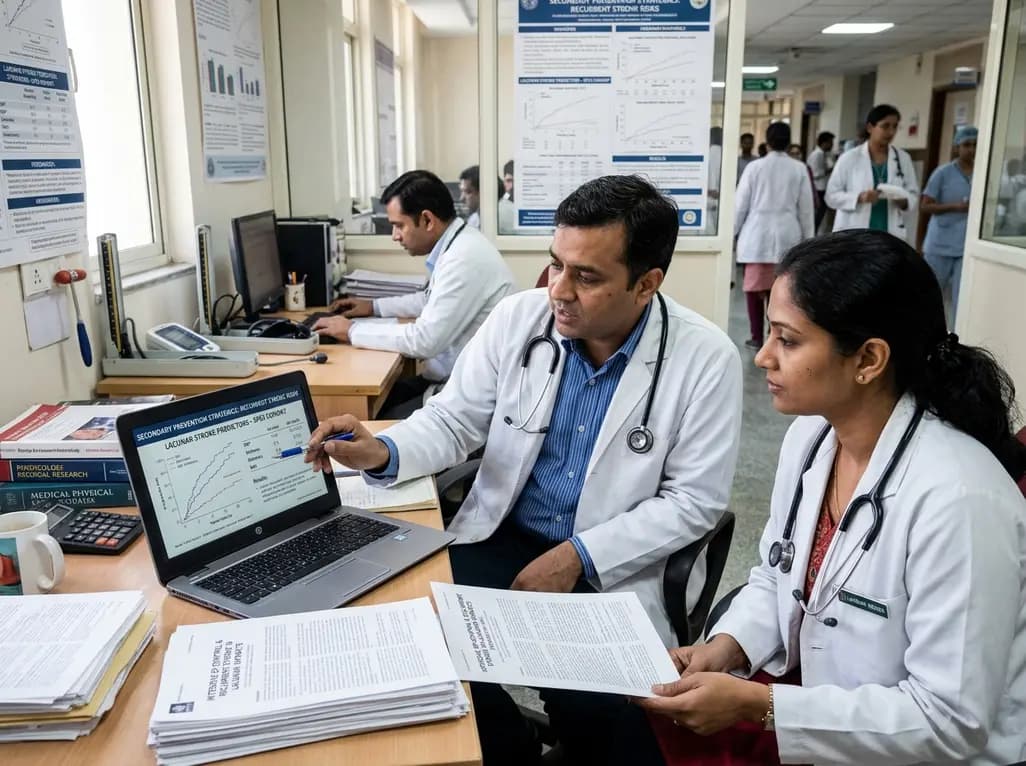
Explore vital recurrent stroke predictors in lacunar stroke patients managed with intensive blood pressure lowering. This analysis examines trial findings from SPS3 to uncover residual vascular risks, metabolic factors, and targeted secondary prevention strategies for high-risk neurological patients.
Today

Odisha has established India's first state-level clinical protocol specifically tailored for pregnant women with sickle cell disease. Developed with NHM and UNICEF, the framework provides structured antenatal screening, crisis mitigation, standardized referral pathways, and specialized interdisciplinary care.
Today

The Directorate General of Health Services directs Indian states to halt the hazardous reuse and reprocessing of single-use medical devices. Discover regulatory implications under the Drugs and Cosmetics Act, critical infection risks, legal liabilities, and operational changes required across clinical specialties.
Today

Mitochondria-targeted nanoparticles self-assembled from EGCG and L-glutamic acid effectively restore mitochondrial homeostasis, suppress synovial inflammation, and attenuate chondrocyte senescence in osteoarthritis, offering a promising disease-modifying nanotherapy.
Today

India is advancing preventive healthcare by integrating genomics, artificial intelligence, and quantum technologies. With the SANGAM programme sequencing one million Indian genomes, clinicians can unlock personalized therapies, detect cardiometabolic risks early, and curb the burden of diabetes and heart disease.
Today
