

Loading, please wait...
Loading, please wait...

Glioblastoma is the most lethal primary central nervous system malignancy in adults. Clinicians routinely assess molecular and anatomical markers to establish patient expectations. However, recent evidence shows that initial presentation fundamentally impacts IDH-wildtype glioblastoma prognosis. A retrospective cohort study by Donnini and colleagues demonstrates that neurocognitive and neuropsychiatric symptoms identify an adverse clinical phenotype. Patients presenting with cognitive decline or behavioral disturbances face poorer survival than those presenting with seizures or focal deficits. Therefore, recognizing symptom onset provides indispensable prognostic clarity.
Historically, neuro-oncologists have relied on molecular alterations, patient age, performance status, and surgical resection margins to estimate survival. Furthermore, subventricular zone involvement provides crucial anatomical insight regarding disease aggressiveness. In contrast, clinical mode of symptom onset has received limited scientific attention as an independent prognostic indicator.
Most patients with glioblastoma seek acute emergency care following sudden motor deficits, speech impairment, or epileptic seizures. However, nearly one-fifth of individuals present with insidious personality shifts, apathy, memory deficits, or executive dysfunction. Clinicians often misattribute these symptoms to primary psychiatric disorders, depression, or early dementia. Consequently, patients experiencing cognitive onset frequently endure diagnostic delays before undergoing brain magnetic resonance imaging. This delay allows infiltrative glioma cells to invade distributed neural pathways. Therefore, evaluating baseline presentation mode addresses an essential gap in neuro-oncology risk modeling.
To investigate this clinical association, researchers performed a single-center retrospective cohort analysis evaluating 165 adults with IDH-wildtype glioblastoma. Every included patient underwent standard postoperative chemoradiation according to the Stupp protocol. The investigators extracted presenting symptoms from baseline medical records, classifying cases into neurocognitive or neuropsychiatric onset versus all other clinical presentations.
Overall, 31 patients (18.8 percent) exhibited a neurocognitive or neuropsychiatric onset, presenting with apathy, confusion, memory impairment, or personality disturbances. Meanwhile, the remaining 134 patients presented with typical features such as focal deficits, seizures, or headaches. The primary study endpoint was progression-free survival, while overall survival served as the secondary endpoint. Through this systematic stratification, the investigators aimed to determine whether cognitive presentations signify an aggressive biological phenotype or merely reflect anatomical tumor location.
Unadjusted survival analyses initially revealed minimal divergence between the two cohorts. Specifically, unadjusted progression-free survival showed an insignificant trend toward separation, while unadjusted overall survival curves did not differ statistically. These preliminary comparisons initially suggested that presentation mode lacked prognostic independence.
However, multivariable Cox proportional hazards modeling revealed a dramatically different picture after adjusting for prespecified confounding variables. Researchers adjusted for age, baseline Karnofsky Performance Status, extent of resection, MGMT promoter methylation, and subventricular zone contact. Following multivariable adjustment, neurocognitive or neuropsychiatric presentation was independently associated with significantly shorter progression-free survival (hazard ratio 1.77, 95% confidence interval 1.13 to 2.77, p equals 0.012). Furthermore, multivariable overall survival demonstrated a concordant, statistically significant reduction (hazard ratio 1.71, 95% confidence interval 1.02 to 2.87, p equals 0.041). Sensitivity analyses confirmed these robust associations. Thus, multivariable modeling demonstrates that cognitive onset reflects an intrinsically worse disease course.
Two primary mechanisms likely explain why neurocognitive onset portends a poorer clinical outcome. First, psychiatric and cognitive symptoms typically require extensive disruption of widely distributed cerebral networks. Unlike focal weakness originating from a discrete cortical lesion, complex cognition depends on interconnected bilateral circuits. Consequently, cognitive impairment indicates diffuse microstructural infiltration and white matter tract disruption that conventional neuroimaging may fail to capture initially.
Second, symptom characteristics substantially influence diagnostic timelines. While sudden focal deficits and seizures prompt rapid neuroimaging, subtle cognitive or mood disturbances often prompt protracted outpatient psychiatric or general medical consultations. In India and worldwide, these diagnostic delays permit uninterrupted tumor proliferation and deeper subcortical invasion. When neuro-oncologists eventually establish the diagnosis, extensive parenchymal infiltration impairs the efficacy of subsequent surgical resection and chemoradiotherapy. Therefore, widespread neural network disruption combined with delayed intervention creates an unfavorable biological trajectory for these vulnerable patients.
These retrospective findings offer vital lessons for physicians managing suspected or confirmed central nervous system tumors. First, general practitioners and neurologists must maintain vigilance when assessing older adults with new-onset psychiatric symptoms or unexplained cognitive decline. Prompt neuroimaging prevents costly diagnostic delays and facilitates early neurosurgical referral. Furthermore, multidisciplinary tumor boards should incorporate presenting symptom profiles into personalized prognostic assessments alongside molecular pathology.
Additionally, identifying high-risk presentation phenotypes allows clinical teams to deploy specialized supportive interventions earlier. Cognitive decline compromises treatment adherence, rehabilitation participation, and patient independence. Consequently, integrating early neurocognitive rehabilitation, psycho-oncology, and speech therapy can help preserve functional performance during chemoradiotherapy. Moreover, clinical investigators designing high-grade glioma trials should consider stratifying cohorts by presentation mode to prevent survival confounding. Although prospective multicenter validation remains necessary, mode of onset represents an easily accessible clinical marker that enhances personalized patient counseling and clinical decision-making.
Patients with IDH-wildtype glioblastoma presenting with neurocognitive or neuropsychiatric symptoms experience significantly shorter progression-free survival and overall survival compared to other presentations. Multivariable analyses demonstrate a seventy-seven percent higher risk of disease progression and a seventy-one percent higher risk of mortality, even after adjusting for age, resection extent, and MGMT status.
Cognitive and behavioral presentations usually reflect widespread disruption of complex, bilateral neural networks rather than localized cortical compression. Additionally, subtle neuropsychiatric symptoms frequently mimic mood disorders or progressive dementia, leading to notable diagnostic delays. Consequently, tumors often advance further into critical deep brain structures before clinical diagnosis and surgical intervention occur.
Physicians must maintain high clinical suspicion and promptly order brain magnetic resonance imaging when adults develop acute or progressive cognitive, mood, or personality changes. Furthermore, oncologists identifying this higher-risk phenotype should initiate early neurocognitive rehabilitation, integrate multidisciplinary supportive care, and closely monitor patients for rapid disease recurrence during and after adjuvant chemoradiotherapy.
Disclaimer: This content is for informational and educational purposes only. It does not constitute medical advice and should not be used as a substitute for professional healthcare evaluation, diagnosis, or treatment. Always consult qualified healthcare providers with questions about medical conditions or treatment plans. Refer to the latest local and national guidelines for clinical practice.
References

Read summarized clinical updates, watch expert medical content, and earn CME certifications right from your smartphone.
Open your smartphone camera to scan and install.





A retrospective study reveals that IDH-wildtype glioblastoma patients presenting with neurocognitive or neuropsychiatric symptoms face significantly shorter PFS and OS. This adverse phenotype underscores the prognostic role of clinical presentation and the urgent need to minimize diagnostic delays.
Today

Standardizing continuous physiological waveforms in EHRs has long challenged clinical teams. The novel TIDE framework leverages HL7 FHIR R4 to decouple queryable clinical metadata from massive raw signal repositories, unlocking scalable telemetry exchange for bedside care and predictive research.
Today

A secondary analysis of the MOMS clinical trial reveals that infant sex does not influence neonatal opioid withdrawal syndrome severity in buprenorphine-exposed newborns. Maternal co-exposures and clinical factors drive outcomes, highlighting the need for objective assessment and supportive breastfeeding.
Today
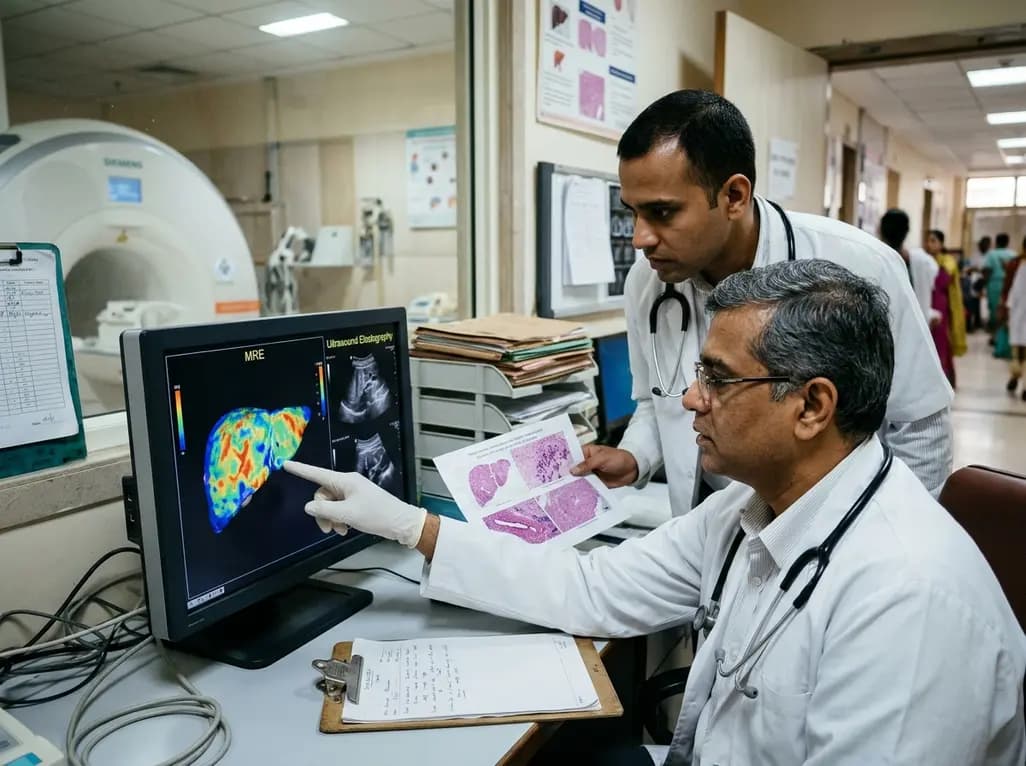
A comparative study reveals magnetic resonance elastography outperforms ultrasound elastography in assessing liver fibrosis in Fontan-associated liver disease, demonstrating stronger histological agreement and superior discrimination.
Today

A systematic review and meta-analysis highlights the substantial impact of plyometric jump training on jump performance, reactive strength, and landing kinematics in female team-sport athletes, providing evidence-based programming guidelines for sports medicine and orthopedics.
Today

A comprehensive review of the role of growth hormone in diabetic kidney disease and podocytopathy. Learn how elevated GH activates ZEB2, Notch, and TGF-beta1, driving podocyte loss and glomerulosclerosis, and explore novel targeted therapeutic approaches.
Today
