.webp&w=384&q=75)

Loading, please wait...
Loading, please wait...
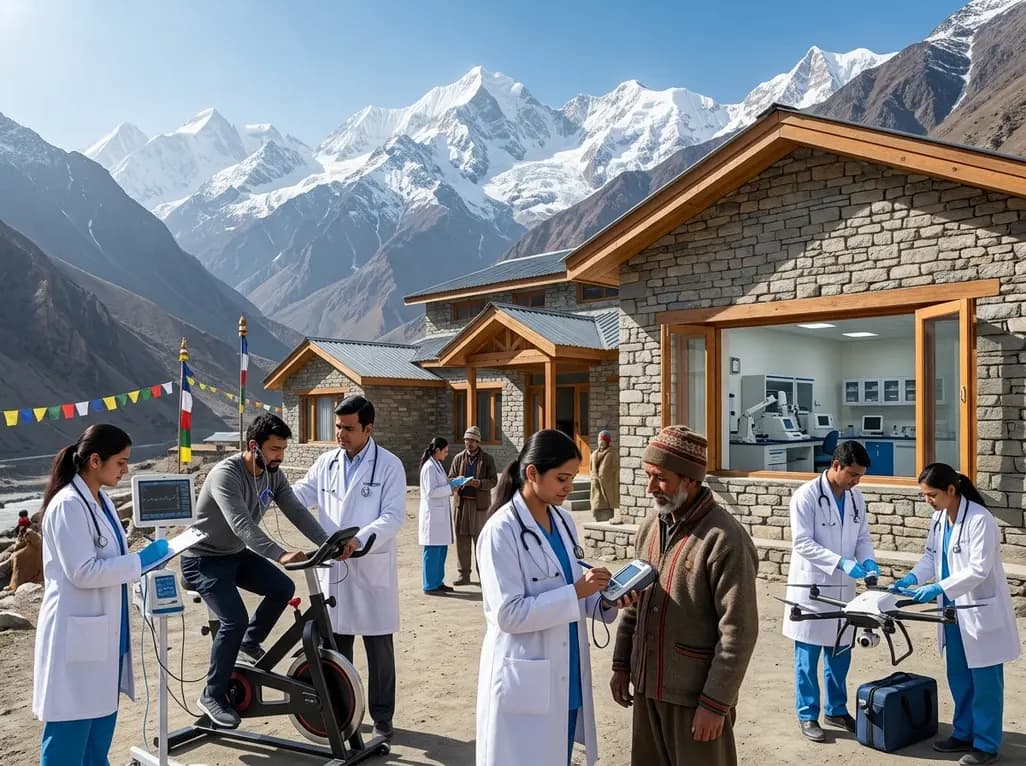
Union Health Minister JP Nadda is set to lay the foundation stone for a pioneering medical facility in India. Specifically, on July 11, 2026, he will inaugurate the construction of the ICMR Centre for High Altitude Medicine and Public Health Research. This establishment represents a massive leap forward for mountainous healthcare. Consequently, clinicians and researchers will gain unprecedented insights into how extreme elevations affect the human body. Furthermore, the specialized hub aims to revolutionize rural healthcare delivery in these challenging terrains.
The Indian Council of Medical Research previously operated a small field station at Keylong. However, the rapidly changing healthcare landscape demanded a more comprehensive infrastructure. Therefore, the government decided to upgrade this modest station into a full-fledged, multidisciplinary research hub. This transition represents a major milestone for the country's medical history. Clinicians have long struggled with limited data regarding high-altitude physiology in local populations. Consequently, this new development directly addresses those long-standing information gaps. The Himalayan ecosystem presents several severe public health challenges. For instance, low oxygen levels, freezing temperatures, and rugged terrain directly threaten human health. Additionally, these extreme factors severely restrict standard healthcare access. Through this upgraded facility, medical researchers can now design targeted interventions. They will study how mountain communities adapt to extreme stress. Ultimately, the collected data will support the creation of specialized clinical protocols. This scientific evidence will directly improve the quality of care for mountain residents. Medical professionals across the nation will benefit from these practical insights.
The primary focus of this new establishment will be high altitude medicine. Specifically, researchers will investigate the precise mechanisms of human acclimatization. Doctors often observe acute mountain sickness, high-altitude pulmonary edema, and cerebral edema in travelers. However, clinicians currently lack comprehensive guidelines tailored to the Indian population. Therefore, this center will focus on developing evidence-based therapeutic standards. Moreover, the broad research mandate covers non-communicable and infectious diseases. Scientists will also investigate maternal and child health alongside nutritional deficiencies. In addition, mental health challenges in isolated environments will receive significant attention. Extreme environments often exacerbate psychiatric conditions among residents. Thus, local practitioners require specialized diagnostic and therapeutic tools. The facility will also study occupational hazards facing high-altitude workers. Ultimately, these clinical insights will refine emergency response strategies. By generating solid medical evidence, the center will empower physicians to provide safer care. This focused approach will undoubtedly reduce mortality rates associated with elevation illnesses. Consequently, India will establish itself as a global leader in high-altitude research.
Climate change increasingly threatens the fragile Himalayan ecosystem. Consequently, emerging diseases are spreading into previously unaffected high-altitude regions. This geographic shift presents novel diagnostic challenges for local medical teams. Therefore, the Keylong center will conduct real-time surveillance of climate-sensitive pathogens. Furthermore, the geographic location of this research facility is strategically critical. Lahaul & Spiti features a high concentration of tribal populations. These indigenous communities experience unique genetic, environmental, and dietary influences. However, historical epidemiological data on these groups remains remarkably sparse. By establishing this center, the Indian government ensures year-round access to these remote populations. Clinicians can subsequently initiate long-term cohort studies. These studies will analyze the direct environmental determinants of tribal health. In addition, researchers will develop targeted disaster medicine frameworks. Landslides, avalanches, and extreme cold often isolate these high-altitude settlements. As a result, immediate disaster preparedness is absolutely vital for saving lives. Ultimately, this research will shape national policies regarding tribal welfare. The generated data will help design resilient, climate-adaptive medical infrastructures.
Modern medical technology offers unique opportunities to bridge geographic divides. Specifically, the new center will aggressively integrate digital health platforms. Telemedicine will play a central role in connecting remote mountain clinics with urban tertiary hospitals. Consequently, patients in isolated valleys can receive expert consultations without traveling for days. Moreover, the facility will champion drone-enabled healthcare logistics. Transporting essential medicines and diagnostic samples across mountainous terrains is historically difficult. Indeed, recent drone trials in Lahaul & Spiti successfully demonstrated rapid delivery of critical supplies. This technology bypasses road blockages that seasonal snow and landslides create. Therefore, emergency medications can reach vulnerable patients in a matter of minutes. Additionally, real-time public health surveillance will monitor disease outbreaks. These technological tools will substantially improve health outcomes in hard-to-reach areas. Clinicians can manage emergencies with greater efficiency and precision. Ultimately, these innovations will serve as a model for other remote regions globally. Technology will ensure that geographical isolation no longer dictates healthcare quality.
To build a robust ecosystem, the center will establish powerful institutional partnerships. Specifically, it will collaborate with the Armed Forces Medical Services. The military possesses extensive practical experience in managing troops at high elevations. Therefore, combining military experience with civilian academic research will yield highly practical medical strategies. Furthermore, the Defence Research and Development Organisation will partner with the new center. This collaboration will enhance the development of protective gear and altitude-assistive technologies. In addition, the Himachal Pradesh government will provide active operational and administrative support. Academic institutions within India and abroad will also join this research network. Consequently, Keylong will emerge as a prominent international hub for translational medicine. This joint effort aligns perfectly with national developmental priorities. For instance, it supports tribal health initiatives and disaster preparedness goals. Ultimately, the center will generate valuable data that feeds directly into global research networks. By sharing these scientific advancements, India will contribute significantly to global health security. The center will showcase how targeted research solves local and international health problems.
Q1: What are the primary medical conditions that the new ICMR center will investigate?
The facility will focus extensively on high-altitude illnesses like acute mountain sickness, high-altitude pulmonary edema, and high-altitude cerebral edema. Furthermore, researchers will study climate-sensitive infectious diseases, chronic non-communicable conditions, and maternal and child health issues. In addition, studies will explore nutritional deficiencies, psychiatric wellbeing in extreme environments, and environmental health determinants affecting these tribal populations in strategically vital border regions.
Q2: How will technology improve healthcare delivery in the remote Lahaul and Spiti region?
The center will integrate digital health platforms and telemedicine to connect remote local clinics with specialized urban medical experts. Additionally, it will utilize drone-enabled healthcare logistics to deliver critical medicines and retrieve diagnostic samples rapidly across rugged terrains. Consequently, these innovative technologies will overcome geographic isolation, bypass severe road blockages, and ensure timely medical interventions during critical environmental emergency situations.
Q3: Who are the key institutional collaborators for this high-altitude medical research project?
The Indian Council of Medical Research will actively collaborate with several prestigious partners to build a cohesive translational research ecosystem. Specifically, it will partner with the Armed Forces Medical Services and the Defence Research and Development Organisation. Furthermore, the Himachal Pradesh state government, alongside multiple prominent national and international academic institutions, will provide extensive administrative and scientific support to ensure long-term clinical research success.
Disclaimer: This content is for informational and educational purposes only. It does not constitute medical advice or replace professional judgment. Refer to the latest local and national guidelines for clinical practice.
References

Read summarized clinical updates, watch expert medical content, and earn CME certifications right from your smartphone.
Open your smartphone camera to scan and install.





India takes a monumental step in healthcare with the establishment of its first dedicated ICMR research centre in Keylong, Himachal Pradesh. The facility will address crucial clinical questions regarding altitude adaptation, tribal health, climate change, and remote delivery systems using advanced technologies.
3 months ago
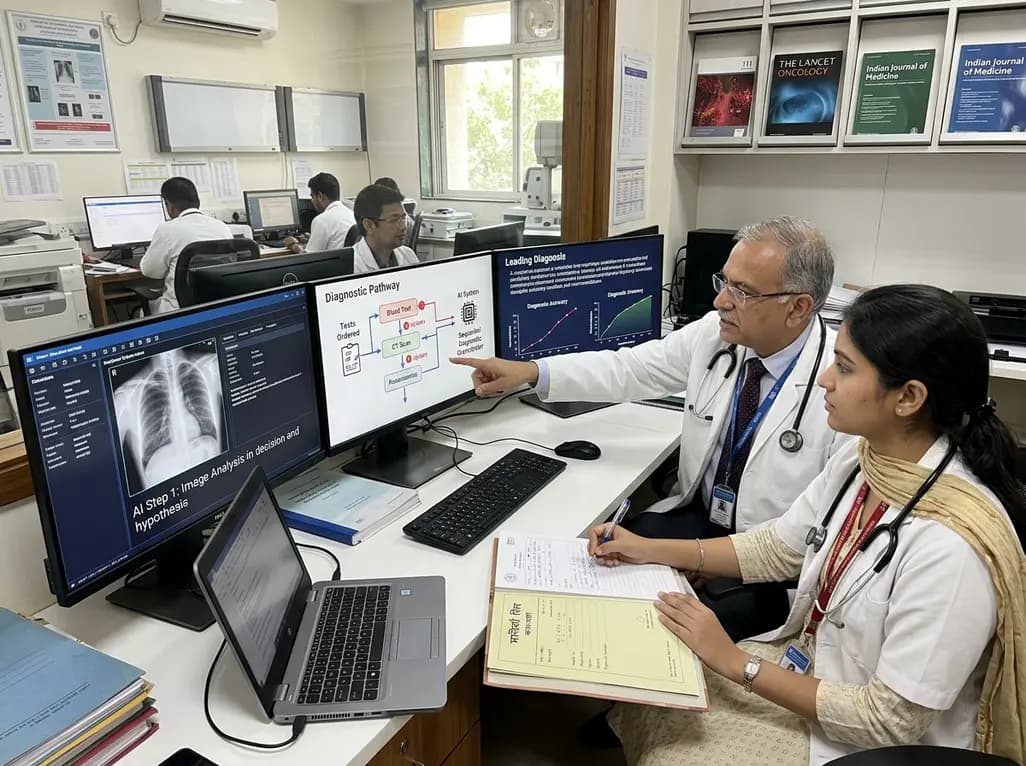
A breakthrough peer-reviewed study demonstrates that a sequential AI diagnosis system can mirror real-world clinical reasoning. By ordering stepwise tests and updating hypotheses dynamically, this multi-agent orchestrator achieved superior diagnostic accuracy while reducing investigative costs.
Today

A prenatal case highlights severe glutaric acidemia type II presenting as bilateral hyperechoic cystic kidneys at 18 weeks. Whole-exome sequencing revealed a novel homozygous ETFDH frameshift variant, demonstrating the power of rapid genetic testing in fetal renal anomalies.
Today

Review how tailored exercise programs benefit frail older patients with heart failure. Explore pathophysiological mechanisms, individualized training prescriptions, and strategies to overcome adherence barriers in clinical practice.
Yesterday

This comparative study evaluates posterior labral tears with and without glenohumeral instability, highlighting distinct demographic patterns, MRI underestimation in stable shoulders, and successful arthroscopic repair outcomes.
Yesterday

A clinical study demonstrates that early intervention with tocilizumab, either as monotherapy or bridged with corticosteroids, achieves significant proptosis reduction and resolves active inflammation in treatment-naive thyroid eye disease.
Yesterday
