.webp&w=384&q=75)

Loading, please wait...
Loading, please wait...
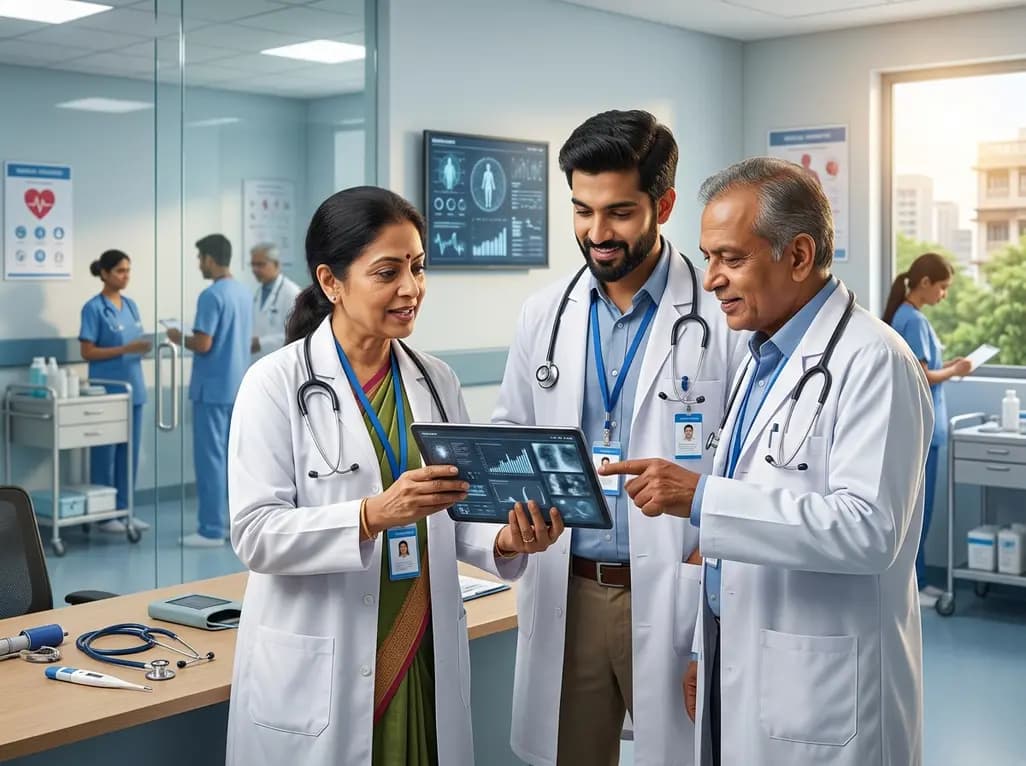
India is currently undergoing a massive healthcare transformation, focusing heavily on early detection and preventative medicine. Union Health Minister Jagat Prakash Nadda recently highlighted these efforts, revealing that the country has achieved unprecedented milestones in public health. Specifically, the government's flagship primary care network has emerged as a cornerstone of this strategy. Through these initiatives, the nation is actively addressing the rising burden of non-communicable diseases (NCDs) across diverse demographics. A key highlight of this program is the nationwide hypertension screening India initiative. This initiative has already evaluated hundreds of millions of citizens. By bringing diagnostic services directly to local communities, the government aims to reduce cardiovascular morbidity. Consequently, these systematic screenings are helping to shift the clinical paradigm from late-stage treatment to early intervention. As a result, millions of previously undiagnosed individuals are now receiving timely therapeutic care.
To implement this massive preventive strategy, India utilizes over 1.85 lakh Ayushman Arogya Mandirs (AAM). These grassroots centers serve as the primary point of clinical contact. Health Minister Nadda announced that more than 42 crore individuals have undergone screening for high blood pressure. Consequently, this initiative led to the successful diagnosis of over 7.3 crore hypertension cases. This represents a critical step forward, as hypertension often remains a silent killer. Therefore, identifying these patients early prevents severe complications like stroke and chronic kidney disease. Furthermore, the health ministry works to ensure that diagnosed patients gain immediate access to free essential medicines. Local healthcare workers also provide continuous counseling regarding lifestyle modifications, such as reducing sodium intake. Ultimately, these integrated services strengthen the national healthcare delivery framework significantly. As a result, the burden on tertiary care facilities will gradually decrease.
In addition to hypertension, the Ayushman Arogya Mandirs focus on other prominent non-communicable diseases. For instance, the government has screened over 42 crore individuals for diabetes. This massive effort resulted in the detection of nearly 5 crore cases of elevated blood glucose. Similarly, oncology screening has received unprecedented priority to ensure early detection. More than 35 crore people underwent screening for oral cancer, which led to the diagnosis of 2.3 lakh cases. For women's health, breast cancer screenings reached over 16 crore beneficiaries, identifying more than 86,000 cases. Moreover, over 9 crore women received screenings for cervical cancer, resulting in approximately one lakh diagnoses. Early detection in these cases is highly crucial because it dramatically improves survival rates. Consequently, patients can access less invasive treatment options when clinicians detect cancers early.
To support this massive preventive expansion, India is simultaneously enhancing its medical education ecosystem. Health Minister Nadda emphasized that the government is focusing on both hardware and software. Specifically, the "hardware" refers to physical clinical infrastructure, while the "software" denotes the academic policies and training environment. The country now boasts 818 medical colleges, a significant increase from 387 institutions. Consequently, undergraduate medical seats have expanded from approximately 50,000 to over 1.2 lakh. Postgraduate seats have also risen from 30,000 to more than 80,000. Furthermore, the government aims to add 75,000 MBBS seats over five years. To date, authorities have already created nearly 25,000 of these undergraduate seats. In addition, the country now operates 23 operational AIIMS facilities, compared to just one at the turn of the century. This rapid expansion ensures a steady supply of specialist doctors.
Strong clinical leadership and medical ethics are essential to sustain these public health achievements. During his address at the Institute of Liver and Biliary Sciences (ILBS), Nadda urged graduating physicians to maintain compassion. Super-specialty training comes with a profound responsibility to serve the community and strengthen the national health framework. In addition, the minister praised ILBS for raising awareness about fatty liver disease. He noted that the institute plays a vital role in advancing hepatology research and patient care. Consequently, the government has mandated ILBS to design a national screening framework for liver diseases. This framework will soon integrate with existing services at Ayushman Arogya Mandirs. Therefore, primary care centers will eventually screen for chronic liver conditions alongside diabetes and hypertension. Such collaboration between premier tertiary institutes and primary health centers represents a holistic approach to medicine.
The rapid rise of non-communicable diseases highlights India's ongoing epidemiological transition. Traditionally, public health policies focused primarily on controlling infectious diseases like tuberculosis, polio, and malaria. However, lifestyle-driven chronic conditions now account for a major share of mortality. The establishment of over 1.85 lakh Ayushman Arogya Mandirs directly addresses this modern health crisis. These centers act as the first contact point, offering preventive, promotive, and curative services. Moreover, they employ dedicated frontline workers, including ASHA workers, to track patient outcomes at the community level. This grassroots approach ensures that rural and underserved populations receive equal health opportunities. By utilizing digital health records, clinicians can monitor patient compliance and treatment efficacy remotely. Consequently, the government can implement data-driven policies to manage regional disease clusters, ensuring that preventive healthcare becomes a sustainable reality.
Q1: What are the main objectives of the screening programs conducted at Ayushman Arogya Mandirs?
The primary objective is to facilitate the early detection of major non-communicable diseases, including hypertension, diabetes, and common cancers like oral, breast, and cervical cancers. By screening individuals over thirty years of age at the community level, these centers enable timely clinical interventions. This proactive approach significantly reduces long-term morbidity, lowers healthcare expenses, and decreases the burden of chronic diseases on tertiary hospitals.
Q2: How has India expanded its medical education capacity to meet the growing healthcare demands?
India has substantially increased its medical infrastructure by expanding the number of medical colleges from 387 to 818. Consequently, undergraduate MBBS seats have grown to over 1.2 lakh, and postgraduate seats have exceeded 80,000. Additionally, the government has established twenty-three operational AIIMS institutions. This extensive growth ensures a continuous supply of skilled medical professionals and specialists to manage healthcare delivery across the country.
Q3: Why is integrating liver disease screening into primary healthcare centers considered crucial?
Integrating liver screening helps address the rising prevalence of chronic liver conditions, particularly non-alcoholic fatty liver disease. By collaborating with specialized institutions like ILBS, the government aims to establish standardized protocols at Ayushman Arogya Mandirs. This integration ensures that patients receive early diagnosis and essential lifestyle counseling at the grassroots level. Consequently, early management prevents progression to severe conditions like cirrhosis or liver failure.
Disclaimer: This content is for informational and educational purposes only. It does not constitute medical advice or replace professional judgment. Refer to the latest local and national guidelines for clinical practice.
References

Read summarized clinical updates, watch expert medical content, and earn CME certifications right from your smartphone.
Open your smartphone camera to scan and install.





Discover how India's preventive healthcare ecosystem is expanding. Union Health Minister J.P. Nadda highlighted that over 42 crore citizens have been screened for hypertension and diabetes through Ayushman Arogya Mandirs, driving early diagnosis of chronic diseases alongside major expansions in medical seats.
3 months ago

A breakthrough study evaluated H5N1 transmission efficiency across mammalian isolates. Researchers discovered that human-derived D1.1 harboring the PB2 D701N mutation spread efficiently in ferrets, unlike strains carrying PB2 E627K. This finding highlights critical genetic markers for zoonotic surveillance.
Today

A comparative cohort study evaluates vNOTES vs TLH hysterectomy for benign conditions, demonstrating shorter operative duration, faster return to daily activities, and equivalent female sexual function scores without increased dyspareunia.
Today

Review how tailored exercise programs benefit frail older patients with heart failure. Explore pathophysiological mechanisms, individualized training prescriptions, and strategies to overcome adherence barriers in clinical practice.
Yesterday

This comparative study evaluates posterior labral tears with and without glenohumeral instability, highlighting distinct demographic patterns, MRI underestimation in stable shoulders, and successful arthroscopic repair outcomes.
Yesterday

A clinical study demonstrates that early intervention with tocilizumab, either as monotherapy or bridged with corticosteroids, achieves significant proptosis reduction and resolves active inflammation in treatment-naive thyroid eye disease.
Today
