.webp&w=384&q=75)

Loading, please wait...
Loading, please wait...
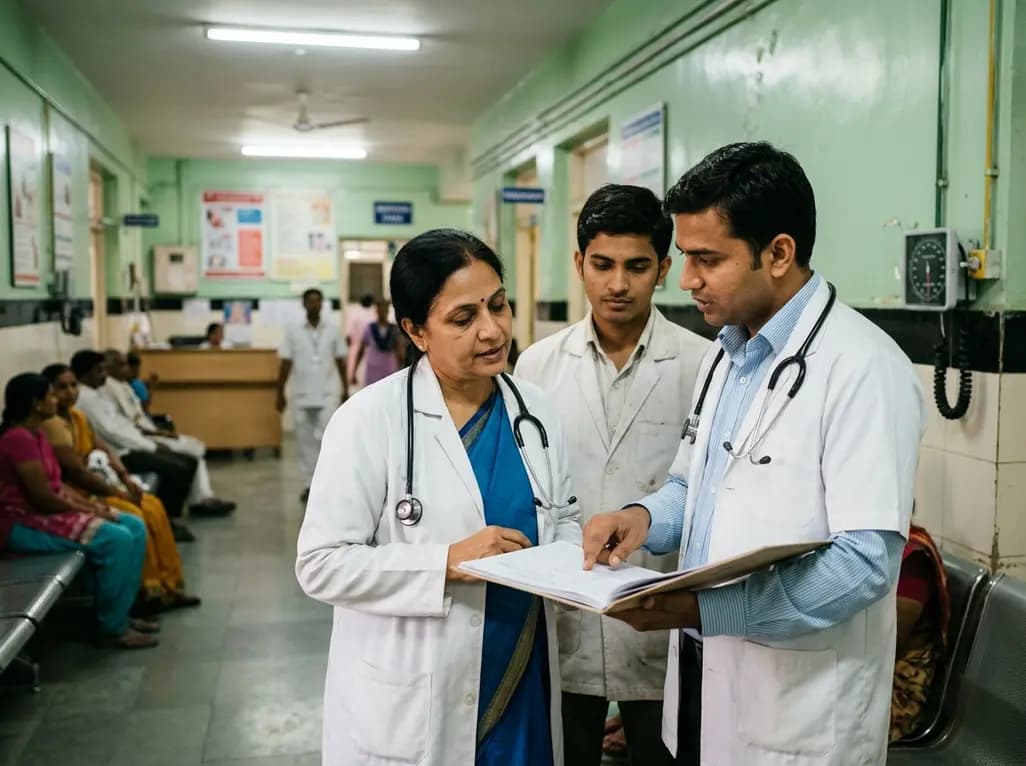
India is currently undergoing a massive transformation in its approach to public health and preventive medicine. Under the leadership of Union Health Minister Jagat Prakash Nadda, the country has achieved historic milestones in hypertension screening India initiatives, targeting non-communicable diseases at an unprecedented scale.
In recent years, non-communicable diseases have emerged as a primary threat to public health across India. Consequently, the Ministry of Health and Family Welfare launched a massive population-based screening initiative to combat these silent killers. Recent statistics revealed by Union Health Minister JP Nadda indicate that health workers have screened more than 42 crore individuals for hypertension nationwide. This extensive effort has successfully led to over 7.3 crore diagnoses. Consequently, patients can now seek timely clinical interventions. Furthermore, identifying these individuals at an early stage prevents devastating cardiovascular events such as myocardial infarctions and strokes. By managing blood pressure levels early, the healthcare system significantly reduces the long-term burden on tertiary care hospitals. Additionally, this nationwide program highlights the critical need for regular blood pressure monitoring among adult populations. Medical practitioners must continue to emphasize routine screenings in their clinical practices to maintain this momentum. Ultimately, these massive numbers demonstrate the government's commitment to building a robust preventive framework. Early detection remains the most effective tool to mitigate uncontrolled hypertension across diverse demographics.
The successful implementation of this screening drive relies heavily on India's decentralized primary healthcare network. Specifically, over 1.85 lakh Ayushman Arogya Mandirs (AAMs) serve as the primary operational hubs for these mass health screenings. These localized wellness centers have effectively brought essential diagnostic services directly to the doorsteps of rural and underserved populations. Consequently, millions of previously underserved citizens can now receive free, high-quality screenings for multiple chronic conditions. Furthermore, these centers do not merely focus on diagnosis; they also ensure continuity of care through teleconsultations and consistent medication distribution. Because of this integration, patients diagnosed with hypertension can immediately begin evidence-based treatment regimens without traveling long distances. Moreover, the presence of trained community health officers and auxiliary nurse midwives at each AAM ensures culturally competent counseling on lifestyle modifications. This grassroots infrastructure has successfully bridged the historical gap between rural communities and specialized medical institutions. Therefore, transforming these health centers represents a monumental milestone. This shift continues to drive systemic change.
While hypertension screening remains a core pillar, the national screening framework also targets other prevalent non-communicable diseases. For instance, the diagnostic drive has screened more than 42 crore individuals for diabetes. This massive effort detected approximately 5 crore cases. Similarly, oncology screenings have covered over 35 crore people for oral cancer. This program has successfully detected over 2.3 lakh cases. Additionally, healthcare professionals focused heavily on women's health. They reached over 16 crore female beneficiaries for breast cancer screenings. This specific intervention successfully identified more than 86,000 cases of breast malignancies at treatable stages. Additionally, cervical cancer screenings have reached over 9 crore women, leading to the early diagnosis of nearly one lakh cases. These statistics underscore how timely, population-wide screenings can alter the natural history of deadly diseases. Consequently, patients who receive an early diagnosis can access less invasive treatment options, leading to improved survival rates. Healthcare providers across India are now utilizing these clinical outcomes to advocate for routine health evaluations.
To support this expanding ecosystem, the government has focused heavily on expanding India's clinical workforce and educational capacity. During the 10th Convocation of the Institute of Liver and Biliary Sciences (ILBS), Minister Nadda highlighted these extraordinary achievements. Currently, India boasts 818 medical colleges, marking a massive increase from the previous count of 387 institutions. Consequently, undergraduate medical seats have expanded from approximately 50,000 to over 1.2 lakh seats nationwide. Similarly, postgraduate medical seats have witnessed substantial growth, rising from 30,000 to more than 80,000 specialty training positions. Furthermore, the administration remains actively committed to its ambitious goal of adding 75,000 MBBS seats over five years. The government has successfully created nearly 25,000 of these undergraduate seats, demonstrating rapid execution of policy. Additionally, the establishment of 23 functional All India Institutes of Medical Sciences (AIIMS) ensures tertiary healthcare access across various states. This massive educational expansion directly addresses the historical shortage of qualified medical professionals in rural areas. By producing more specialized doctors, the nation is preparing its healthcare workforce for future clinical demands.
The celebration of medical milestones at ILBS also brought critical focus to specialized fields like hepatology and gastroenterology. Minister Nadda highly praised the Institute of Liver and Biliary Sciences for its outstanding contributions to advanced clinical research. Specifically, the institute has played an invaluable role in elevating public awareness regarding non-alcoholic fatty liver disease (NAFLD). Because lifestyle factors heavily influence liver health, educating families about dietary choices and metabolic health has become crucial. Furthermore, the minister suggested that liver screening should eventually be integrated into broader national health screening initiatives. This integration would allow primary care providers to identify metabolic dysfunction-associated steatotic liver disease during routine wellness checks. Consequently, medical professionals could prevent advanced liver cirrhosis and hepatocellular carcinoma through timely lifestyle interventions and pharmacological management. Additionally, the training of super-specialists at ILBS ensures that India remains at the cutting edge of global medical science. By combining advanced clinical education with community outreach, the country is addressing liver diseases at both individual and population levels.
Q1: What is the primary objective of India's population-based screening program?
The program aims to achieve early detection, timely treatment, and effective management of major non-communicable diseases. Specifically, it targets conditions like hypertension, diabetes, and common cancers through the decentralized network of Ayushman Arogya Mandirs. By shifting the clinical focus from curative to preventive healthcare, the initiative strives to reduce overall cardiovascular mortality and prevent chronic organ damage.
Q2: How do Ayushman Arogya Mandirs support the hypertension screening India initiative?
Ayushman Arogya Mandirs serve as localized healthcare hubs that bring essential screening services directly to the community. Over 1.85 lakh of these centers provide free diagnostics, essential medicines, and routine blood pressure monitoring. Additionally, they facilitate immediate teleconsultations with specialized physicians for patients diagnosed with hypertension, ensuring that therapeutic interventions begin promptly without requiring long-distance travel.
Q3: How much has India's medical education capacity expanded recently?
India’s medical education capacity has grown significantly, with the number of medical colleges increasing from 387 to 818. Consequently, undergraduate MBBS seats have surged from 50,000 to over 1.2 lakh, while postgraduate seats have expanded to over 80,000. Furthermore, the country now operates 23 AIIMS institutions, which greatly enhances the availability of specialist training and tertiary care.
Disclaimer: This content is for informational and educational purposes only. It does not constitute medical advice or replace professional judgment. Refer to the latest local and national guidelines for clinical practice.
References

Read summarized clinical updates, watch expert medical content, and earn CME certifications right from your smartphone.
Open your smartphone camera to scan and install.





Union Health Minister JP Nadda revealed that India has screened over 42 crore citizens for hypertension and diabetes through Ayushman Arogya Mandirs. Learn how this massive preventive healthcare drive and expanding medical education are transforming patient outcomes and clinical training nationwide.
3 months ago

Novel diimide and hydrazone scaffolds, particularly compound #C4, synergistically reactivate latent HIV-1 when combined with JQ1 or PKC activators. Demonstrating donor-matched proviral transcription ex vivo and non-canonical signaling, these findings advance shock and kill strategies toward reservoir eradication.
Today

A comparative cohort study evaluates vNOTES vs TLH hysterectomy for benign conditions, demonstrating shorter operative duration, faster return to daily activities, and equivalent female sexual function scores without increased dyspareunia.
Today

Review how tailored exercise programs benefit frail older patients with heart failure. Explore pathophysiological mechanisms, individualized training prescriptions, and strategies to overcome adherence barriers in clinical practice.
Yesterday

This comparative study evaluates posterior labral tears with and without glenohumeral instability, highlighting distinct demographic patterns, MRI underestimation in stable shoulders, and successful arthroscopic repair outcomes.
Yesterday

A clinical study demonstrates that early intervention with tocilizumab, either as monotherapy or bridged with corticosteroids, achieves significant proptosis reduction and resolves active inflammation in treatment-naive thyroid eye disease.
Today
