.webp&w=384&q=75)

Loading, please wait...
Loading, please wait...

Hydrogels represent a significant breakthrough in medical materials because they closely mimic the natural properties of biological tissues. Their exceptional flexibility, stretchability, and biocompatibility make them ideal for creating advanced hydrogel stability bioelectronics. However, conventional hydrogels often face substantial challenges when researchers expose them to the harsh conditions of daily wear or internal physiological environments. These materials can suffer from mechanical damage, dehydration, or excessive swelling. Consequently, such degradation ultimately compromises the reliability and accuracy of clinical data collection.
To overcome these hurdles, researchers now implement several structural optimization strategies. For example, they incorporate functionalized or modified materials to improve mechanical robustness and self-healing abilities. These modifications ensure that wearable sensors remain functional even under prolonged external stress or repeated motion. Additionally, new chemical networks help the material retain water and resist freezing. Therefore, these stable hydrogels provide consistent performance in various extreme environmental conditions across diverse clinical settings.
Furthermore, the development of anti-swelling and antimicrobial properties is essential for successful long-term usage. Excessive swelling can distort electrical signals in bioelectronic interfaces, which leads to inaccurate readings. By controlling the polymer network, engineers can effectively maintain the structural integrity of the device. Moreover, integrated antimicrobial activity prevents bacterial contamination. This feature is particularly vital for both skin-attachable monitors and long-term implantable devices. These advancements allow for more reliable and high-fidelity monitoring of vital signs, such as heart rate and neural activity.
The transition from experimental hydrogels to stable, clinical-grade bioelectronics offers immense potential for precision medicine. Specifically, these materials can support continuous health monitoring for patients with complex chronic conditions. For instance, cardiology patients may benefit from more comfortable, long-term ECG patches that do not lose adhesion or signal quality. Similarly, neurology applications include more effective neural interfaces that adapt seamlessly to the soft environment of the brain. Improving hydrogel stability represents a critical step toward the next generation of advanced biomedical devices.
Stability ensures that the device maintains its mechanical and electrical properties over time. Without it, environmental factors like dehydration or swelling can lead to signal loss or skin irritation, making long-term clinical monitoring unreliable.
Engineers use strategies such as structural optimization and the incorporation of functionalized materials. These techniques create tougher polymer networks that can withstand repeated stretching and external pressure without structural failure.
These materials are ideal for wearable sensors, implantable electrodes, and targeted drug delivery systems. They are particularly useful in cardiology for heart monitoring and in neurology for interfacing with delicate neural tissues.
Disclaimer: This content is for informational and educational purposes only. It does not constitute medical advice or a professional opinion. Readers should consult with a qualified healthcare professional for specific medical concerns. Refer to the latest local and national guidelines for clinical practice.
References
Gu Y et al. Engineering Long-Term Hydrogel Stability for Reliable Bioelectronics. ACS Nano. 2026 May 18. doi: 10.1021/acsnano.6c02885. PMID: 42151728.
Park J et al. Soft sensors and actuators for wearable human-machine interfaces. Chem Rev. 2024;124(3):1464–1534. doi: 10.1021/acs.chemrev.3c00488.
Meng Y et al. Bioelectronics hydrogels for implantable cardiac and brain disease medical treatment application. Int J Biol Macromol. 2025;299:139945. doi: 10.1016/j.ijbiomac.2025.139945.
"
Read summarized clinical updates, watch expert medical content, and earn CME certifications right from your smartphone.
Open your smartphone camera to scan and install.





Research explores new strategies to enhance hydrogel stability and robustness, paving the way for reliable wearable sensors and implantable bioelectronics....
5 months ago
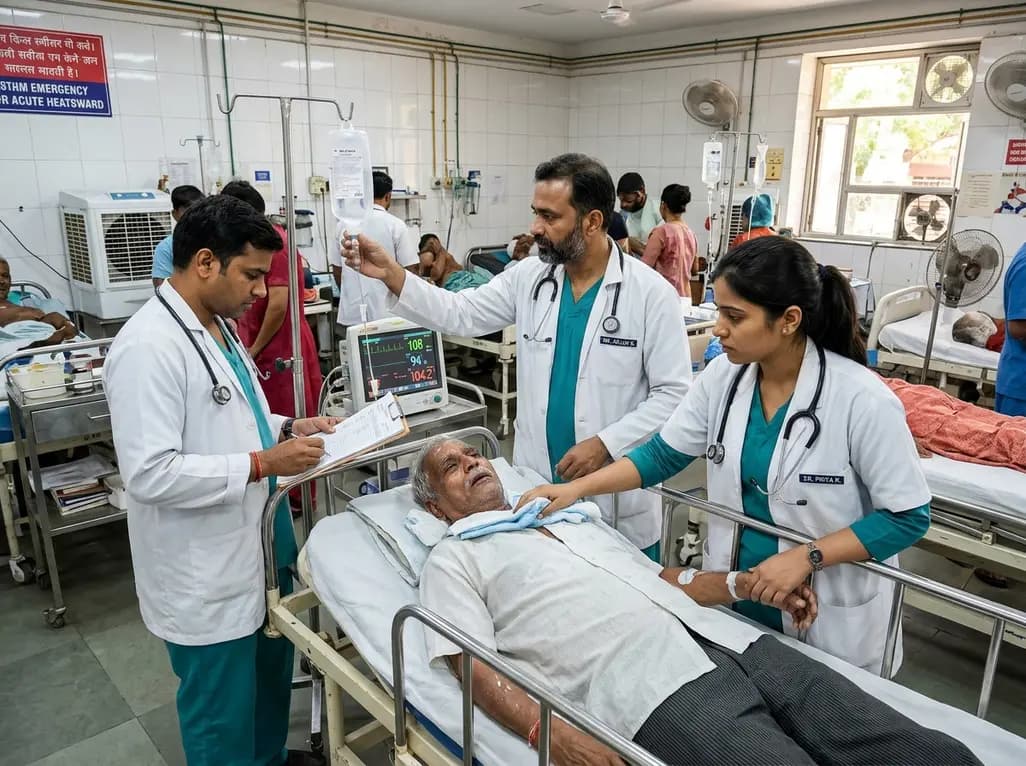
Recent epidemiological data reveals a dramatic surge in summer heat mortality driven by human-induced climate warming. This analysis explores the pathophysiological impacts on cardiac and renal systems, diagnostic dilemmas in death certification, and essential emergency cooling protocols for acute clinical care.
Today

Odisha has established India's first state-level clinical protocol specifically tailored for pregnant women with sickle cell disease. Developed with NHM and UNICEF, the framework provides structured antenatal screening, crisis mitigation, standardized referral pathways, and specialized interdisciplinary care.
Today

India is advancing preventive healthcare by integrating genomics, artificial intelligence, and quantum technologies. With the SANGAM programme sequencing one million Indian genomes, clinicians can unlock personalized therapies, detect cardiometabolic risks early, and curb the burden of diabetes and heart disease.
Today

A randomized controlled trial demonstrates that an eight-week dual-task training intervention significantly improves static and dynamic postural control over standard balance exercises in individuals with chronic ankle instability, addressing critical neurocognitive deficits during athletic and daily activities.
Today

A retrospective cohort study of 7,716 ICU patients from the MIMIC-IV database demonstrates that Gradient Boosting Decision Trees significantly outperform traditional SOFA scores in predicting in-hospital mortality among patients with sepsis and diabetes, with SHAP analysis providing clinical interpretability.
Today
