.webp&w=384&q=75)

Loading, please wait...
Loading, please wait...

Modern radiation oncology increasingly utilizes hypofractionated radiation therapy to manage localized prostate adenocarcinoma efficiently. However, delivering escalated daily radiation fractions elevates the risk of acute and late rectal injury. Because the anterior rectal wall abuts the prostate capsule, steep dose gradients inevitably intersect normal mucosa. Consequently, interventional spacing strategies have gained prominence to separate these critical structures mechanically during external beam radiotherapy. Inserting a hyaluronic acid rectal spacer creates a reliable physical cushion between the prostate and anterior rectum. Unlike rigid implants, stabilized hyaluronic acid provides a sculptable, highly biocompatible gel that clinicians can inject with exceptional anatomical control. Furthermore, this hydrogel maintains consistent tissue hydration and resists rapid displacement during treatment. Recent clinical evaluations show that even minor separation dramatically lowers rectal radiation exposure. Therefore, evaluating spacer stability and dosimetric benefits remains essential for oncologists adopting moderate hypofractionation regimens in modern clinical practice.
This retrospective comparative analysis evaluated ninety-one patients undergoing definitive radiation therapy across two academic treatment centres. Specifically, sixty-four consecutive patients received a stabilized hyaluronic acid spacer prior to treatment, whereas twenty-seven patients received radiation without spacing. All participants completed moderate hypofractionation delivering sixty Gray in twenty fractions over four weeks. Radiation oncologists utilized volumetric modulated arc therapy with daily image guidance to ensure high delivery precision. In addition, medical physicists measured baseline separation at simulation using computed tomography and magnetic resonance scans. Clinicians then evaluated spacer geometry across five cone beam computed tomography scans during treatment delivery. Furthermore, investigators retrospectively graded clinical adverse events using Common Terminology Criteria for Adverse Events version 5.0. Importantly, the study required a minimum three-month follow-up to capture acute and early late complications accurately. Consequently, this comparative cohort provides reliable institutional data regarding spacer longevity and clinical tolerance.
Maintaining stable anatomical separation throughout daily radiation fractions is essential to avoid unexpected rectal overdose during hypofractionated radiotherapy. Notably, the stabilized hyaluronic acid device demonstrated consistent spatial stability from initial simulation through treatment completion. Initial simulation scans revealed mean separations of 0.8 centimetres at the prostatic apex, 1.0 centimetre at mid-gland, and 0.9 centimetres at the base. Subsequent cone beam scans confirmed that these anatomical distances remained completely intact throughout the treatment course. Because the cross-linked formulation resists rapid enzymatic degradation, it prevented prostate-rectal re-approximation. Furthermore, the sculptable hydrogel allowed targeted hydrodissection around the apex where high-dose rectal exposure commonly occurs. Serial imaging demonstrated negligible gel migration or lateral displacement into adjacent pelvic tissues. Therefore, the stabilized gel maintained a dependable protective barrier across all treatment fractions without structural collapse. Consequently, clinicians confirmed reproducible organ displacement without premature volume loss.
Physical organ displacement generated significant dosimetric advantages during radiation treatment planning for localized prostate cancer. In this comparative analysis, the spacer cohort achieved statistically significant reductions across nearly all evaluated rectal dose-volume metrics. Specifically, intermediate and high-dose rectal exposure decreased markedly compared to the non-spacer group. Interestingly, only the maximal dose threshold showed similar values due to stringent institutional planning constraints. Furthermore, the expanded anatomical separation allowed planning algorithms to deliver full therapeutic doses without compromising target margins. Planning target volume coverage improved significantly in the spacer cohort, achieving a higher D98% metric of 57.8 Gray versus 57.3 Gray in controls. As a result, radiation oncologists did not compromise tumour coverage to protect adjacent normal tissues from high radiation doses. Moreover, steep dose fall-off gradients shielded the anterior rectal wall effectively. Thus, the hydrogel spacer eliminated the classic therapeutic dilemma between disease eradication and organ preservation.
The observed dosimetric advantages translated directly into tangible reductions in clinical gastrointestinal morbidity following hypofractionated treatment. Patients treated without a spacer experienced significantly higher rates of acute rectal pain, tenesmus, and radiation proctitis. In contrast, patients receiving the hyaluronic acid hydrogel exhibited markedly lower rates of grade 2 or greater gastrointestinal toxicity. Furthermore, early late gastrointestinal complications remained negligible in the spacer cohort throughout post-treatment follow-up. Because the hydrogel displaced the rectal wall away from high radiation fields, mucosal inflammation remained minimal. Additionally, incorporating hyaluronic acid offers unique procedural advantages over polyethylene glycol formulations. Specifically, clinicians can dissolve hyaluronic acid with hyaluronidase if accidental rectal wall infiltration occurs during injection. Consequently, this reversibility enhances procedural confidence during transperineal hydrodissection. Therefore, routine adoption of stabilized hyaluronic acid spacers optimizes the therapeutic window during moderate hypofractionation for prostate cancer.
Stabilized hyaluronic acid spacers offer distinct clinical advantages over traditional polyethylene glycol hydrogels. Clinicians can inject hyaluronic acid without rigid working-time constraints because the material does not polymerize inside the syringe. Furthermore, physicians can sculpt the hydrogel incrementally under transrectal ultrasound guidance to achieve symmetrical spacing. Importantly, if inadvertent rectal wall infiltration occurs, clinicians can rapidly dissolve hyaluronic acid using hyaluronidase, providing a crucial safety mechanism absent in synthetic polyethylene glycol products.
The stabilized hyaluronic acid spacer maintains reliable anatomical separation throughout the entire hypofractionated radiation therapy schedule. Serial cone beam imaging confirms that apical, mid-gland, and basal separation distances remain stable over four to six weeks of treatment. Following radiation completion, endogenous hyaluronidase enzymes and macrophage pathways gradually break down the biocompatible polysaccharide. The gel undergoes complete reabsorption within six to twelve months without eliciting chronic foreign-body reactions or persistent pelvic fibrosis.
Perirectal spacer insertion is contraindicated in patients with direct posterior extraprostatic tumour extension or frank rectal wall invasion. In these settings, creating mechanical separation risks displacing gross malignancy outside the primary radiation field. Furthermore, active perineal infection, acute proctitis, bleeding diatheses, and prior pelvic irradiation require comprehensive risk assessment. Clinicians must confirm preserved perirectal fascial planes on magnetic resonance imaging before attempting hydrodissection and hydrogel delivery.
Disclaimer: This content is for informational and educational purposes only and is intended solely for healthcare professionals. It does not constitute medical advice, diagnosis, or treatment recommendations. Clinicians should exercise their independent professional judgment when evaluating and applying clinical information. Treatment decisions must always be tailored to the individual patient's medical condition, contraindications, and preferences. Mention of specific products, procedures, or technologies does not imply endorsement or recommendation. Healthcare providers are advised to verify all drug dosages, interactions, and procedural details with current prescribing information and institutional protocols. The authors and publishers assume no liability for any injury, loss, or damage resulting from the use or misuse of the information presented herein. Refer to the latest local and national guidelines for clinical practice.
References

Read summarized clinical updates, watch expert medical content, and earn CME certifications right from your smartphone.
Open your smartphone camera to scan and install.





A retrospective comparative study demonstrates that stabilized hyaluronic acid rectal spacers provide stable prostate-rectum separation, reduce rectal radiation dose, improve planning target volume coverage, and significantly lower gastrointestinal toxicity during hypofractionated prostate radiation therapy.
Today

Telangana's statewide cancer registry faces delays due to data entry and verification challenges across private and public centres. Clinicians examine how reporting bottlenecks, deduplication efforts, rising incidence rates, and low baseline screening affect regional oncology surveillance and healthcare delivery.
Today

Meghalaya recorded a historic 55% reduction in maternal deaths, dropping from 244 to 107 over five years. Through the MOTHER app, dedicated transit homes, and expanded infrastructure like the 150-bed Tura Maternity Hospital with its first public NICU, the state demonstrates an effective public health model.
Today

Explore modern perioperative management protocols for clinical xenotransplantation. Learn how costimulation blockade, anti-inflammatory perfusion, and coagulopathy rescue overcome interspecies hurdles.
Today
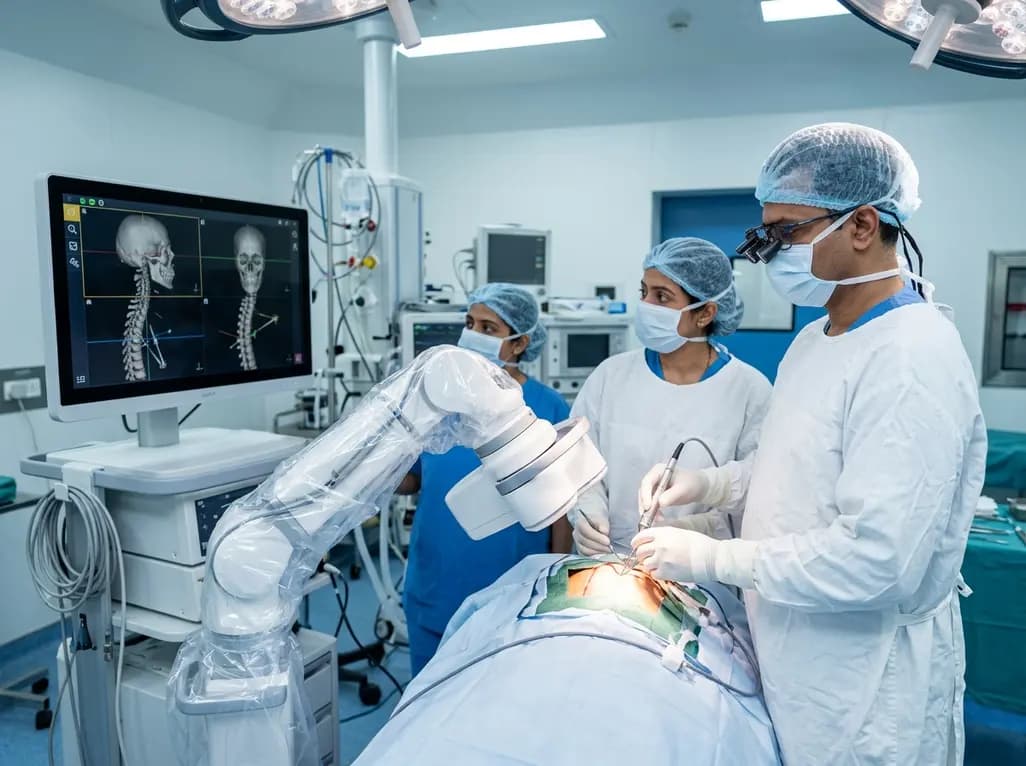
North India's first Centre of Excellence for Brain and Spine at Amrita Hospital Faridabad integrates Brainlab's Loop-X mobile robot. This landmark facility combines cone-beam computed tomography with surgical navigation to elevate precision, optimize operative workflows, and enhance specialized clinician training.
Today

At Homa CME 2026 at Hyderabad's T-Hub, healthcare leaders emphasized moving beyond routine metrics through digital calculators and precision stratification. Discover why characterizing individual insulin secretion, resistance patterns, and vascular risks transforms chronic metabolic care in India.
Today
