

Loading, please wait...
Loading, please wait...

The Supreme Court of India recently intensified its scrutiny regarding excessive hospital mark-ups on essential medicines and consumables. During judicial proceedings, the Union government revealed that mark-ups on clinical supplies frequently range from 100% to well over 1,000%. Consequently, judicial authorities expressed grave concern over the escalating out-of-pocket healthcare expenses borne by vulnerable patients. The court questioned why statutory price controls remain limited mostly to essential drugs rather than extending to routine procedural items. In response, central health officials emphasized that comprehensive market data must precede any national pricing intervention. While the National Pharmaceutical Pricing Authority fixes ceiling rates for scheduled formulations, most consumables lack formal price caps. Furthermore, recent policy decisions capped trade margins for selected anti-cancer drugs at 30% of the maximum retail price. However, replicating this exact approach across thousands of medical devices requires rigorous analysis. Judicial scrutiny continues to build momentum across the country. Nevertheless, policymakers stress that rash price ceilings could disrupt institutional supply chains. Clinicians must observe these legal developments closely. Hospital administrations will inevitably adapt their financial planning as judicial scrutiny accelerates. Therefore, understanding this evolving policy dialogue helps medical teams anticipate future operational changes.
Federal authorities acknowledge significant informational blind spots regarding hospital procurement practices. Specifically, the central government lacks structured data comparing wholesale acquisition prices with the charges billed to admitted patients. Senior officials highlighted that without empirical transaction records, regulators cannot evaluate true profit margins. In addition, healthcare facilities procure supplies through diverse commercial channels, including distributors, third-party logistics firms, and direct manufacturer agreements. Consequently, acquisition costs fluctuate widely based on institutional volume, geography, and vendor contracts. Regulatory agencies must first gather granular commercial data before determining whether nationwide price intervention makes clinical sense. For instance, an intravenous cannula or catheter may carry vastly different discounts across regional institutions. Without standardized reporting frameworks, sweeping caps could unfairly penalize community nursing homes while favoring corporate hospital chains. Moreover, health economists point out that arbitrary limits could deter global manufacturers from launching innovative consumables in India. Therefore, the government advocates for comprehensive empirical studies before finalizing new restrictions. Policymakers certainly demand robust evidence-based calculations rather than speculative retail estimates. Ultimately, establishing transparent procurement databases represents the essential first step toward sustainable pricing reforms.
Beyond missing commercial metrics, complex constitutional divisions create substantial administrative friction. Under the Indian Constitution, public health and sanitation remain state subjects. Consequently, individual state governments govern clinical establishments through state-specific legislation or the Clinical Establishments Act. In contrast, the central government exercises power primarily over pharmaceuticals through the National Pharmaceutical Pricing Authority. This statutory division creates significant enforcement challenges. Furthermore, health ministry representatives caution that central agencies cannot easily dictate hospital room rents or procedural tariffs. In addition, selling medical items at the printed maximum retail price does not breach current statutory laws. Retailers have no legal mandate to pass trade discounts directly to end consumers. Thus, applying the label of overcharging proves legally contentious when hospitals bill within printed ceilings. Regulators face statutory boundaries if they attempt to penalize providers who observe existing retail ceilings. Accordingly, any effective consumer protection framework requires close coordination between federal authorities and state health departments. Without synchronized state policies, unilateral federal directives might trigger intense legal challenges in higher courts. Therefore, harmonized federal-state policies are essential to resolve these deep-rooted regulatory dilemmas.
The widespread adoption of composite package billing further complicates price regulation. Modern tertiary hospitals frequently bill surgical procedures as consolidated packages rather than issuing itemized receipts. These inclusive charges bundle nursing care, operating theater time, surgeon fees, and routine consumables into one figure. Consequently, isolating the specific cost of individual syringes or sutures proves exceptionally difficult for external auditors. Furthermore, hospital administrators warn that stringent price caps on consumables could trigger immediate cost shifting. If regulators slash profit margins on surgical supplies, profit-conscious institutions will likely raise other service components. For example, hospitals might inflate bed charges, diagnostic fees, or professional fees for surgical specialists. Such compensatory pricing tactics would neutralize patient savings while increasing financial friction across clinical departments. In addition, surgeons express concern that arbitrary consumable caps might restrict access to premium operating equipment. High-volume centers might opt for cheaper, lower-grade surgical disposables to maintain operational viability under restricted budgets. Therefore, uncoordinated price interventions could compromise clinical quality without lowering overall treatment costs. Healthcare policy experts argue that regulators must evaluate total hospital billing structures rather than singling out individual procedural inputs.
Private healthcare providers operate under substantial economic stress that frequently shapes their retail pricing strategies. Specifically, hospitals face severe cash flow bottlenecks caused by delayed reimbursements from private insurers and government health schemes. Payouts under initiatives like Ayushman Bharat often encounter prolonged administrative delays and tedious audit queries. Consequently, healthcare institutions carry massive accounts receivable balances for months, straining routine working capital. To offset these persistent financial shortfalls, facilities often rely on immediate pharmacy and consumable margins to maintain liquidity. Furthermore, hospitals invest heavily in high-end medical equipment, advanced infrastructure maintenance, and 24-hour emergency staffing. These substantial overhead costs demand steady operational revenue to avoid financial distress. However, public debates rarely acknowledge these systemic financial pressures when examining retail consumable prices. If the government restricts mark-ups without accelerating insurance settlements, many private nursing homes could face severe financial insolvency. In addition, rural and semi-urban hospitals might restrict their participation in government-sponsored welfare schemes. Therefore, policymakers must design balanced reforms that guarantee patient affordability while preserving the financial sustainability of healthcare providers. A holistic approach will protect clinical standards and maintain nationwide access to high-quality inpatient medical care.
Q1: Why does the government struggle to regulate prices of hospital consumables?
The central government faces two primary hurdles in regulating consumable pricing. First, health remains a state subject under the Indian Constitution, leaving hospital oversight to state clinical establishment acts. Second, authorities currently lack comprehensive baseline procurement data across disparate supply chains. Without reliable metrics comparing manufacturer acquisition costs against final patient billing across varied tertiary centers, regulatory bodies cannot easily establish standardized, defensible price caps without triggering unintended administrative disputes.
Q2: Does billing consumables at maximum retail price violate existing Indian drug laws?
Billing medicines or consumables at the printed maximum retail price does not currently violate statutory provisions. Under the Drugs Prices Control Order, retailers and healthcare facilities cannot charge above the stated MRP. However, no existing statute compels private facilities to pass institutional bulk purchase discounts directly to consumers. Therefore, while apex judicial bodies question the ethical fairness of steep trade mark-ups, selling supplies at printed retail values remains legally compliant under present framework rules.
Q3: How might consumable price caps affect private clinical establishments and practicing surgeons?
If statutory authorities cap consumable margins, private hospitals may reconfigure their overall billing structures to sustain operational revenue. Consequently, clinical administrators might increase surgical procedure fees, consultation rates, or diagnostic charges to balance institutional balance sheets. Furthermore, facilities facing compressed margins might limit their inventory of advanced, premium surgical tools. This shift could indirectly influence clinician choices regarding specialized equipment during complex operations, especially when managing high-risk patients requiring sophisticated procedural interventions.
Disclaimer: This content is for informational and educational purposes only. It does not constitute medical advice or replace professional judgment. Refer to the latest local and national guidelines for clinical practice.
References

Read summarized clinical updates, watch expert medical content, and earn CME certifications right from your smartphone.
Open your smartphone camera to scan and install.





The Union government recently informed the Supreme Court about challenges in regulating prices for medical consumables. While mark-ups often reach extreme margins, federal authorities lack standardized procurement data. Healthcare providers must understand the legal limits, billing models, and economic pressures.
Today
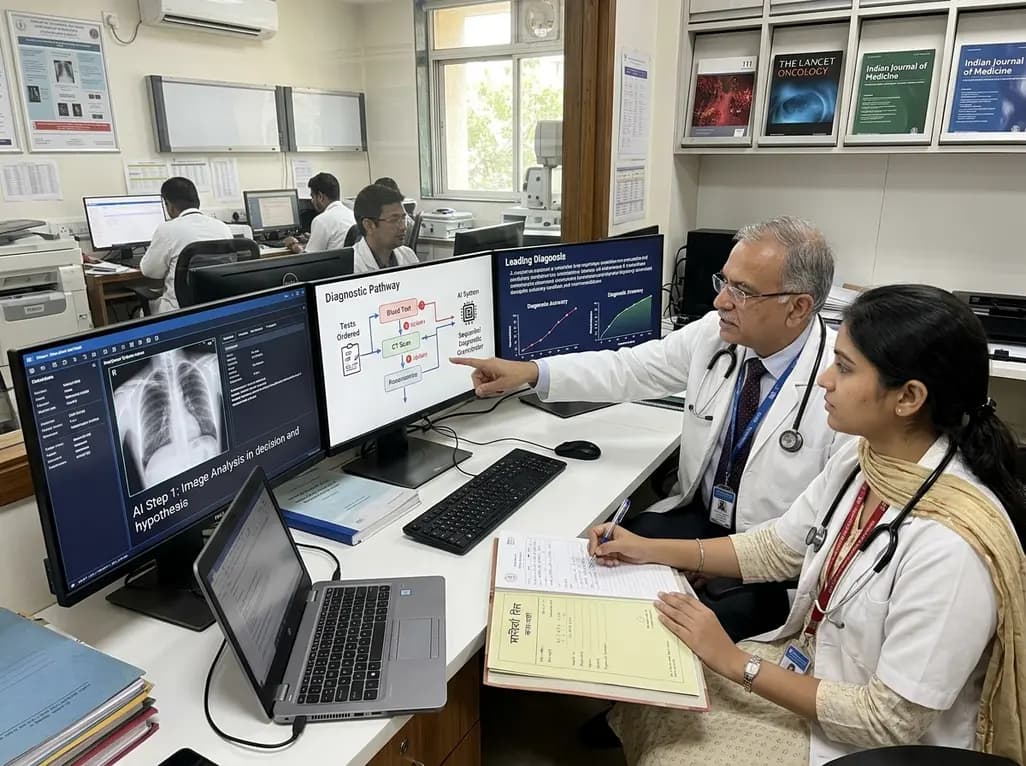
A breakthrough peer-reviewed study demonstrates that a sequential AI diagnosis system can mirror real-world clinical reasoning. By ordering stepwise tests and updating hypotheses dynamically, this multi-agent orchestrator achieved superior diagnostic accuracy while reducing investigative costs.
Today

A prenatal case highlights severe glutaric acidemia type II presenting as bilateral hyperechoic cystic kidneys at 18 weeks. Whole-exome sequencing revealed a novel homozygous ETFDH frameshift variant, demonstrating the power of rapid genetic testing in fetal renal anomalies.
Today

Review how tailored exercise programs benefit frail older patients with heart failure. Explore pathophysiological mechanisms, individualized training prescriptions, and strategies to overcome adherence barriers in clinical practice.
Yesterday

This comparative study evaluates posterior labral tears with and without glenohumeral instability, highlighting distinct demographic patterns, MRI underestimation in stable shoulders, and successful arthroscopic repair outcomes.
Yesterday

A clinical study demonstrates that early intervention with tocilizumab, either as monotherapy or bridged with corticosteroids, achieves significant proptosis reduction and resolves active inflammation in treatment-naive thyroid eye disease.
Yesterday
