.webp&w=384&q=75)

Loading, please wait...
Loading, please wait...

Inpatient hyperglycemia affects up to forty percent of hospitalized individuals across medical and surgical wards. Both preexisting diabetes and acute stress hyperglycemia contribute significantly to prolonged hospital stays, surgical site infections, and increased mortality. Consequently, modern healthcare institutions are transitioning from isolated ward-based protocols to multidisciplinary hospital glycemic management systems. These integrated digital platforms coordinate blood glucose monitoring, insulin titration, and specialist consultations across diverse clinical departments. Clinicians face considerable challenges when managing fluctuating metabolic demands during acute medical illness. For instance, irregular nutritional intake, systemic corticosteroid therapy, and acute organ dysfunction frequently induce severe glycemic variability. Traditional paper charts and manual sliding-scale insulin regimens often fail to detect early glycemic excursions, increasing the risk of life-threatening hypoglycemia. Therefore, digital hospital glycemic management systems have emerged as an essential infrastructure for inpatient safety. By linking point-of-care glucometers directly to electronic health records, these architectures provide timely visibility into ward-level dysglycemia. Furthermore, systematic digital oversight enables proactive clinical intervention before severe metabolic decompensation occurs. Understanding how health systems deploy these digital tools offers critical insights for improving institutional quality metrics and standardizing glycemic care globally.
A nationwide mixed-methods study recently evaluated the implementation patterns, functional demands, and user satisfaction associated with hospital glycemic management systems across thirty-one provincial administrative regions. Researchers gathered detailed data from 988 healthcare professionals representing 265 hospitals between April and December 2024. The investigators utilized standardized quantitative questionnaires alongside purposive semistructured qualitative interviews to assess how frontline teams navigate digital glucose workflows. To evaluate differences in functional importance and user satisfaction, the authors applied robust statistical methods, including the Friedman test and Wilcoxon signed-rank tests with Bonferroni corrections. Qualitative interviews underwent thematic analysis to explore operational barriers and clinical expectations across diverse institutional tiers. The findings demonstrated remarkable enthusiasm for multidisciplinary digital integration alongside noticeable operational hurdles. Frontline physicians and diabetes nurse specialists consistently recognized that systematic glucose tracking enhances patient outcomes across non-endocrinology wards. However, the survey uncovered profound regional and institutional disparities in actual infrastructure adoption. While tertiary medical centers in developed urban areas possessed sophisticated architectures, peripheral hospitals frequently lacked modern digital tools. Consequently, the study emphasizes an urgent need to establish standardized implementation benchmarks to eliminate disparities in digital inpatient diabetes care.
The national investigation categorized hospital adoption into six discrete maturity tiers, ranging from Level 0 to Level 5. Alarmingly, 12.45% of surveyed centers remained at Level 0, relying exclusively on handwritten bedside glucose documentation. In addition, 47.92% operated at Level 1, which requires manual data entry into disconnected hospital workstations. Approximately 21.51% achieved Level 2, characterized by basic department-level data sharing without hospital-wide connectivity. Thus, over eighty percent of institutions lacked comprehensive, automated integration across their general inpatient wards. In sharp contrast, only 13.21% reached Level 3, featuring automated point-of-care transmission across all hospital departments. Even fewer facilities demonstrated advanced maturity, with Level 4 bidirectional order entry comprising 3.40% and Level 5 closed-loop automated intelligence representing only 1.51%. These findings illustrate significant technological fragmentation across the acute care landscape. Qualitative interviews revealed that budgetary limitations, legacy IT infrastructure, and interoperability barriers between electronic medical records restrict higher-level system rollouts. When wards rely on manual documentation, clinicians experience substantial cognitive fatigue and delayed recognition of dysglycemia. Therefore, closing this technological divide represents a critical priority for health systems seeking to ensure equitable, high-quality inpatient diabetes management across all clinical settings.
Healthcare professionals expressed clear consensus regarding essential system features, prioritizing foundational safety mechanisms above complex algorithmic tools. Specifically, 68.42% of clinicians rated real-time alerts for hypoglycemia and hyperglycemia as critically important. Furthermore, 68.02% prioritized seamless interoperability between computerized physician order entry and electronic medical records, while 67.51% emphasized automated glucose data transmission. Clinicians also valued advanced capabilities, including standardized staff education (64.47%), clinical decision support algorithms (61.54%), and tele-endocrinology consultations (61.13%). Nevertheless, user satisfaction analyses revealed stark discrepancies between clinical expectations and practical software performance. Automatic glucose transmission achieved the highest clinician satisfaction rate at 81.63%, confirming its utility in eliminating manual documentation errors. Conversely, clinical decision support systems recorded the lowest satisfaction score, reaching merely 45.51%. Qualitative feedback demonstrated that existing decision support algorithms often generate inflexible insulin dosing suggestions that fail to account for acute clinical nuances, such as changing enteral nutrition or renal replacement therapy. Consequently, providers frequently override automated recommendations. Developing adaptive, context-aware decision algorithms remains vital to improving physician trust and optimizing automated insulin titration protocols in acute care environments.
The survey highlights how structured digital workflows transform inpatient glycemic control by bridging endocrinologists and non-endocrinology medical teams. In typical general hospitals, non-communicable disease wards and surgical units manage the majority of patients with secondary hyperglycemia. However, surgeons, cardiologists, and oncologists often lack specialized training in dynamic insulin titration. When digital systems aggregate real-time ward data, hospital-wide diabetes teams can proactively monitor outliers without waiting for formal bedside consultation requests. As a result, endocrine specialists can intervene rapidly to resolve persistent hyperglycemia or recurrent nocturnal hypoglycemia. Moreover, automated point-of-care glucometers streamline nursing workflows by instantly syncing capillary blood glucose values to central monitoring dashboards. This rapid data synchronization reduces charting transcription errors and prevents missed insulin doses before scheduled meals. In addition, structured digital order sets encourage the adoption of evidence-based basal-bolus-correction insulin regimens over outdated sliding-scale protocols. Integrating standardized glycemic targets into daily clinical rounds substantially shortens hospital length of stay and diminishes post-surgical complications. Thus, investing in reliable digital infrastructure strengthens multidisciplinary collaboration and ensures patient safety across all specialized inpatient units.
Health systems must adopt structured implementation frameworks to transition successfully from rudimentary manual charting toward advanced digital glycemic networks. First, hospital leaders must secure institutional sponsorship and establish dedicated multidisciplinary glycemic committees comprising endocrinologists, hospitalists, specialized nurses, and IT professionals. Second, institutions should prioritize automated point-of-care glucometer integration to eliminate manual transcription and provide immediate real-time oversight. Connecting bedside devices directly to centralized electronic records establishes a reliable data foundation for institutional quality benchmarking. Third, IT developers must refine clinical decision support engines by incorporating dynamic patient parameters, including glomerular filtration rates, glucocorticoid regimens, and nutritional intake changes. Providing intuitive, explainable insulin dosing recommendations will significantly improve frontline physician compliance and system satisfaction. Furthermore, healthcare administrators must implement standardized digital training programs to empower ward nurses and junior medical officers. Establishing tele-endocrinology virtual rounding networks also ensures rapid specialist support for resource-limited peripheral units. By executing these strategic initiatives systematically, hospitals can overcome implementation bottlenecks, reduce clinical inertia, and deliver safe, equitable glycemic management throughout the inpatient care continuum.
A hospital-wide glycemic management system is an integrated software platform that connects bedside point-of-care glucometers directly with electronic health records. The architecture enables centralized glucose tracking, automated hypo- and hyperglycemia alerts, standardized insulin order sets, and multidisciplinary communication across all hospital wards. Consequently, this system allows specialized diabetes teams to oversee glycemic control proactively in non-endocrine medical and surgical units.
Clinical decision support tools received low satisfaction scores because existing algorithms often lack flexibility during acute clinical fluctuations. For example, generic insulin recommendations frequently fail to adjust for sudden changes in enteral nutrition, steroid dosing, or acute renal impairment. Consequently, frontline physicians encounter excessive alert fatigue and inappropriate titration suggestions, prompting them to override automated guidance in complex inpatient cases.
Automated glucose transmission instantly uploads bedside point-of-care measurements into the electronic medical record, eliminating manual data entry errors and charting delays. Furthermore, this real-time synchronization triggers immediate notifications for dangerous glycemic excursions, such as severe hypoglycemia. As a result, nursing and medical teams can execute corrective rescue protocols rapidly, preventing adverse metabolic events and improving overall inpatient clinical outcomes.
Disclaimer: This content is for informational and educational purposes only and does not constitute medical advice, diagnosis, or treatment. Healthcare professionals should exercise their independent clinical judgment when managing inpatient dysglycemia. Refer to the latest local and national guidelines for clinical practice.
References

Read summarized clinical updates, watch expert medical content, and earn CME certifications right from your smartphone.
Open your smartphone camera to scan and install.





A nationwide mixed-methods study evaluated hospital glycemic management systems across 265 hospitals. While real-time alerts and automatic data sync are highly valued, significant disparities in digital maturity and low satisfaction with decision support highlight the need for standardized implementation.
Today

A novel modified LEEP technique employing Foley catheter traction enhances cervical stabilization and specimen integrity during dysplasia excision, eliminating specimen fragmentation while maintaining comparable margin positivity and safety profiles.
Today

Cardiac surgery routinely elevates troponin levels, complicating perioperative myocardial infarction detection. Novel data shows intact long cardiac troponin T clears rapidly post-surgery, unlike conventional hs-cTnT, providing a clearer diagnostic window for true ischemic injury.
Today
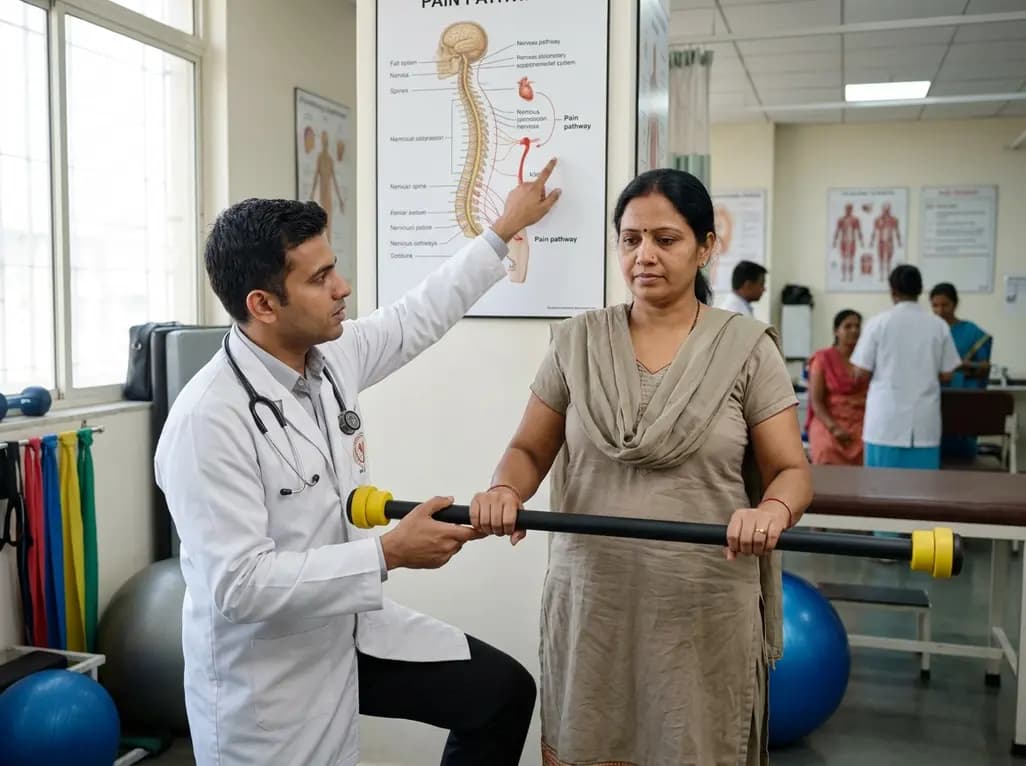
A randomized trial demonstrates that combining pain neuroscience education with Flexi-Bar stabilization significantly reduces pain intensity and functional disability while optimizing trunk muscle architecture in chronic non-specific low back pain.
Today

The Food Safety and Standards Authority of India has proposed front-of-pack warning labels with a red hexagonal graphic for packaged items high in sugar, fat, or salt. This critical public health initiative aims to combat non-communicable diseases and empower consumers across the country.
Today
