.webp&w=384&q=75)

Loading, please wait...
Loading, please wait...
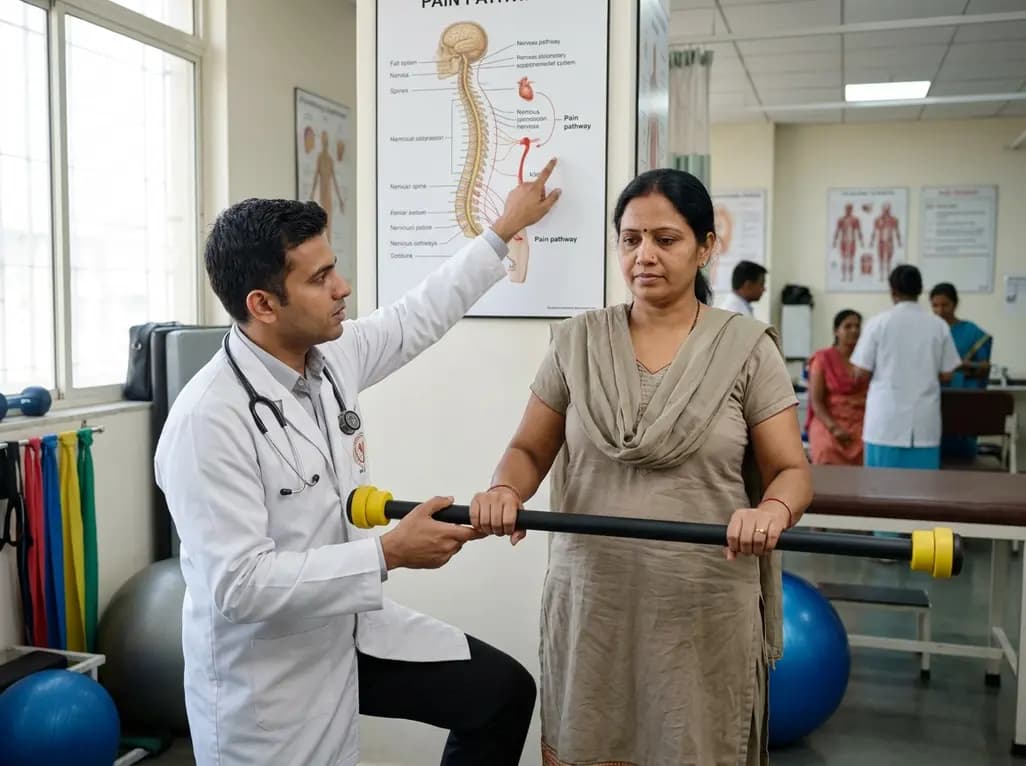
Chronic non-specific low back pain presents a major clinical challenge globally. This debilitating condition involves complex interactions between biomechanical dysfunction, central sensitization, and psychological distress. Clinicians increasingly recognize that structural spinal pathology poorly correlates with perceived symptoms. Consequently, contemporary rehabilitation emphasizes cognitive restructuring alongside targeted neuromuscular training. A landmark randomized clinical trial evaluated the therapeutic impact of combining pain neuroscience education with dynamic Flexi-Bar stabilization exercises. The investigators observed significant clinical improvements in patient-reported disability, pain scores, and structural muscle architecture. This multimodal strategy offers a comprehensive framework for clinicians managing refractory spinal pain syndromes.
Traditional biomedical explanations frequently reinforce fear-avoidance beliefs and catastrophizing in patients experiencing persistent spinal symptoms. In contrast, pain neuroscience education reconceptualizes pain as an alarm mechanism driven by central nervous system sensitivity rather than ongoing tissue damage. Therefore, this educational approach demystifies neurobiology, diminishes fear of movement, and alters maladaptive cognitive frameworks. During guided sessions, clinicians explain peripheral nociception, central amplification, neuroplasticity, and the modulatory influence of stress on symptom perception. As a result, patients develop active coping mechanisms and reduce hypervigilance. When patients understand that safe movement does not cause structural harm, their willingness to engage in active physical therapy increases substantially. Thus, cognitive reconceptualization provides an indispensable foundation for functional spinal rehabilitation.
Dynamic stabilization exercises play a vital role in restoring functional spinal control and core endurance. The Flexi-Bar operates through rhythmic oscillatory vibrations that generate rapid, involuntary neuromuscular perturbations throughout the kinetic chain. Consequently, the deep stabilizing musculature must continuously contract to maintain trunk stability and postural control. Unlike conventional static core routines, oscillatory training demands continuous sensorimotor adaptation and dynamic neuromuscular coordination. Furthermore, these rhythmic vibrations stimulate proprioceptors within joint capsules, ligaments, and muscle spindles. This heightened sensory feedback enhances motor unit recruitment and reflex activation across deep stabilizer groups. Therefore, clinicians can utilize oscillatory stabilization to improve spinal motor control without exposing vulnerable vertebral segments to excessive axial loads.
The randomized trial enrolled forty-eight individuals with chronic non-specific low back pain and allocated them to either combined therapy or exercise alone. Both cohorts completed supervised Flexi-Bar training sessions three times weekly for six consecutive weeks. However, the experimental group received structured pain neuroscience education before beginning their physical training. Investigators evaluated functional disability via the Roland-Morris Questionnaire alongside pain intensity, kinesiophobia, catastrophizing, and fear-avoidance beliefs. Repeated-measures analysis demonstrated significant time-by-group interaction effects favoring the integrated intervention. Participants receiving educational reconceptualization exhibited markedly greater reductions in perceived disability and pain intensity at post-intervention and four-week follow-up. In addition, secondary psychological measures improved dramatically, confirming the powerful synergy between neurocognitive education and neuromuscular conditioning.
Beyond subjective symptom reporting, the trial rigorously evaluated objective structural adaptations in trunk stabilizing musculature using real-time musculoskeletal ultrasonography. Researchers assessed the architectural geometry of the transversus abdominis, internal oblique, external oblique, and lumbar multifidus muscles across supine, seated, and standing positions. Both interventions successfully enhanced muscle thickness and contractile efficiency across postures. However, patients receiving integrated cognitive education demonstrated superior neuromuscular recruitment patterns and muscular architecture adaptations. Furthermore, the reduction in movement-related fear allowed participants to achieve greater contraction amplitude during dynamic stability drills. Consequently, the deep stabilizing muscles showed enhanced cross-sectional geometry, restoring essential active support to the lumbar spine and pelvis.
Integrating neurobiology education with oscillatory stabilization represents a pragmatic, cost-effective paradigm for modern rehabilitation clinics. Clinicians managing persistent spinal pain should initially screen patients for elevated kinesiophobia, hypervigilance, and somatic catastrophizing. First, practitioners should deliver targeted educational modules using accessible analogies, interactive diagrams, and validating dialogue. Second, clinicians can introduce gradual oscillatory exercises, progressing from supported supine postures to complex functional standing drills. Furthermore, medical teams must emphasize that transient discomfort during exercise reflects neuroplastic sensitivity rather than anatomical failure. This combined treatment protocol addresses both central pain processing and peripheral neuromuscular deficits, empowering patients to achieve durable functional recovery.
Pain neuroscience education is an evidence-based clinical strategy that educates patients on the neurobiology and physiology of persistent pain. It explains central sensitization, neuroplasticity, and nervous system processing rather than focusing solely on anatomical tissue damage. Consequently, this intervention reduces fear-avoidance behaviors, decreases pain catastrophizing, and empowers patients to engage actively in therapeutic exercise programs.
The Flexi-Bar generates rapid oscillatory vibrations that create dynamic mechanical perturbations across the trunk. In response, deep stabilizing muscles, such as the lumbar multifidus and transversus abdominis, activate involuntarily to maintain postural equilibrium. This continuous neuromuscular recruitment strengthens core stabilizers, improves proprioception, and enhances dynamic spinal control without placing excessive compressive stress on lumbar motion segments.
Chronic low back pain involves both neurocognitive maladaptations and biomechanical dysfunctions. While exercise strengthens deep stabilizing musculature and restores functional movement, psychological fear often limits exercise performance and adherence. Combining cognitive education with physical training addresses both central nervous system sensitization and peripheral muscular deficits, yielding superior, long-lasting reductions in pain, disability, and movement-related fear.
Disclaimer: This content is for informational and educational purposes only and does not constitute medical advice, diagnosis, or treatment. Healthcare professionals must exercise independent clinical judgment. Refer to the latest local and national guidelines for clinical practice.
References
Dehghani Z et al. The effect of integrating pain neuroscience education with stabilization exercises using a flexi-bar on functional disability, pain, and geometry of abdominal and multifidus muscles in patients with chronic non-specific low back pain. PLoS One. 2026 undefined undefined. doi: 10.1371/journal.pone.0355692. PMID: 42659623.
Malfliet A, Kregel J, Meeus M, et al. Applying modern pain neuroscience in clinical practice: criteria for the classification of central sensitization pain. Pain Physician. 2017;20(3):135-145.
Louw A, Zimney K, Puentedura EJ, Diener I. The efficacy of pain neuroscience education on musculoskeletal pain: A systematic review of the literature. Physiother Theory Pract. 2016;32(5):332-355.

Read summarized clinical updates, watch expert medical content, and earn CME certifications right from your smartphone.
Open your smartphone camera to scan and install.





A randomized trial demonstrates that combining pain neuroscience education with Flexi-Bar stabilization significantly reduces pain intensity and functional disability while optimizing trunk muscle architecture in chronic non-specific low back pain.
4 weeks back

Targeting ferroptosis provides a compelling strategy to dismantle hypoxia- and acidosis-driven immunosuppression in solid tumors, enhancing response to modern immunotherapy.
Today

Findings from Project Viva indicate that sustained postpartum weight retention, rather than excessive gestational weight gain alone, directly worsens women's mid-life cardiovascular health, degrading blood pressure and glycemic parameters decades after delivery.
Today
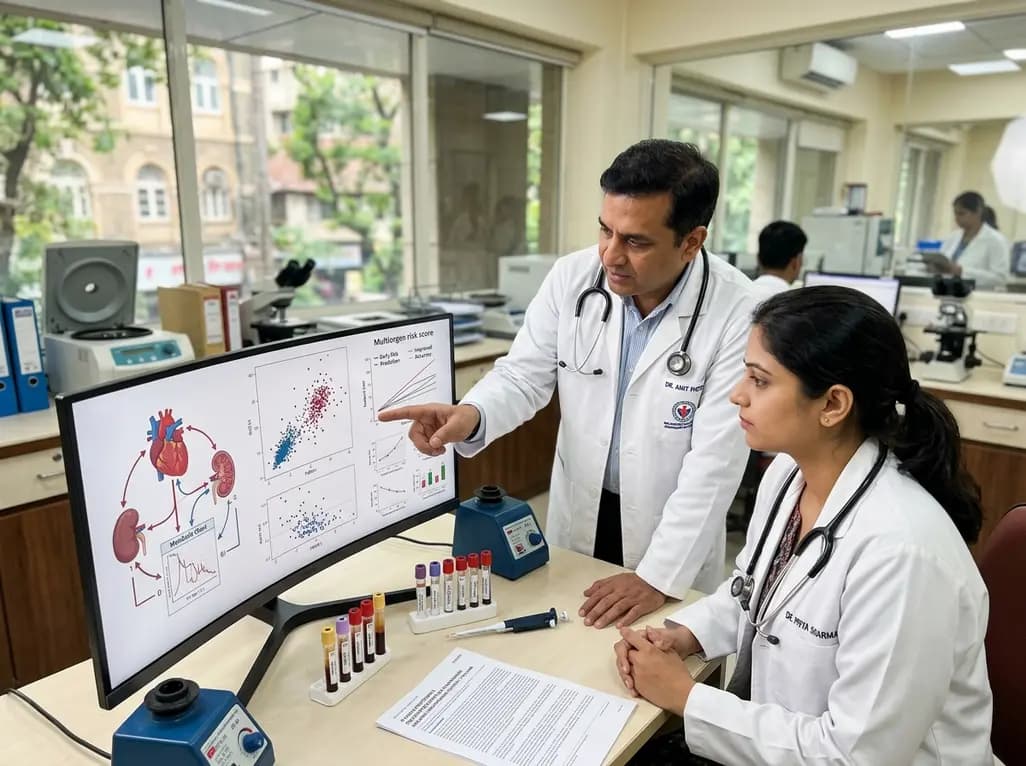
A large UK Biobank study reveals that plasma proteomic signatures capture preclinical organ damage and improve multiorgan risk prediction across early CKM syndrome stages 0 to 2 beyond traditional PREVENT clinical models.
Today

A retrospective CBCT study reveals that superior TMJ space asymmetry correlates moderately with occipital condyle-atlas-axis asymmetry in unilateral TMJ osteoarthritis, highlighting an imaging correlate between jaw biomechanics and upper cervical alignment rather than a standalone diagnostic marker.
Today

A Bayesian multilevel meta-analysis reveals that aerobic training combined with moderate carbohydrate restriction modestly lowers HbA1c in type 2 diabetes. However, sparse data and very low certainty leave incremental benefits over exercise or diet alone unproven, highlighting the need for individualized care.
Today
