.webp&w=384&q=75)

Loading, please wait...
Loading, please wait...
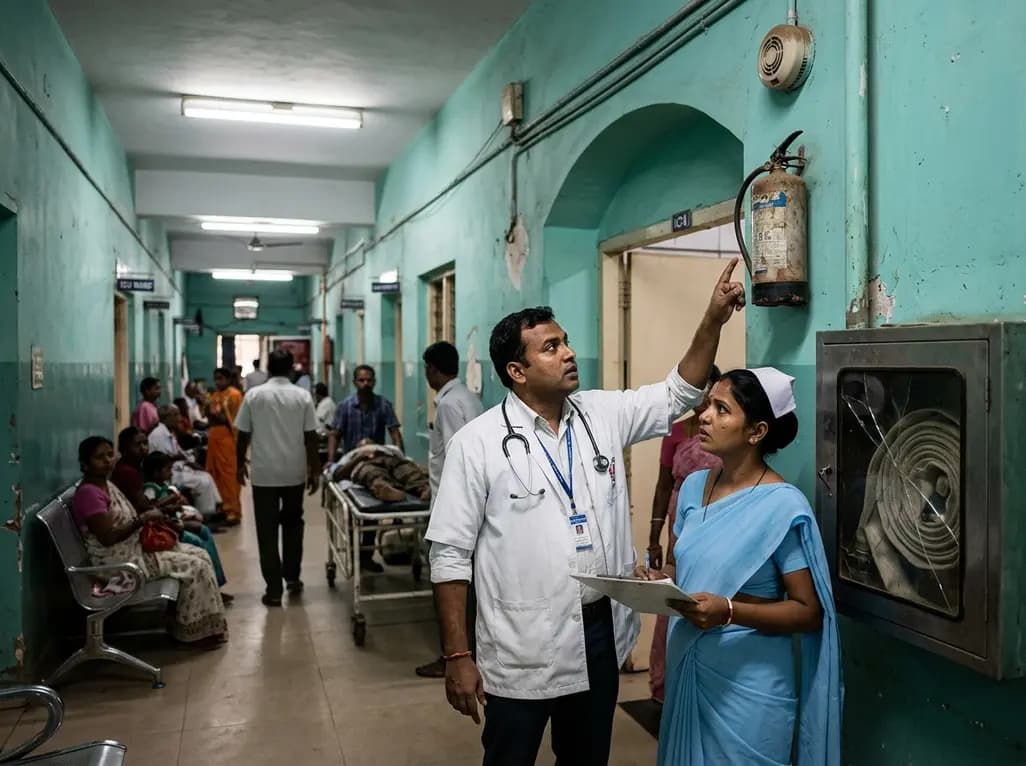
Recent legislative disclosures in Odisha have exposed alarming systemic deficiencies in institutional disaster preparedness. Specifically, hospital fire safety compliance remains absent across an overwhelming majority of state-run medical centres. Official state assembly records show that only seventeen of two hundred forty-one mandated government healthcare facilities hold valid clearances. Consequently, over ninety-three percent of these critical facilities operate without formal fire certifications. This staggering shortfall jeopardizes patient survival across vulnerable intensive care environments. Furthermore, healthcare administrators must immediately resolve these profound gaps to safeguard human life.
Under the Odisha Fire Prevention and Fire Safety Rules of 2017, certain healthcare facilities face mandatory safety certification. Specifically, buildings exceeding twelve metres in height or housing three or more floors must obtain certification. In addition, institutions maintaining more than thirty beds or operating critical care units require certified clearance. Nevertheless, compliance across state facilities remains abysmally low. While Odisha operates seven hundred forty-seven public healthcare centers, two hundred forty-one require mandatory fire clearance. However, only seventeen government facilities have secured active safety certificates.
Chief Minister Mohan Charan Majhi confirmed these official statistics during an assembly query. Consequently, the remaining two hundred twenty-four establishments continue delivering healthcare under severe regulatory default. Health systems cannot afford such administrative inertia when handling critically ill individuals. Furthermore, the lack of certification indicates missing fire prevention systems and untested evacuation pathways. Most facilities lack automated smoke dampers, functional wet risers, or dedicated refuge compartments. Therefore, non-compliant hospitals pose grave dangers to vulnerable inpatient cohorts. Medical administrators must acknowledge this compliance gap as a primary clinical emergency. Ultimately, regulatory compliance represents an essential prerequisite for patient life preservation.
The urgent scrutiny surrounding healthcare safety stems from devastating institutional tragedies across the state. In March, a catastrophic blaze erupted inside the trauma care intensive care unit at SCB Medical College. Consequently, the dense smoke and toxic fumes claimed twelve patient lives. Similar historical disasters, such as the fatal 2016 Bhubaneswar hospital blaze, expose recurring infrastructural failures. Intensive care units house unique physiological hazards that dramatically accelerate fire risks. Specifically, high ambient oxygen concentrations turn tiny electrical sparks into rapid infernos.
Moreover, modern critical care units contain dense clusters of heat-generating diagnostic machinery. Continuous power loads strain legacy electrical circuits and generate hazardous harmonic currents. In contrast to general wards, critical care patients cannot evacuate independently. Mechanically ventilated patients depend entirely on uninterrupted medical gases and continuous electrical power. Therefore, sudden fire outbreaks trigger rapid asphyxiation and immediate life-support failure. When flames compromise municipal oxygen lines, catastrophic explosions can follow swiftly. Furthermore, toxic plastic combustion releases dense carbon monoxide and cyanide gas. Clinicians must recognize that physical structural safety directly dictates ICU survival outcomes.
Achieving comprehensive hospital fire safety compliance across legacy public institutions presents substantial technical hurdles. First, most government hospitals occupy aging masonry structures built decades prior to modern building codes. Retrofitting complex internal wet risers, fire sprinklers, and compartmentalized smoke barriers requires extensive invasive construction. However, public hospitals operate continuously under relentless clinical demand and overcrowded patient wards. As a result, facility directors cannot easily suspend inpatient services to install essential fire-retardant barriers. In addition, electrical distribution systems in older hospitals frequently struggle under excessive appliance loads.
Facility managers continuously plug advanced life-support units into outdated wiring networks. Furthermore, the Odisha Fire and Emergency Services completed safety audits across over two thousand institutions. Nevertheless, many facility administrators fail to execute the recommended structural modifications due to severe budgetary constraints. Bureaucratic delays between public works departments and healthcare directorates further paralyze safety overhauls. Meanwhile, routine maintenance contracts for pressure pumps and smoke detectors frequently lapse without administrative intervention. Overcoming these barriers requires dedicated funding, inter-departmental coordination, and rigorous technical oversight. Hospital leadership must treat safety infrastructure with the same urgency as pharmacological procurement.
National regulatory guidelines provide unambiguous engineering frameworks to safeguard clinical facilities from structural blazes. Specifically, Part Four of the National Building Code of India outlines stringent fire protection rules. Healthcare buildings require continuous automatic smoke detection networks connected directly to central monitoring stations. In addition, high-risk critical care zones mandate early-warning addressable detection systems and manual call points. Flame-retardant interior finishes and two-hour fire-rated compartment doors restrict toxic smoke migration. Furthermore, healthcare facilities must implement dedicated compartmentalization to facilitate horizontal progressive evacuation.
Because bedridden patients cannot navigate emergency stairwells, staff must wheel them laterally into adjacent fire-resistant zones. Consequently, emergency escape routes and wide corridors must remain entirely free from equipment clutter. Facilities must also install functional wet risers, landing valves, and carbon dioxide extinguishers. Because water conducts electricity, personnel must deploy specialized gas suppression agents inside sensitive electrical rooms. Moreover, emergency ventilation systems must swiftly exhaust toxic fumes while maintaining staircase pressurization. Adhering strictly to these national engineering standards prevents minor localized sparks from transforming into catastrophic infernos. Therefore, healthcare engineers must systematically align clinical architecture with modern fire prevention benchmarks.
Hardware installations and engineering retrofits remain largely ineffective without rigorously trained medical personnel. During sudden fires, immediate human action determines patient survival within the initial four minutes. Therefore, hospital management must train every doctor, nurse, and support staff member in rapid response protocols. Specifically, healthcare workers must master the RACE protocol: Rescue, Alarm, Confine, and Extinguish. In addition, staff members must learn to operate portable fire extinguishers using the PASS technique. Medical teams must conduct scheduled disaster drills rather than relying on theoretical instruction. Many fatal incidents occur simply because flustered hospital workers fail to deploy functional hydrants.
Moreover, ICU personnel require specialized simulation training for evacuating ventilator-dependent patients during structural threats. Teams must maintain emergency manual resuscitator bags and portable oxygen cylinders along evacuation corridors. Similarly, medical gas supply lines must feature clearly marked emergency shutoff valves outside critical units. Designated safety officers must continuously monitor these manifold systems to avert disastrous gas leaks. Ultimately, proactive safety training bridges the gap between mechanical engineering and clinical emergency survival. Institutional leaders must cultivate an uncompromising culture of safety across all clinical departments.
Q1: Which healthcare facilities in Odisha must legally obtain a fire safety certificate?
Under the Odisha Fire Prevention and Fire Safety Rules of 2017, specific clinical establishments must secure certification. Facilities measuring twelve metres or more in height or housing three or more floors fall under this mandate. Furthermore, any healthcare facility operating more than thirty patient beds or managing critical care units requires formal certification. Consequently, institutions must pass rigorous structural and operational inspections by fire authorities.
Q2: Why do hospital intensive care units present uniquely severe fire risks?
Intensive care units maintain enriched oxygen atmospheres that drastically accelerate ignition and combustion rates. In addition, these specialized wards utilize extensive electrical life-support machinery that can trigger electrical overloads or short circuits. Most critically, non-ambulatory patients cannot independently escape during sudden structural emergencies. Therefore, any failure in rapid smoke containment or emergency life-support transfer leads to immediate asphyxiation and severe clinical catastrophe.
Q3: How does progressive horizontal evacuation function during a hospital fire?
Progressive horizontal evacuation moves vulnerable patients laterally away from active danger into an adjacent fire-resistant compartment on the same floor. Because moving critically ill or bedridden patients down vertical stairwells poses severe logistical hazards, horizontal barriers provide immediate safety. Consequently, fire-rated doors and smoke barriers shield occupants from toxic fumes. Staff can subsequently organize orderly vertical evacuation if the blaze breaches surrounding secondary barriers.
Disclaimer: This content is for informational and educational purposes only. It does not constitute medical advice or replace professional judgment. Refer to the latest local and national guidelines for clinical practice.
References

Read summarized clinical updates, watch expert medical content, and earn CME certifications right from your smartphone.
Open your smartphone camera to scan and install.





Official assembly data reveals that only 17 of 241 mandated government healthcare facilities in Odisha hold valid fire safety certificates. Following fatal ICU blazes, this glaring deficiency highlights urgent vulnerabilities, prompting demands for structural retrofitting and strict disaster preparedness protocols.
Today
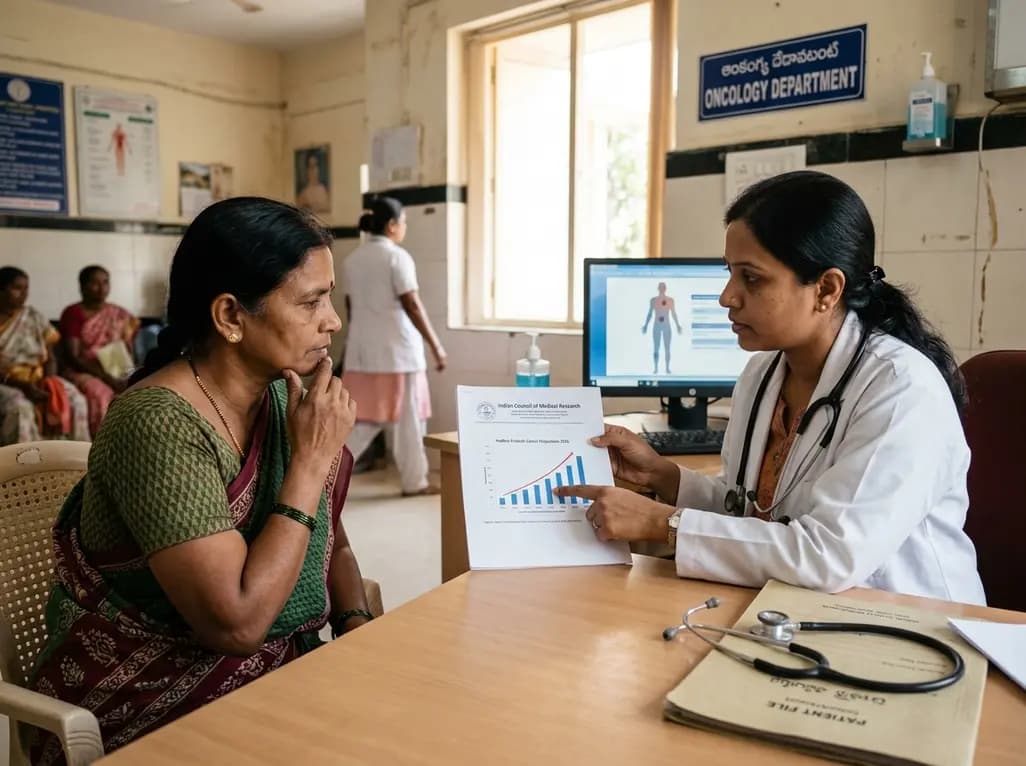
A new ICMR-NINE profile projects 65,000 new adult cancer cases in Andhra Pradesh for 2026, with women carrying the highest burden. The findings underscore an urgent need for oncological infrastructure, early detection initiatives, and public awareness campaigns addressing widespread tobacco and metabolic risk factors.
Today

The FEBE study investigates the prevalence of post-traumatic stress disorder symptoms in women receiving high-dose-rate brachytherapy for cervical cancer, highlighting the critical role of procedural sedation and trauma-informed clinical care.
Today
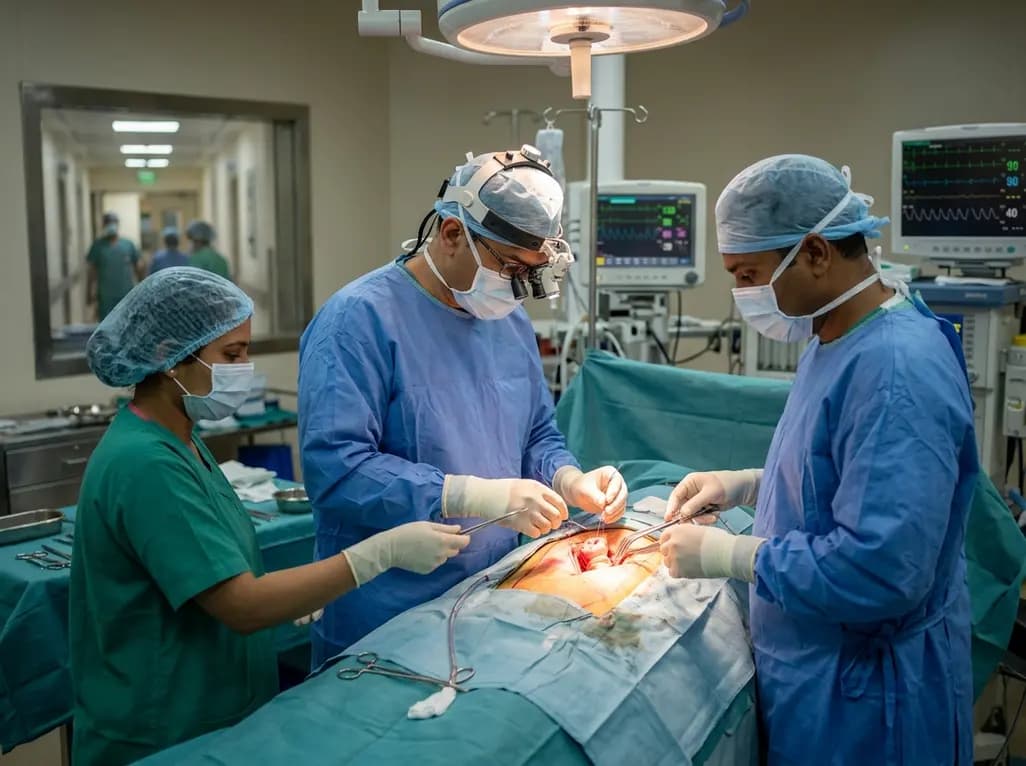
Aortic root aneurysms often develop silently, yet timely intervention provides a critical window to salvage the native aortic valve. Preserving the patient's own anatomy avoids lifelong anticoagulation, provided clinicians identify root dilatation before secondary leaflet distortion and ventricular failure occur.
Today

A Level I trauma center study shows a brief bedside mental health intervention boosts 30-day follow-up screening adherence by 84% in nonviolent injury patients. However, outcomes for violence survivors reveal critical care gaps, underscoring the urgent need for specialized community violence intervention programs.
Today

A preclinical study demonstrates that the SGLT2 inhibitor remogliflozin attenuates cyclophosphamide-associated peripheral neurotoxicity in rats. Remogliflozin restores antioxidant balance via Nrf2, suppresses NF-κB-driven neuroinflammation, activates PI3K/Akt survival signaling, and preserves structural myelin integrity.
Today
