.webp&w=384&q=75)

Loading, please wait...
Loading, please wait...

Effective management of pediatric AML relapse risk requires precise prognostic tools. A significant report from the Children's Oncology Group (COG) recently evaluated the role of HLA-DR expression at diagnosis. Specifically, researchers wanted to see if this marker could predict which children might experience a recurrence after an allogeneic hematopoietic stem cell transplant (HSCT). However, the study results demonstrate that HLA-DR expression does not offer clear predictive value for post-transplant relapse.
The investigators reviewed data from numerous pediatric cases to find patterns in post-transplant outcomes. Consequently, they discovered that initial HLA-DR status did not correlate with the likelihood of the disease returning. Therefore, doctors should not rely on this marker when tailoring transplant protocols. Instead, medical teams must prioritize established factors like cytogenetic risk and minimal residual disease (MRD) levels. These elements remain the gold standard for identifying high-risk patients. Furthermore, this study suggests that the biological drivers of relapse post-HSCT differ from those present at initial diagnosis. Thus, continuous monitoring of MRD remains far more critical than diagnostic immunophenotype alone.
Additionally, identifying new biomarkers remains essential for improving survival rates. While HLA-DR identifies myeloid cells, it does not seem to influence the graft-versus-leukemia effect. Because of this, scientists are now exploring other genetic and epigenetic changes that might bypass the immune system. Ultimately, this research helps clinicians refine their focus toward markers that truly impact patient survival.
No. According to the latest COG report, HLA-DR expression levels at diagnosis do not significantly impact the risk of relapse or overall success following an allogeneic transplant.
Clinicians find that cytogenetic abnormalities and the presence of minimal residual disease (MRD) are much more accurate predictors of relapse risk than initial HLA-DR expression.
HLA-DR is a common surface marker used in flow cytometry to identify and classify myeloid blasts. While it helps confirm an AML diagnosis, it does not appear to serve as a long-term prognostic indicator for transplant outcomes.
Disclaimer: This content is for informational and educational purposes only. It does not constitute medical advice or a professional relationship. Refer to the latest local and national guidelines for clinical practice.
References

Read summarized clinical updates, watch expert medical content, and earn CME certifications right from your smartphone.
Open your smartphone camera to scan and install.





A Children's Oncology Group report shows HLA-DR expression at diagnosis is not a predictor for relapse risk after transplant in pediatric AML patients....
6 months ago
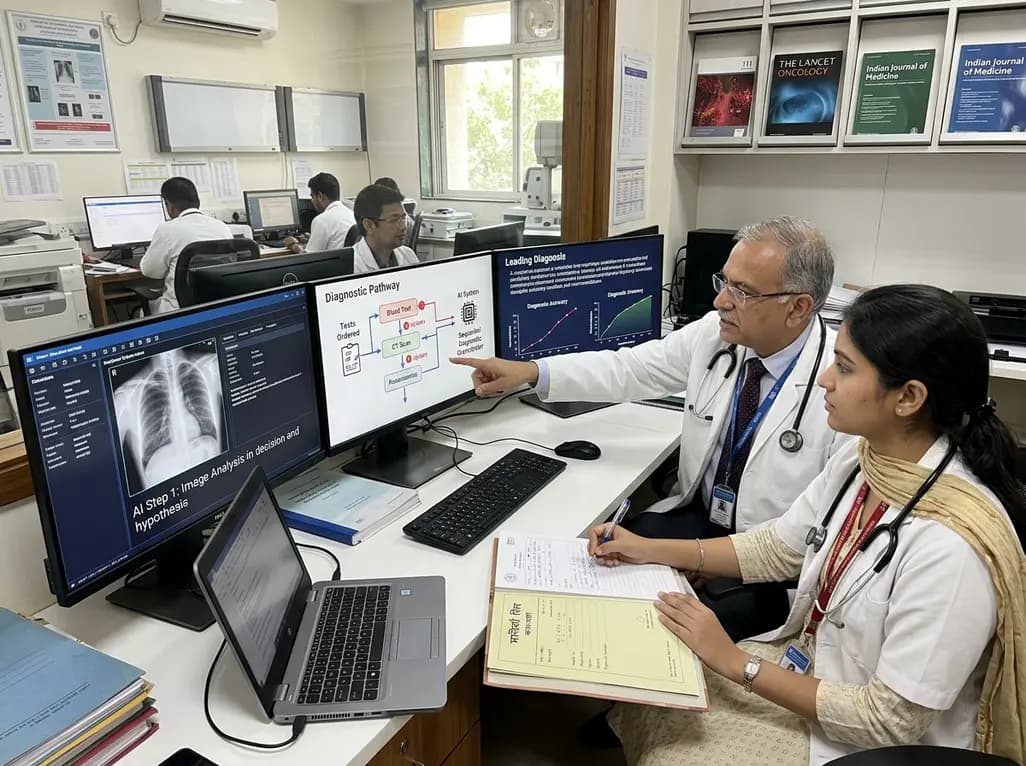
A breakthrough peer-reviewed study demonstrates that a sequential AI diagnosis system can mirror real-world clinical reasoning. By ordering stepwise tests and updating hypotheses dynamically, this multi-agent orchestrator achieved superior diagnostic accuracy while reducing investigative costs.
Today

A prenatal case highlights severe glutaric acidemia type II presenting as bilateral hyperechoic cystic kidneys at 18 weeks. Whole-exome sequencing revealed a novel homozygous ETFDH frameshift variant, demonstrating the power of rapid genetic testing in fetal renal anomalies.
Today

Review how tailored exercise programs benefit frail older patients with heart failure. Explore pathophysiological mechanisms, individualized training prescriptions, and strategies to overcome adherence barriers in clinical practice.
Yesterday

This comparative study evaluates posterior labral tears with and without glenohumeral instability, highlighting distinct demographic patterns, MRI underestimation in stable shoulders, and successful arthroscopic repair outcomes.
Yesterday

A clinical study demonstrates that early intervention with tocilizumab, either as monotherapy or bridged with corticosteroids, achieves significant proptosis reduction and resolves active inflammation in treatment-naive thyroid eye disease.
Yesterday
