.webp&w=384&q=75)

Loading, please wait...
Loading, please wait...

Managing pediatric HIV involves more than clinical care; it requires navigating the complex process of HIV status disclosure interventions. For children and adolescents aged 6 to 19, learning their status is critical for treatment adherence and viral suppression. According to a new global scoping review, effective disclosure also improves psychosocial well-being. Furthermore, it empowers young patients to make informed decisions about their healthcare.
The review categorized 25 unique interventions into disclosure-specific and disclosure-inclusive models. Specifically, disclosure-specific programs focus directly on the act of telling the child about their HIV status. Conversely, disclosure-inclusive interventions integrate disclosure within broader social or health system support. Both types of HIV status disclosure interventions share common building blocks, such as prioritizing the patient's dignity and autonomy.
Moreover, these models utilize specialized tools that enhance engagement between children, caregivers, and health workers. Evidence shows that health system integration improves communication and increases confidence among youth. Nevertheless, researchers highlighted a significant gap in rights-based approaches and specific tools tailored for older adolescents. They also noted that fewer efforts focused on strengthening the support systems themselves.
Consequently, healthcare providers in India should adopt youth-driven strategies that adapt to the evolving HIV landscape. Strengthening health system linkages remains essential for long-term retention in care. Therefore, practitioners must prioritize training and education to support families through the disclosure process effectively. Adopting these priority actions will ensure better clinical outcomes for the next generation.
Disclosure is vital because it significantly improves antiretroviral therapy (ART) adherence and helps achieve viral suppression. Additionally, it supports the overall mental health, health literacy, and autonomy of the child.
These are support systems where disclosure is not the sole focus. Instead, caregivers and providers integrate it into broader care models, such as peer support groups or general health system strengthening initiatives.
Disclaimer: This content is for informational and educational purposes only. It does not constitute professional medical advice, diagnosis, or treatment. Always seek the advice of your physician or other qualified healthcare provider with any questions you may have regarding a medical condition. Refer to the latest local and national guidelines for clinical practice.
References
Laurenzi C et al. Interventions Supporting Disclosure Among Children and Adolescents Living with HIV: A Scoping Review and Realist Synthesis. AIDS Behav. 2026 Feb 10. doi: 10.1007/s10461-026-05060-2. PMID: 41665776.
World Health Organization. Supporting disclosure among children and adolescents living with HIV: interventions, emerging considerations, key gaps and key actions. Geneva: WHO; 2025.
National AIDS Control Organisation (NACO). National HIV Counselling and Testing Guidelines 2024. New Delhi: Ministry of Health and Family Welfare, Government of India.

Read summarized clinical updates, watch expert medical content, and earn CME certifications right from your smartphone.
Open your smartphone camera to scan and install.





A new global scoping review identifies 25 interventions supporting HIV status disclosure in children and adolescents to improve clinical and social outcomes...
8 months ago

A multicenter study from Southeastern Türkiye identified rare alpha-1 antitrypsin deficiency variants, including the homozygous Malton genotype, among COPD patients. Half were never-smokers, highlighting the critical need for comprehensive genetic screening beyond common S and Z alleles.
Today
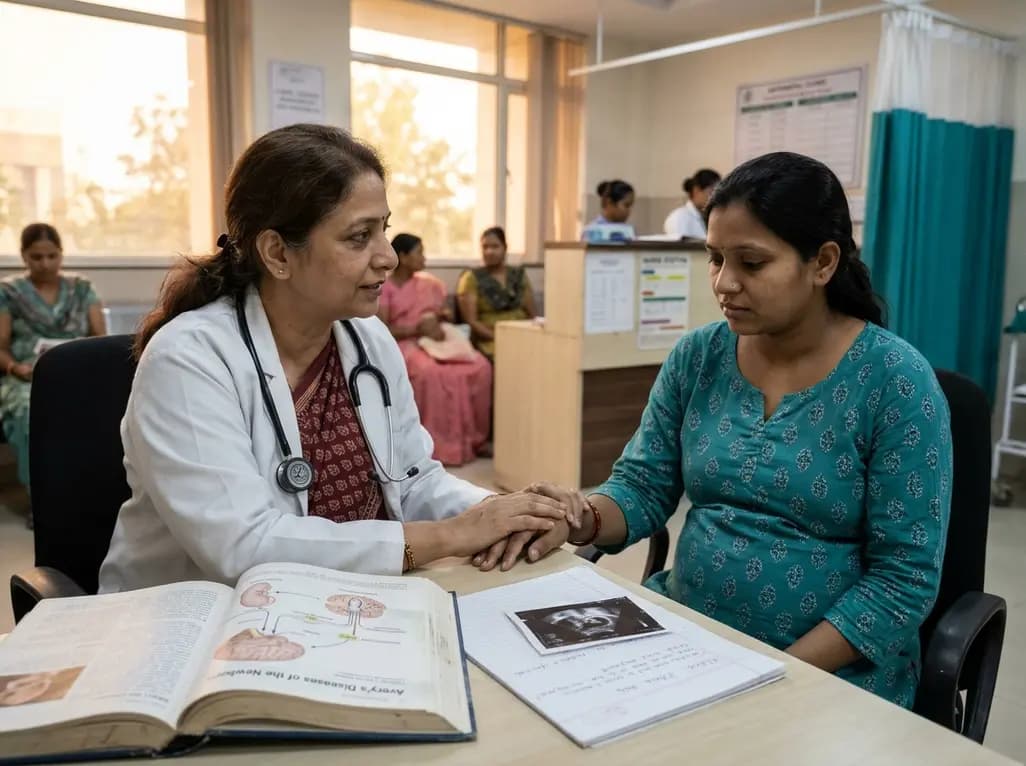
A comprehensive scoping review synthesises evidence linking prenatal maternal mental health to long-term offspring neurodevelopment, evaluating neuroendocrine, inflammatory, and epigenetic pathways while highlighting clinical screening and future research priorities.
Today

The Directorate General of Health Services directs Indian states to halt the hazardous reuse and reprocessing of single-use medical devices. Discover regulatory implications under the Drugs and Cosmetics Act, critical infection risks, legal liabilities, and operational changes required across clinical specialties.
Today
A 25-year multi-institutional cohort reveals high recurrence rates in pediatric giant cell tumor of bone, particularly in patients with open physes and bone marrow edema on preoperative MRI. Early surveillance and careful balance between growth plate preservation and tumor clearance are essential.
Today

India is advancing preventive healthcare by integrating genomics, artificial intelligence, and quantum technologies. With the SANGAM programme sequencing one million Indian genomes, clinicians can unlock personalized therapies, detect cardiometabolic risks early, and curb the burden of diabetes and heart disease.
Today
