.webp&w=384&q=75)

Loading, please wait...
Loading, please wait...

Exposure to hypobaric hypoxia presents substantial physiological challenges to human circulation. Understanding high altitude cardiovascular adaptations is essential for clinicians who evaluate travelers, pilgrims, and personnel moving to elevated terrains. Recently, an expansive systematic review and meta-analysis synthesized data from 121 studies encompassing 108,530 participants. Consequently, this study provides clear evidence on dose-dependent circulatory responses across progressive altitude gradients. The human body initiates immediate compensatory reflexes when ambient barometric pressure decreases. However, physiological compensation differs markedly between moderate elevations and extreme environments. In low-altitude conditions, the cardiovascular system maintains tissue perfusion through modest functional adjustments. In contrast, extreme environments trigger pronounced hemodynamic strain and vascular remodeling. These findings offer an evidence-based framework for clinical decision-making and altitude-specific healthcare management.
Environmental hypoxia fundamentally alters vascular tone, cardiac workload, and autonomic regulation. As individuals ascend above sea level, the partial pressure of inspired oxygen declines progressively. Therefore, peripheral chemoreceptors trigger immediate sympathetic activation to preserve vital organ oxygenation. The systematic review evaluated individuals across distinct elevation categories, contrasting low-altitude baselines with high-altitude and extreme high-altitude cohorts. Consequently, researchers documented clear physiological thresholds where compensations transition into pathological strain. During initial exposure, heightened catecholamine release increases systemic vascular tone and cardiac contractility. However, sustained exposure forces structural and functional vascular adaptations over time. Lowland travelers experience acute physiological stress, whereas native highlanders display genetic modifications that optimize oxygen utilization. In addition, the duration of exposure profoundly influences circulatory responses. Short-term visitors display dynamic hemodynamic fluctuations, whereas prolonged stays induce pulmonary and systemic vascular remodeling. Thus, evaluating this dose-response relationship is vital for recognizing both adaptive and maladaptive cardiovascular pathways.
Peripheral capillary oxygen saturation serves as a direct indicator of systemic hypoxemia during altitude exposure. In the meta-analysis, arterial saturation demonstrated a dose-dependent reduction as elevation increased. Most notably, individuals reaching extreme high altitudes experienced an intense decline, with a standardized mean difference of minus 16.68. This precipitous drop highlights how severe atmospheric hypoxia overwhelms standard respiratory compensation. Consequently, low alveolar oxygen tension impairs alveolar-capillary diffusion gradients. Even healthy individuals exhibit marked arterial desaturation at these elevated thresholds. Furthermore, physical exertion exacerbates this hypoxemia by shortening erythrocyte transit time within pulmonary capillaries. In clinical practice, severe desaturation impairs subendocardial viability and compromises myocardial reserve. Furthermore, persistent hypoxemia stimulates pulmonary arterial vasoconstriction, thereby compounding right ventricular afterload. Subgroup findings indicated that lowland natives suffer significantly sharper desaturation curves than acclimated highlanders. Therefore, regular pulse oximetry monitoring remains a cornerstone of early diagnostic surveillance for ascending travelers. Clinicians must recognize that extreme altitude induces profound hypoxemic stress that necessitates swift altitude moderation.
Systemic blood pressure exhibits dynamic variations depending directly on the degree of hypoxic exposure. Interestingly, the meta-analysis revealed that diastolic blood pressure showed the greatest surge at extreme high altitude, achieving a standardized mean difference of 6.09. This significant elevation reflects intense peripheral vasoconstriction driven by sustained sympathetic hyperactivation. Endothelial endothelin production increases during acute hypoxia, whereas nitric oxide bioavailability often declines. Consequently, systemic vascular resistance rises substantially, which elevates diastolic arterial pressure. In contrast, systolic blood pressure changes often vary depending on baseline hydration, stroke volume, and cardiac output. The marked diastolic increase presents substantial risks for individuals with underlying hypertensive heart disease or vascular stiffness. Furthermore, elevated peripheral resistance directly increases left ventricular myocardial wall stress. Subgroup analyses confirmed that exposure duration alters blood pressure trajectories significantly. Lowlanders frequently experience sustained hypertension during their initial weeks at extreme altitude. Consequently, practicing physicians must carefully assess baseline cardiovascular risk and optimize antihypertensive therapy before patients embark on mountain ascents.
Chronotropic responses represent one of the earliest compensatory mechanisms against acute environmental hypoxemia. When individuals ascend from low to high altitude, resting heart rate increases promptly to augment cardiac output. This accelerated pulse compensates for reduced arterial oxygen content, thereby ensuring stable tissue perfusion. However, the meta-analysis identified a intriguing physiological plateau. Although heart rate rose significantly from low to high altitude, it demonstrated no further significant increase at extreme elevations. Several physiological mechanisms account for this unexpected rate limitation. First, prolonged hypobaric hypoxia induces beta-adrenergic receptor desensitization in myocardial tissue. Consequently, the myocardium exhibits diminished chronotropic responsiveness despite high circulating catecholamines. Second, concurrent parasympathetic reactivation may counteract excessive tachycardia to prevent myocardial oxygen supply-demand mismatches. In addition, stroke volume frequently declines at extreme altitudes due to contracted plasma volume. Therefore, the cardiovascular system cannot indefinitely escalate heart rate to sustain cardiac output under severe hypoxia. Clinicians should recognize that the lack of additional tachycardic response at extreme heights reflects an exhausted autonomic reserve.
In India, high-altitude travel has expanded rapidly due to religious pilgrimages, adventure tourism, and strategic defense deployments. Millions of pilgrims travel annually to high-altitude shrines, including Kedarnath, Badrinath, and the Amarnath Cave. Many of these travelers are elderly individuals who carry undiagnosed coronary artery disease, hypertension, or diabetes mellitus. In addition, tourists frequently fly directly into Leh Ladakh, ascending from sea level to over 3,500 meters within hours. This abrupt ascent precipitates acute hypoxic stress without providing adequate acclimatization windows. Consequently, pilgrimage routes frequently report high rates of sudden cardiac events, acute pulmonary edema, and hypertensive crises. Military personnel stationed along Himalayan border posts face prolonged hypobaric exposure, which promotes chronic pulmonary hypertension and right ventricular strain. The findings from this meta-analysis emphasize that cardiovascular strain scales dramatically with altitude elevation. Therefore, Indian physicians must conduct rigorous pre-travel cardiovascular screenings for prospective travelers. Routine assessments should include twelve-lead electrocardiography, echocardiography, and ambulatory blood pressure monitoring for at-risk individuals.
Successful risk mitigation requires comprehensive pre-travel planning, structured acclimatization schedules, and targeted pharmacological management. High-altitude clinical guidelines strongly advocate for gradual ascent rates to allow cardiovascular accommodation. Specifically, travelers ascending above 2,500 meters should avoid increasing their sleeping elevation by more than 500 meters daily. Furthermore, inclusion of a dedicated rest day every three to four days facilitates autonomic stabilization. Patients with established cardiovascular disease require individualized risk stratification before undertaking mountain travel. Individuals with uncontrolled hypertension, severe aortic stenosis, or unstable coronary syndromes should avoid high-altitude exposure entirely. For hypertensive travelers, clinicians often consider calcium channel blockers or angiotensin receptor blockers to mitigate sympathetic vasoconstriction, while avoiding excessive diuretics that worsen hypovolemia. In addition, prophylactic acetazolamide promotes metabolic acidosis, which stimulates ventilation and improves arterial oxygen saturation. Portable hyperbaric chambers and supplemental oxygen supplies should be available along busy Himalayan pilgrimage paths. Ultimately, multidisciplinary collaboration ensures traveler safety through structured surveillance and timely intervention.
Acute exposure to high altitude triggers sympathetic nervous system activation, which increases systemic vasoconstriction and cardiac output. Consequently, both systolic and diastolic blood pressure rise shortly after arrival. The recent meta-analysis demonstrated that diastolic blood pressure increases most dramatically at extreme altitudes due to pronounced vascular resistance. Patients with pre-existing hypertension must monitor their readings diligently because elevated blood pressure often persists throughout the initial weeks of high-altitude acclimatization.
Although heart rate rises during moderate altitude ascent to preserve tissue oxygen delivery, it stops increasing at extreme elevations. This physiological plateau occurs primarily because prolonged hypoxemia downregulates myocardial beta-adrenergic receptors, reducing sensitivity to circulating catecholamines. Concurrently, heightened vagal tone and reduced plasma volume limit further tachycardic compensation. Therefore, clinicians must realize that a plateauing heart rate indicates exhausted autonomic reserve rather than successful cardiovascular acclimatization under extreme hypoxic conditions.
Indian pilgrims with underlying cardiovascular disease should undergo comprehensive medical evaluations, including baseline electrocardiography and echocardiography, prior to travel. They must maintain strict medication adherence, avoid rapid ascents, and allow adequate acclimatization days. Furthermore, individuals should avoid strenuous walking during harsh weather, stay hydrated, and monitor blood oxygen levels with portable pulse oximeters. Seeking immediate medical attention and descending promptly upon experiencing chest tightness or severe breathlessness is vital.
Disclaimer: This content is for informational and educational purposes only and should not be considered medical advice. Always consult a qualified healthcare professional regarding any medical condition or treatment. Refer to the latest local and national guidelines for clinical practice.
References

Read summarized clinical updates, watch expert medical content, and earn CME certifications right from your smartphone.
Open your smartphone camera to scan and install.





A landmark systematic review of 108,530 individuals reveals dose-dependent high altitude cardiovascular adaptations, marked by severe SpO2 drops, increased diastolic blood pressure, and heart rate plateaus.
Today

New evidence from Karolinska Institutet shows women vaccinated against HPV prior to conception have significantly lower rates of preterm birth and major perinatal complications. Clinicians in India can leverage these findings to strengthen adolescent immunisation and reproductive health advocacy.
Today

Review of artificial intelligence applications in pediatric cardiac critical care, exploring continuous physiologic monitoring, waveform analytics, vasoactive de-escalation, and implementation challenges.
Today
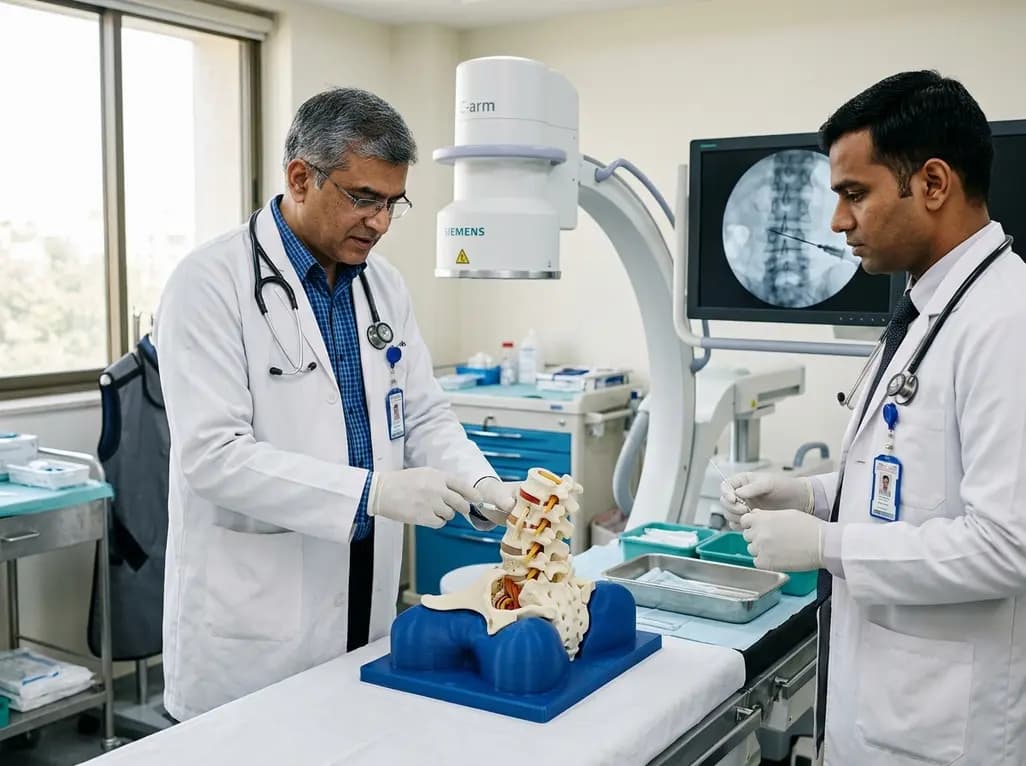
A novel 3D-printed lumbar spine simulator with tunable radiopacity provides realistic tactile and radiographic feedback for fluoroscopy-guided intervertebral disc puncture training, offering a low-cost, ethical alternative to cadaver models.
Today

A breakthrough study reveals that loss of SELENOT in hypothalamic POMC neurons triggers premature cellular senescence, ATF6α stress activation, and ER calcium depletion, linking neuroendocrine decay to metabolic disease.
Today
