.webp&w=384&q=75)

Loading, please wait...
Loading, please wait...
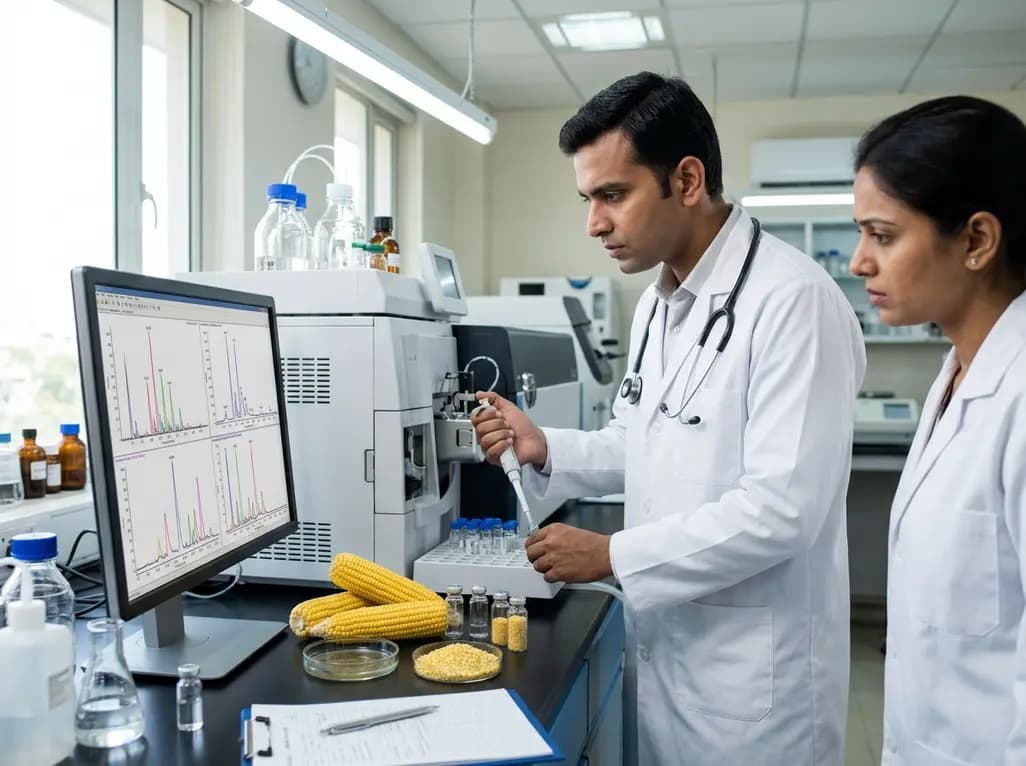
Monitoring herbicide residues in corn has become an essential priority for public health practitioners and regulatory bodies worldwide. As agricultural intensification continues to meet global food demands, the widespread application of chemical weed control agents remains a standard practice. However, this reliance often leads to persistent environmental contamination and potential health risks for consumers. Among the most frequently utilized chemicals are glyphosate and glufosinate, which are valued for their efficacy in managing broad-spectrum weeds. Despite their agricultural benefits, the detection of these substances at trace levels in dietary staples is necessary to prevent chronic exposure. Consequently, researchers have focused on developing highly sensitive analytical techniques to ensure food safety. A recent study has successfully validated a robust methodology using ultra-high performance liquid chromatography-tandem mass spectrometry (UHPLC-MS/MS). This advancement allows for the simultaneous quantification of glyphosate, its metabolite aminomethylphosphonic acid (AMPA), and glufosinate. By establishing precise detection protocols, we can better safeguard populations that rely heavily on corn-based products. Therefore, understanding the technical and clinical implications of these monitoring tools is vital for modern healthcare providers and toxicologists.
Specifically, the analytical challenge of identifying herbicide residues in corn stems from the highly polar nature of glyphosate and glufosinate. These chemical properties make the substances difficult to separate using conventional chromatographic methods. To address this issue, scientists utilize a derivatization process involving fluorenylmethyloxycarbonyl chloride (FMOC-Cl). This reaction chemically modifies the herbicides, enhancing their suitability for liquid chromatography and mass spectrometry. The validated UHPLC-MS/MS method demonstrates an impressive linear range of 0.04 to 6.0 mg/kg. Furthermore, the detection limits are remarkably low, reaching 15 µg/kg for glyphosate and 9 µg/kg for glufosinate. Accuracy and precision remain high, with recovery percentages consistently falling between 70% and 120%. Notably, the method maintains its reliability even when applied to complex food matrices like corn grain and processed tortillas. Scientists found that the matrix components did not interfere with the quantification of the target analytes. As a result, this methodology provides a dependable framework for routine national monitoring programs. By implementing such precise techniques, laboratory professionals can ensure that corn-derived products meet stringent safety requirements before they enter the commercial supply chain.
Maintaining rigorous food safety requires the strict enforcement of Maximum Residue Limits (MRL) set by international and national agencies. Typically, these limits for glyphosate and glufosinate in corn grains range from 1 to 5 mg/kg. The newly validated UHPLC-MS/MS method proves exceptionally capable of quantifying residues well below these regulatory thresholds. In the Indian context, the regulation of glyphosate has seen significant shifts to protect human and animal health. For instance, the Ministry of Agriculture and Farmers Welfare restricted glyphosate use in 2022 to authorized Pest Control Operators only. This move aimed to curb the rampant and often unmonitored application of the chemical across various non-approved crops. Despite these rules, the persistence of herbicide residues in corn remains a concern for the Food Safety and Standards Authority of India (FSSAI). Consequently, the availability of a high-throughput, validated testing method is crucial for regulatory compliance and public safety. Moreover, regular monitoring helps identify geographic regions where herbicide misuse might be occurring. Ultimately, adhering to established MRLs ensures that dietary exposure remains within safe toxicological limits for the general population.
From a medical perspective, the potential health impacts of herbicide residues in corn cannot be ignored. The International Agency for Research on Cancer (IARC) famously classified glyphosate as a \"probable human carcinogen\" in 2015. This classification emphasizes the link between chronic exposure and risks such as non-Hodgkin lymphoma. Furthermore, emerging research suggests that these herbicides may function as endocrine disruptors. Such interference can lead to metabolic imbalances, reproductive issues, and developmental abnormalities in vulnerable groups. In India, some clinicians have expressed concern over the correlation between pesticide exposure and the rising incidence of chronic kidney disease of unknown etiology (CKDu). Additionally, glufosinate exposure has been associated with neuroinflammatory responses and oxidative stress in animal models. Therefore, healthcare providers must consider environmental factors when assessing patients with unexplained chronic conditions. Recognizing the subtle signs of pesticide toxicity, such as persistent skin irritation or metabolic dysfunction, is essential for comprehensive patient care. Clearly, the availability of accurate food residue data supports clinicians in advocating for better dietary habits and safer agricultural practices. By reducing cumulative chemical exposure, we can potentially lower the burden of chronic diseases in society.
Applying advanced analytical methods to real-world samples is the ultimate test of their utility in public health. Researchers recently applied the UHPLC-MS/MS method to common food items like corn tortillas, totopos, and tostadas. These products are staples in many regions, including Latin America and increasingly in urban Indian markets. Notably, the study confirmed that the corn matrix did not impede the accurate detection of glyphosate or AMPA. This success is significant because food processing can often complicate the extraction and analysis of chemical residues. By successfully screening processed goods, authorities can ensure safety throughout the entire production chain from farm to table. Furthermore, the inclusion of AMPA in the monitoring process is vital. Since AMPA is the primary degradation product of glyphosate, its presence indicates previous herbicide use and environmental persistence. Consequently, a comprehensive screening approach provides a more realistic assessment of total toxicological risk. In fact, routine monitoring programs that utilize these advanced techniques can serve as an early warning system for contamination. Thus, scaling up these methodologies is an important step toward achieving long-term food security and health protection.
In conclusion, the validation of a precise UHPLC-MS/MS method for quantifying herbicide residues in corn represents a major milestone in food toxicology. This methodology ensures that detection remains accurate and aligned with international safety benchmarks. As the global conversation around pesticide safety continues to evolve, medical professionals must remain informed about these analytical developments. Understanding how residues are monitored allows clinicians to better interpret environmental health data and advise their patients accordingly. Moreover, supporting the integration of such advanced technologies into national health surveillance systems is essential for informed policy-making. Indeed, the transition toward more transparent and rigorous food safety testing will benefit public health outcomes significantly. However, addressing the risks of herbicide exposure requires a multi-faceted approach involving chemists, regulators, and healthcare providers. By prioritizing the reduction of chemical contaminants in the food supply, we move closer to a healthier and more sustainable future. Ultimately, the use of robust scientific methods like the one described here is our best defense against the unintended consequences of modern agricultural practices.
The UHPLC-MS/MS method provides superior sensitivity and specificity compared to older analytical techniques. Specifically, it uses ultra-high performance liquid chromatography to separate complex mixtures and tandem mass spectrometry to identify molecules precisely. By employing a derivatization step with FMOC-Cl, researchers can accurately quantify polar herbicides like glyphosate and glufosinate. Consequently, this method detects even trace amounts of residues, ensuring food products comply with strict international safety standards for human consumption.
In 2022, the Indian government implemented significant restrictions on glyphosate, limiting its application to authorized Pest Control Operators. This regulatory shift was driven by concerns over human health hazards and environmental safety. Currently, the Food Safety and Standards Authority of India (FSSAI) sets Maximum Residue Limits for specific commodities. However, having a validated testing method for corn is essential because unmonitored use in non-approved crops can still lead to residues in the food supply.
Chronic exposure to herbicide residues is linked to several serious health concerns. The IARC has classified glyphosate as a probable carcinogen, with research suggesting an increased risk of specific cancers like non-Hodgkin lymphoma. Furthermore, these chemicals may act as endocrine disruptors, potentially causing reproductive and metabolic health issues. Some studies also highlight risks of neurotoxicity and adverse effects on the gut microbiome. Therefore, consistent food monitoring is vital to minimize these long-term toxicological risks for consumers.
Disclaimer: This content is for informational and educational purposes only and does not constitute medical advice or a professional opinion. Readers should consult with a qualified healthcare professional regarding specific medical concerns or the potential health impacts of environmental exposures. Refer to the latest local and national guidelines for clinical practice.
References
González-López I et al. Validation of an analytical method for quantification of glyphosate, AMPA, and glufosinate in corn using ultra-high performance liquid chromatography-tandem mass spectrometry. Anal Methods. 2026 Jul 17. doi: 10.1039/d6ay00173d. PMID: 42464857.
Food Safety and Standards Authority of India (FSSAI). Manual of Methods of Analysis of Foods: Pesticide Residues. 2025.
International Agency for Research on Cancer (IARC). IARC Monographs on the Evaluation of Carcinogenic Risks to Humans: Glyphosate. Volume 112. 2015.

Read summarized clinical updates, watch expert medical content, and earn CME certifications right from your smartphone.
Open your smartphone camera to scan and install.





A new study validates a high-precision UHPLC-MS/MS method for detecting glyphosate and glufosinate residues in corn. As herbicide use faces increasing scrutiny in India, this methodology offers a critical tool for routine food safety monitoring and the assessment of long-term clinical health risks.
3 months ago

Health authorities in Kenya have confirmed two fatalities among nine cases of Ebola linked to regional transmission. Clinicians worldwide must maintain heightened vigilance, screen international travelers promptly, enforce strict infection prevention, and deliver immediate supportive care for suspected cases.
Today
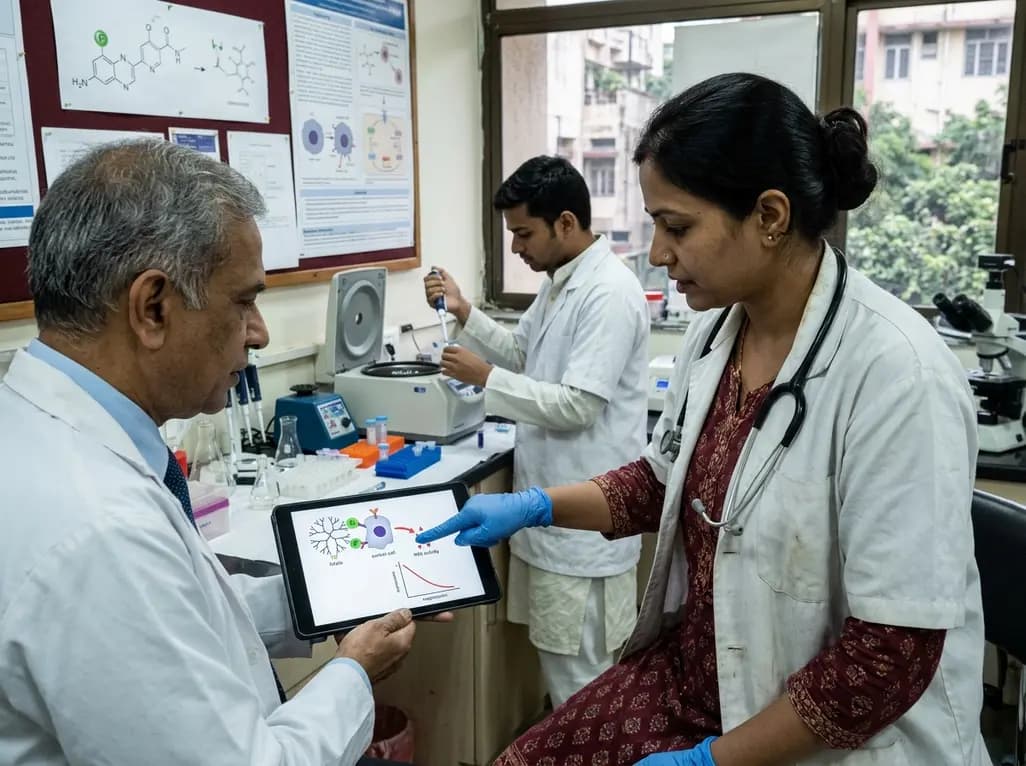
A novel folate-conjugated tecto-dendrimer nanoplatform successfully delivers siRNA to achieve targeted HK2 silencing, disrupting ovarian cancer glycolysis and suppressing lactate output.
Today

A comparative non-contact study reveals that high-power radiofrequency delivery with the QDOT MICRO catheter induces an artifactual contact force rise. Electrophysiologists must understand this power-dependent thermal and electrical phenomenon to avoid inadvertent catheter withdrawal and ineffective ablation.
Today

A novel proof-of-concept study presents a six-degree-of-freedom articulated manikin neck equipped with linear potentiometers. The system provides real-time kinematic motion feedback during cervical immobilisation, delivering sub-degree tracking accuracy to improve pre-hospital trauma training and patient safety.
Today

Novel glucose-responsive mPEG-PSA nanocarriers deliver insulin aspart on demand, achieving dual postprandial and basal glycemic control without hypoglycemia in diabetic models. This biomaterial breakthrough offers promising clinical implications for physiologic diabetes management.
Today
