.webp&w=384&q=75)

Loading, please wait...
Loading, please wait...

Effective oncology care requires a multidisciplinary approach that includes pre-treatment oral health screening. Recently, researchers evaluated the Helsinki Protocol, a specialized clinical workflow designed for cancer patients. This protocol aims to complete comprehensive dental assessments and necessary treatments in a single day. By doing so, clinicians prevent significant delays in starting radiotherapy or antiresorptive therapy. Consequently, this study provides vital insights into the oral health status of patients before they begin intensive oncological regimens.
The retrospective study analyzed 154 patients at Helsinki University Hospital. Researchers found that 61.7% of participants required at least one tooth extraction due to infection foci before starting cancer therapy. Furthermore, smoking significantly increased the risk of needing extractions among these patients. Interestingly, multiple myeloma patients exhibited a lower need for dental surgery compared to other groups receiving antiresorptive medications. Therefore, tailored screening protocols remain essential for different cancer types. Moreover, the Helsinki Protocol successfully minimized treatment delays by streamlining the examination and treatment process. This efficiency is crucial because it allows patients to start their life-saving regimens on time. Additionally, identifying infection foci early prevents long-term complications such as medication-related osteonecrosis of the jaw. As a result, dentists and oncologists should collaborate closely to optimize overall patient health outcomes.
Dental screenings help identify and treat asymptomatic infection foci, such as abscesses or severe gum disease. If left untreated, these infections can cause severe complications like osteonecrosis when the patient undergoes radiation or antiresorptive therapy.
Head and neck cancer patients often face higher risks due to direct radiation exposure and lifestyle factors like smoking. The Helsinki Protocol data suggests that over 60% of oncology patients require extractions to clear infection foci before starting their medical treatment.
Disclaimer: This content is for informational and educational purposes only and does not constitute medical advice. It is not intended to be a substitute for professional medical advice, diagnosis, or treatment. Always seek the advice of your physician or other qualified health provider with any questions you may have regarding a medical condition. Never disregard professional medical advice or delay in seeking it because of something you have read here. Refer to the latest local and national guidelines for clinical practice.
References
1. Järvinen J et al. Oral Health Screening Prior to Oncological Treatment-The Helsinki Protocol. Oral Dis. 2026 Apr 08. doi: 10.1111/odi.70339. PMID: 41952044.
2. Head and Neck Cancer Institute of India. Dental Care Services. Available at: https://hncii.org
3. American Dental Association. Cancer Therapies and Dental Considerations. Available at: https://www.ada.org
"
Read summarized clinical updates, watch expert medical content, and earn CME certifications right from your smartphone.
Open your smartphone camera to scan and install.





A retrospective study highlights the effectiveness of the Helsinki Protocol in providing rapid dental screenings for cancer patients before treatment....
6 months ago
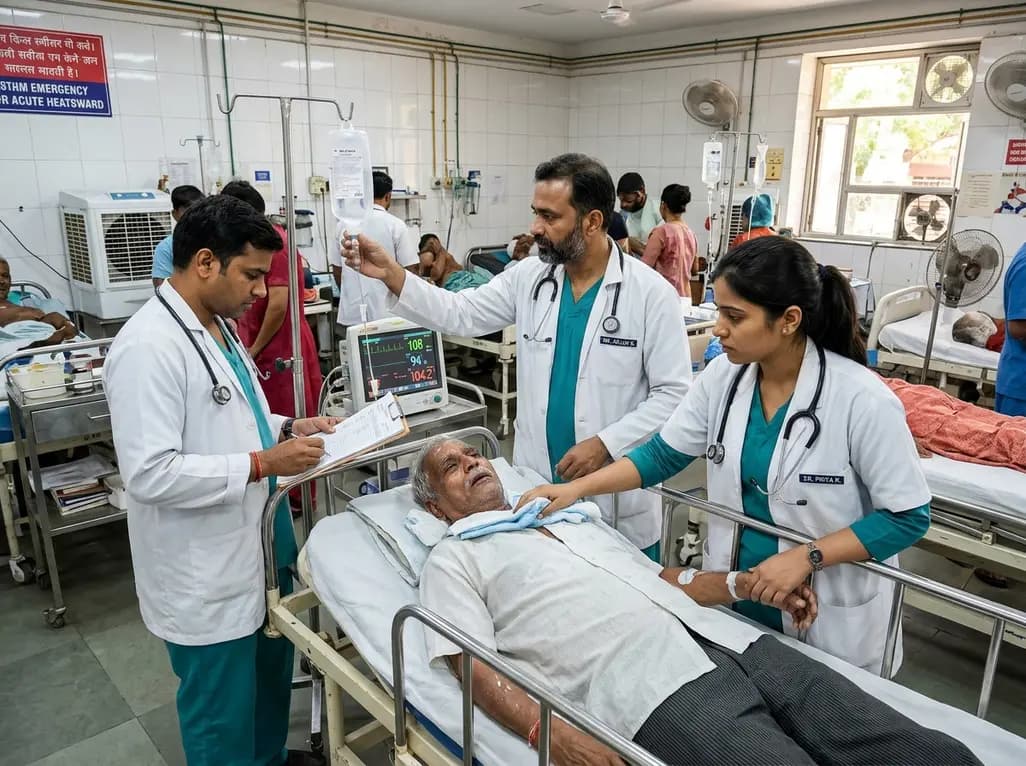
Recent epidemiological data reveals a dramatic surge in summer heat mortality driven by human-induced climate warming. This analysis explores the pathophysiological impacts on cardiac and renal systems, diagnostic dilemmas in death certification, and essential emergency cooling protocols for acute clinical care.
Today

Odisha has established India's first state-level clinical protocol specifically tailored for pregnant women with sickle cell disease. Developed with NHM and UNICEF, the framework provides structured antenatal screening, crisis mitigation, standardized referral pathways, and specialized interdisciplinary care.
Today

India is advancing preventive healthcare by integrating genomics, artificial intelligence, and quantum technologies. With the SANGAM programme sequencing one million Indian genomes, clinicians can unlock personalized therapies, detect cardiometabolic risks early, and curb the burden of diabetes and heart disease.
Today

A randomized controlled trial demonstrates that an eight-week dual-task training intervention significantly improves static and dynamic postural control over standard balance exercises in individuals with chronic ankle instability, addressing critical neurocognitive deficits during athletic and daily activities.
Today

A retrospective cohort study of 7,716 ICU patients from the MIMIC-IV database demonstrates that Gradient Boosting Decision Trees significantly outperform traditional SOFA scores in predicting in-hospital mortality among patients with sepsis and diabetes, with SHAP analysis providing clinical interpretability.
Today
