

Loading, please wait...
Loading, please wait...

Healthcare pricing regulation has emerged as a paramount topic across India as policymakers strive to ensure universal, high-quality, and affordable medical care. Rising out-of-pocket expenses for pharmaceuticals and advanced therapeutic devices place severe financial strain on vulnerable families. While administrative intervention protects vulnerable citizens against price gouging, blunt market caps can inadvertently suppress clinical innovation and critical medical supply chains. Consequently, health authorities must design surgical, evidence-based policies that target specific economic anomalies rather than applying rigid formulas across diverse healthcare sectors.
Healthcare delivery encompasses a remarkably diverse assortment of medical interventions, clinical products, and specialized distribution networks. A mass-produced generic tablet requires vastly different capital investments compared to an advanced biologic therapy, an implantable cardiac device, or temperature-sensitive diagnostics. Therefore, treating these distinct sectors as a uniform marketplace inevitably generates unintended economic consequences. Modern supply chains for specialty pharmaceuticals demand uninterrupted cold-chain logistics, rigorous batch testing, and stringent compliance with good manufacturing practices. When authorities fail to distinguish legitimate handling costs from pure speculative markups, standard market mechanisms deteriorate rapidly. Furthermore, smaller distribution hubs may discontinue low-margin essential products if regulatory ceilings prevent them from recovering mandatory overhead expenses. In addition, regional variations in transport infrastructure across remote districts introduce logistical expenses that centralized price calculations frequently overlook. Clinicians who manage complex chronic illnesses observe firsthand how unexpected supply disruptions immediately compromise patient outcomes. Therefore, a modern healthcare pricing regulation framework must analyze value addition at every distribution tier before imposing statutory controls. By distinguishing unavoidable operational investments from unjustified markups, regulatory authorities can safeguard clinical continuity while eliminating unreasonable financial exploitation of distressed families.
Excessive retail markups across unbranded generics and proprietary consumables represent a chronic problem in secondary and tertiary inpatient care. Under the conventional system, intermediaries occasionally inflate maximum retail prices to offer steep institutional discounts while securing extraordinary margins for commercial dispensing pharmacies. To eliminate this market distortion, the National Pharmaceutical Pricing Authority has implemented trade margin rationalisation across designated therapeutic segments, notably non-scheduled anti-cancer medications. This targeted mechanism caps markups at the first point of sale, thereby directly compressing excessive distribution margins without depressing primary manufacturing revenues. Consequently, patients receive immediate financial relief on high-cost therapies, with price reductions frequently reaching twenty to seventy percent. Furthermore, this surgical method contrasts sharply with blanket ceiling caps that often incentivize manufacturers to exit niche therapeutic markets altogether. When regulators target documented distortions rather than restricting whole therapeutic classes, they protect household budgets while sustaining commercial viability for ethical producers. In addition, transparent margin formulas discourage hospital networks from pushing higher-priced alternative brands merely to capture inflated pharmacy margins. Clinicians can thus focus entirely on therapeutic efficacy and safety rather than arbitrary institutional procurement incentives.
India currently faces a dual epidemiological burden that demands massive capital investments in clinical research, hospital infrastructure, and advanced biotechnology. While public budgetary allocations have expanded, private capital remains indispensable for building modern diagnostic laboratories, tertiary intensive care units, and specialized oncology centers. If stringent price ceilings compress operational margins indiscriminately, institutional investors redirect vital capital toward less regulated foreign markets or alternate industries. Consequently, domestic healthcare providers may struggle to acquire cutting-edge robotic surgical platforms, genomic diagnostic tools, and next-generation immunotherapies. In addition, aggressive price suppression can inadvertently compromise clinical quality standards by forcing facilities to economize on auxiliary staffing, maintenance contracts, and sterilization protocols. Healthcare pricing policy must therefore maintain a delicate equilibrium between consumer affordability and sustainable industrial vitality. Furthermore, clinical investigators need predictable commercial environments to conduct domestic clinical trials and discover treatments tailored to local genetic phenotypes. When price regulations respect legitimate operational costs and reasonable returns on capital, medical institutions can continue expanding tertiary services into underserved tier-three cities. Ultimately, genuine universal access requires not only affordable medicine costs but also reliable, world-class clinical infrastructure that delivers timely treatment.
A static regulatory framework cannot effectively manage the rapidly shifting economic dynamics of the modern healthcare sector. Production inputs, active pharmaceutical ingredients, global shipping freight rates, and general currency valuations experience constant fluctuations over time. Therefore, an arbitrary margin threshold instituted during one fiscal period may become entirely impractical several years later. If price caps remain frozen during periods of persistent inflation, manufacturers face declining margins that frequently cause unexpected medicine shortages. Conversely, when technological advancements significantly reduce manufacturing costs, regulators should promptly revise price ceilings to pass economic savings along to consumers. Trade margin frameworks must therefore incorporate mandatory periodic evaluations into their institutional design from inception. Furthermore, regulatory agencies need transparent digital dashboards that monitor real-time distribution data, inventory levels, and commercial wholesale transactions. Such dynamic calibration ensures that authorities can quickly tighten rules if predatory pricing re-emerges in specialized therapeutic categories. In addition, bidirectional reviews offer predictable operational boundaries for domestic pharmaceutical producers, allowing them to budget long-term research initiatives with confidence. A dynamic framework thus transforms healthcare regulation from a punitive exercise into a responsive, evidence-based governance instrument.
Constructing an equitable and sustainable pricing model requires continuous dialogue among all principal healthcare stakeholders. Government regulators, practicing physicians, pharmaceutical manufacturers, device developers, supply chain intermediaries, and patient advocacy groups observe unique facets of medical delivery. Consequently, structured stakeholder consultations provide essential qualitative insights that raw financial databases cannot reveal. Practicing physicians, for instance, understand which consumable specifications directly impact patient morbidity and clinical outcomes. When policy architects engage medical experts prior to enacting price caps, they avoid restricting access to premium implantable materials or novel drug formulations. Furthermore, constructive dialogue demystifies complex supply chain logistics for regulatory officials, exposing predatory middlemen while shielding legitimate logistics providers. In addition, patient advocacy organizations ensure that regulatory reforms maintain an unyielding focus on family financial protection and catastrophic expenditure reduction. Collaborative rulemaking does not weaken regulatory power or grant commercial enterprises an unwarranted veto over public interest measures. Instead, extensive consultation equips policymakers to anticipate systemic market adaptations, ensuring that interventions lower actual patient expenditure without diminishing clinical quality. A unified, cooperative approach remains the most dependable strategy for achieving health equity across India.
Q1: What is trade margin rationalisation and how does it benefit patients?
Trade margin rationalisation is a regulatory approach that caps the percentage markup intermediaries and retailers can add between the manufacturer sale price and the final retail cost. Consequently, this intervention curbs disproportionate markups on medicines and medical consumables without depressing primary manufacturing revenue. As a result, patients experience substantial out-of-pocket savings on vital treatments while hospitals retain adequate financial viability to provide dependable clinical care.
Q2: Why are blanket price controls considered suboptimal for complex medical devices?
Medical devices encompass intricate technologies ranging from routine consumables to life-saving robotic systems and cardiovascular implants. Unlike generic medicines, specialized medical devices involve substantial post-sale maintenance, specialized technician training, sterilization requirements, and cold-chain logistics. Therefore, imposing blanket price formulas threatens to trigger domestic supply shortages and discourages global innovators from introducing advanced diagnostic technologies into the Indian market.
Q3: How does dynamic healthcare pricing prevent critical pharmaceutical shortages?
Dynamic pricing mechanisms periodically adjust regulatory thresholds to reflect raw material inflation, currency shifts, and evolving manufacturing expenses. When price caps remain static, rising production overheads make drug manufacturing commercially unviable, prompting companies to discontinue essential formulations. Hence, periodic reviews ensure ethical manufacturers sustain adequate margins to continue domestic production, thereby guaranteeing reliable supplies for acute and chronic patient care.
Disclaimer: This content is for informational and educational purposes only. It does not constitute medical advice or replace professional judgment. Refer to the latest local and national guidelines for clinical practice.
References

Read summarized clinical updates, watch expert medical content, and earn CME certifications right from your smartphone.
Open your smartphone camera to scan and install.





India faces an urgent imperative to reform medical costs without stalling clinical innovation or hospital capacity. Explore how nuanced trade margin rationalisation, evidence-based oversight, and periodic policy reviews create an equitable healthcare model that shields vulnerable patients from out-of-pocket distress.
Today
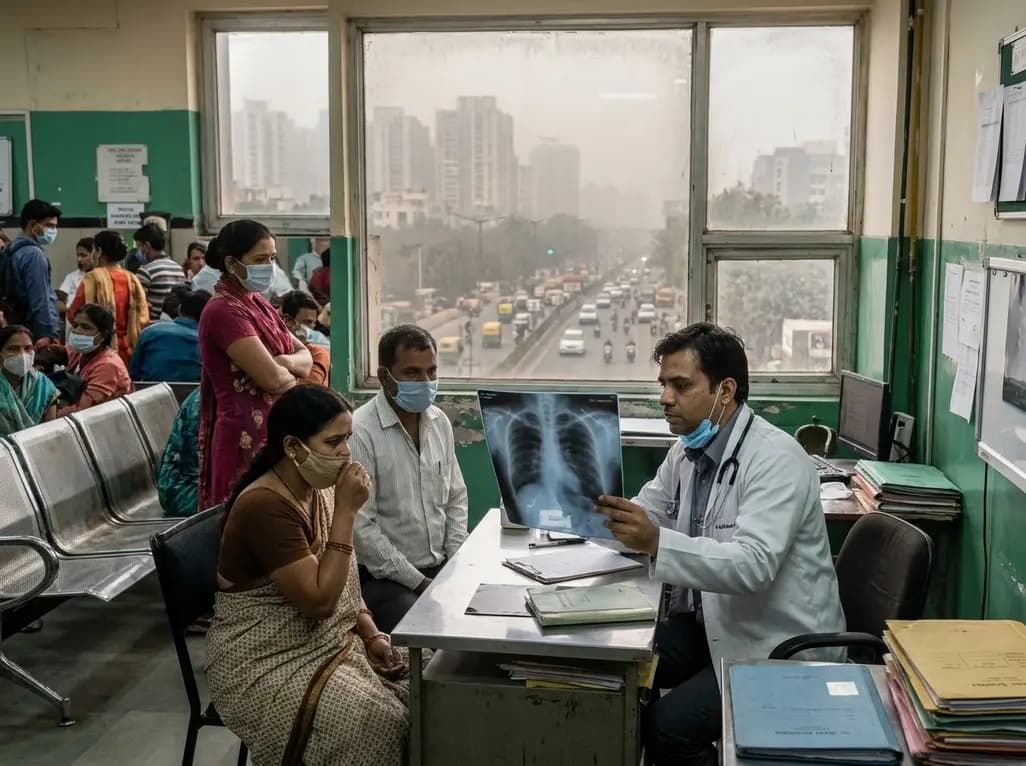
With India still adhering to 2009 air pollution benchmarks, the delayed NAAQS revision exposes populations to fine particulate matter far exceeding global safety limits. Clinicians face surging cardiopulmonary morbidity, emphasizing the urgent need for stringent, health-centered regulatory thresholds nationwide.
Today

India's leading assisted reproduction provider Indira IVF is in advanced talks to acquire a majority stake in Kerala's Sabine Hospital in a Rs 1,300 crore transaction. This strategic development highlights rising private equity interest, clinical consolidation, and changing demographic demands across reproductive medicine.
Today

Recent findings from the VESUVE study demonstrate that brain MRI detects intracranial lesions in over 76% of patients with infective endocarditis. Acute ischemic stroke and subarachnoid hemorrhage independently elevate six-month mortality, underscoring the critical prognostic utility of neuroimaging.
Yesterday

Modern 3D anthropometry reveals that pediatric leg growth ceases years before spinal elongation, exposing the clinical illusion of the classical Anderson-Green model. Learn how segmental growth dissociation improves surgical timing for epiphysiodesis in adolescent leg length discrepancy.
Yesterday

A meta-analysis of 18 studies reveals that bariatric surgery does not significantly alter circulating homocysteine levels, regardless of follow-up duration. Clinicians must maintain vigilance over post-surgical micronutrient supplementation to prevent hyperhomocysteinemia.
Yesterday
