.webp&w=384&q=75)

Loading, please wait...
Loading, please wait...
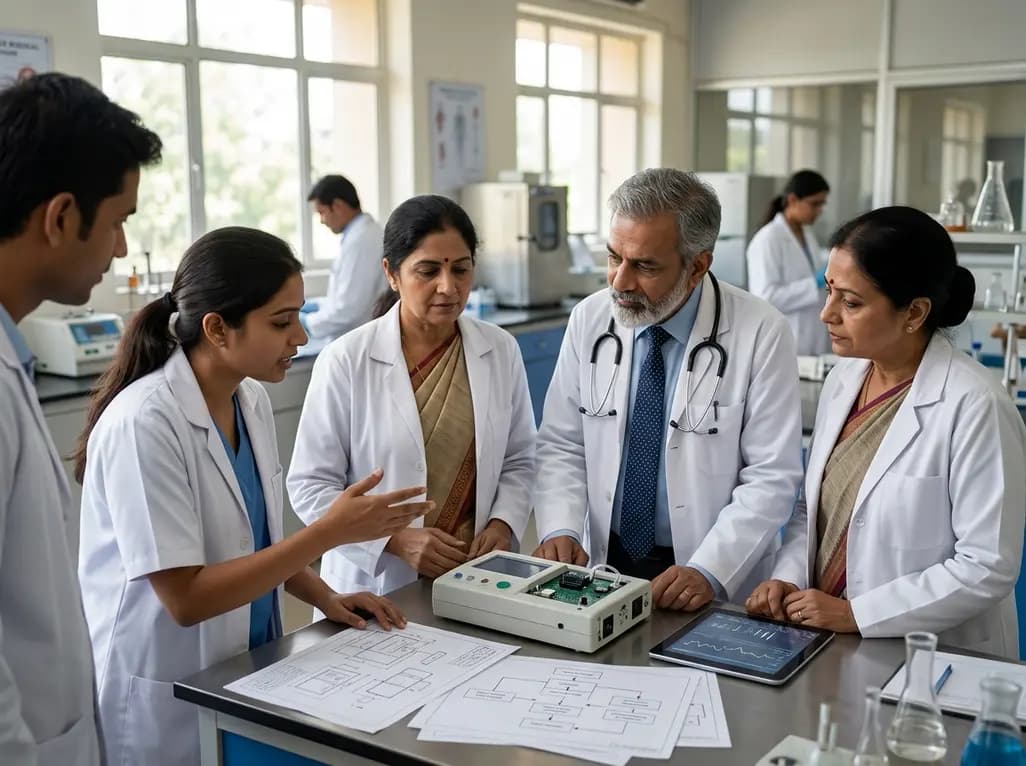
India's biomedical sector is experiencing a transformative shift with the launch of the "Medical Innovations Patent Mitra" initiative by the Indian Council of Medical Research (ICMR). This pivotal program, announced via a recent National Medical Commission (NMC) advisory, aims to dramatically strengthen the ecosystem for relevant internal content, thereby fostering groundbreaking advancements in public health. Consequently, the initiative provides comprehensive, government-funded support for patent protection and technology transfer, empowering researchers across the nation to safeguard their intellectual property. Ultimately, this effort will accelerate the translation of innovative research into tangible healthcare products and technologies that benefit society. Significantly, the program aligns seamlessly with the NMC's overarching objective of promoting research, innovation, and excellence within medical education, establishing a robust framework for future progress. This synergistic approach ensures that intellectual property (IP) is not only generated but also effectively utilized for national betterment. Therefore, understanding the nuances of this initiative is crucial for all stakeholders in India's medical landscape.
The core purpose of the Medical Innovations Patent Mitra is multifaceted, yet focused on revolutionizing India's healthcare innovation landscape. Firstly, the initiative offers fully government-funded support for patent filing and subsequent technology transfer processes. This crucial financial backing removes a significant barrier for many researchers and innovators, enabling them to pursue intellectual property protection without the burden of prohibitive costs. Consequently, it creates an environment where valuable research outcomes can effectively transition from laboratories to clinical application. Furthermore, the program explicitly aims to facilitate the translation of research into healthcare products and technologies for broader public benefit. This directly addresses the often-cited challenge of commercializing scientific discoveries, ensuring that innovative solutions reach the patients who need them. Importantly, the initiative reflects a strategic move towards bolstering India's self-reliance in healthcare technologies, shifting the nation from primarily being a consumer to becoming a global source of affordable and innovative medical solutions. This commitment to indigenous innovation is a cornerstone of the program's long-term vision. Therefore, by offering robust support, the Patent Mitra initiative is set to unlock significant potential across the biomedical sector.
Medical colleges and institutions play a pivotal role in the success of the Patent Mitra initiative, as they are incubators of cutting-edge research and innovation. This program provides immense benefits, particularly by offering expert-driven, centralized support for patent filing, prosecution, maintenance, and technology transfer. Researchers, faculty members, clinicians, and students within these institutions can now access handholding support for quality patent filings, strategic IP management, and seamless transfer of technologies to industry partners. This comprehensive assistance is vital for navigating the complex world of intellectual property rights, allowing innovators to focus on their primary work. Moreover, the initiative encourages wider dissemination of information about the platform among all stakeholders, ensuring that every potential innovator is aware of the resources available. Actively participating in this program will significantly strengthen India's overall healthcare innovation ecosystem. Ultimately, it will accelerate the conversion of academic research into impactful healthcare solutions that address real-world medical challenges. This streamlined process directly contributes to improving public health outcomes and establishing India as a leader in medical technology. Thus, the program transforms the pathway from discovery to patient care.
The establishment of the Medical Innovations Patent Mitra initiative marks a significant step towards reinforcing India's biomedical innovation capabilities. Historically, a robust intellectual property regime has been identified as crucial for incentivizing creativity and innovation in healthcare, transforming inventions into economic assets. This initiative directly addresses that need by providing end-to-end guidance and comprehensive support for patent filings and technology transfer. By doing so, it aims to bridge the critical gap between scientific research and industrial commercialization, enabling faster industry adoption of indigenous medical technologies, diagnostics, vaccines, and biomedical research solutions. Furthermore, the program fosters collaboration between scientists, startups, and established companies, creating a dynamic ecosystem where ideas can flourish and be brought to market efficiently. This robust framework for IP protection ensures that the groundbreaking work of Indian researchers is not only recognized but also adequately safeguarded, paving the way for sustained growth and development in the biomedical sector. Consequently, the initiative is poised to empower India to lead in global health solutions. Additionally, it ensures that domestically developed innovations contribute significantly to national health objectives.
For the Medical Innovations Patent Mitra initiative to achieve its full potential, active engagement from medical colleges and institutions across the country is indispensable. The NMC advisory explicitly requests these institutions to widely disseminate information about the program to their faculty members, clinicians, researchers, and students. This proactive communication is vital to ensure that all potential innovators are aware of the fully government-funded support available for patent filing and technology transfer. Encouraging innovators to actively utilize this platform will directly contribute to a more vibrant and productive healthcare innovation ecosystem. Ultimately, participation will accelerate the critical conversion of research findings into practical, impactful healthcare solutions for public benefit. Institutions are not merely beneficiaries; they are crucial partners in driving this national mission. Therefore, their commitment to promoting and facilitating engagement with the Patent Mitra Portal is paramount. By embracing this initiative, medical colleges can champion a culture of innovation and ensure their research translates into meaningful societal impact, thereby contributing to a healthier India. This collective effort is designed to uplift the entire medical research community.
Innovators interested in leveraging the benefits of the Medical Innovations Patent Mitra can find further details and initiate the process through the dedicated Patent Mitra Portal. This centralized online platform is designed to provide all necessary information and guidance for patenting and technology transfer endeavors. For any specific queries or assistance, medical colleges and institutions are encouraged to contact the ICMR directly via the designated email address, patentmitra.hq@icmr.gov.in. This direct line of communication ensures that support is readily available, facilitating a smooth journey from innovation to implementation. Looking ahead, the initiative promises to transform India's position in the global healthcare landscape, positioning it as a hub for affordable and advanced medical solutions. By fostering a strong intellectual property environment, the Patent Mitra is set to catalyze continuous innovation, improve access to quality healthcare, and solidify India’s role as a leader in biomedical research and development. Therefore, this strategic investment in healthcare innovation patents is anticipated to yield significant long-term dividends for the nation. Furthermore, it exemplifies a forward-thinking approach to public health and economic growth. Another invaluable resource can be found through this article which provides further insight into the platform's vision: ICMR Launches Biomedical Technology Transfer Platform.
Disclaimer: This content is for informational and educational purposes only. It is not intended to be a substitute for professional medical advice, diagnosis, or treatment. Always seek the advice of your physician or other qualified health provider with any questions you may have regarding a medical condition. Refer to the latest local and national guidelines for clinical practice.
References

Read summarized clinical updates, watch expert medical content, and earn CME certifications right from your smartphone.
Open your smartphone camera to scan and install.





The ICMR's 'Medical Innovations Patent Mitra' initiative boosts India's biomedical sector by funding patent protection and technology transfer. It empowers researchers and institutions to translate healthcare innovations into public benefit. Learn how this platform supports IP and accelerates medical advancements.
3 months ago

A multicenter study from Southeastern Türkiye identified rare alpha-1 antitrypsin deficiency variants, including the homozygous Malton genotype, among COPD patients. Half were never-smokers, highlighting the critical need for comprehensive genetic screening beyond common S and Z alleles.
Today
A comprehensive scoping review synthesises evidence linking prenatal maternal mental health to long-term offspring neurodevelopment, evaluating neuroendocrine, inflammatory, and epigenetic pathways while highlighting clinical screening and future research priorities.
Today

The Directorate General of Health Services directs Indian states to halt the hazardous reuse and reprocessing of single-use medical devices. Discover regulatory implications under the Drugs and Cosmetics Act, critical infection risks, legal liabilities, and operational changes required across clinical specialties.
Today
A 25-year multi-institutional cohort reveals high recurrence rates in pediatric giant cell tumor of bone, particularly in patients with open physes and bone marrow edema on preoperative MRI. Early surveillance and careful balance between growth plate preservation and tumor clearance are essential.
Today

India is advancing preventive healthcare by integrating genomics, artificial intelligence, and quantum technologies. With the SANGAM programme sequencing one million Indian genomes, clinicians can unlock personalized therapies, detect cardiometabolic risks early, and curb the burden of diabetes and heart disease.
Today
