.webp&w=384&q=75)

Loading, please wait...
Loading, please wait...

Kenya recently adopted a decentralized health system to improve universal health coverage. However, a new study reveals that health service efficiency remains inconsistent across various subnational regions. While the decentralization process aimed to localise care, the actual utilization of resources varies significantly between the 47 county governments. Specifically, researchers found that while child health programs perform relatively well, maternal health services face severe operational challenges.
Data from 2022 indicates that counties achieved a moderate score for child survival. Furthermore, pure technical efficiency averaged 0.85, which implies that managerial factors account for a 15% loss in productivity. Notably, childhood immunization programs demonstrated higher scores, suggesting strong managerial performance in that sector. In addition, many counties could theoretically increase their service coverage by nearly 17% without requiring any new financial inputs. This highlights the potential for massive gains through better administration.
Maternal survival remains the most inefficient area of health production in Kenya. Consequently, counties are currently achieving only half of their potential in this critical sector. Therefore, strengthening managerial capacity at the county level is essential for reaching national health targets. Moreover, optimizing the scale of operations in low-performing regions like Kisii and Nyeri could yield substantial health improvements. Achieving universal health coverage requires a focused effort to eliminate these regional disparities through evidence-based policy shifts.
Inefficiency stems largely from two sources: managerial factors and suboptimal scale of operations. Managerial issues account for roughly 15% of the efficiency loss, while improper scaling of services contributes another 13%.
Childhood immunization programs currently show the highest efficiency. These programs benefit from strong managerial oversight and consistent scaling across most Kenyan counties.
Counties can improve outcomes by strengthening local managerial capacity and reorganizing service delivery models to reach an optimal scale without necessarily increasing their budgets.
Disclaimer: This content is for informational and educational purposes only and does not constitute medical advice or a professional recommendation. The findings discussed are based on specific research and subnational data from Kenya. Refer to the latest local and national guidelines for clinical practice.
References
Achoki T et al. Technical and scale efficiency in health service production in Kenya: subnational analysis of 47 county governments. Arch Public Health. 2026 May 29. doi: 10.1186/s13690-026-01969-1. PMID: 42216220.
World Health Organization. Universal Health Coverage (UHC) Global Monitoring Report. 2023.
Ministry of Health Kenya. Kenya Health Sector Strategic Plan 2023-2027: Accelerating Progress Towards UHC. 2023.
"
Read summarized clinical updates, watch expert medical content, and earn CME certifications right from your smartphone.
Open your smartphone camera to scan and install.





A subnational analysis of Kenya's 47 counties reveals significant efficiency gaps in maternal health services compared to child health and immunization....
4 months ago
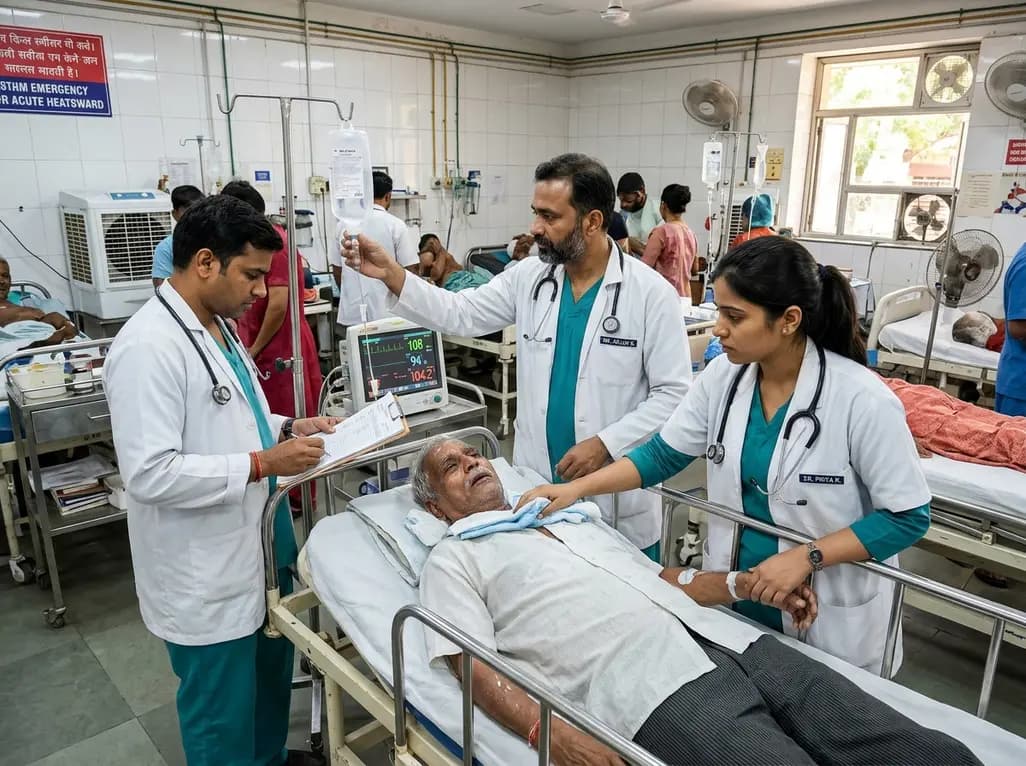
Recent epidemiological data reveals a dramatic surge in summer heat mortality driven by human-induced climate warming. This analysis explores the pathophysiological impacts on cardiac and renal systems, diagnostic dilemmas in death certification, and essential emergency cooling protocols for acute clinical care.
Today

Odisha has established India's first state-level clinical protocol specifically tailored for pregnant women with sickle cell disease. Developed with NHM and UNICEF, the framework provides structured antenatal screening, crisis mitigation, standardized referral pathways, and specialized interdisciplinary care.
Today

India is advancing preventive healthcare by integrating genomics, artificial intelligence, and quantum technologies. With the SANGAM programme sequencing one million Indian genomes, clinicians can unlock personalized therapies, detect cardiometabolic risks early, and curb the burden of diabetes and heart disease.
Today

A randomized controlled trial demonstrates that an eight-week dual-task training intervention significantly improves static and dynamic postural control over standard balance exercises in individuals with chronic ankle instability, addressing critical neurocognitive deficits during athletic and daily activities.
Today

A retrospective cohort study of 7,716 ICU patients from the MIMIC-IV database demonstrates that Gradient Boosting Decision Trees significantly outperform traditional SOFA scores in predicting in-hospital mortality among patients with sepsis and diabetes, with SHAP analysis providing clinical interpretability.
Today
