.webp&w=384&q=75)

Loading, please wait...
Loading, please wait...

Postoperative nausea and vomiting represent persistent challenges during surgical recovery. Laparoscopic gynecological procedures carry an exceptionally high baseline risk for emetic complications. Therefore, clinicians routinely administer multi-agent antiemetic prophylaxis to mitigate patient distress and avoid delayed discharge. For years, the combination of dexamethasone and ondansetron has served as a cornerstone regimen in perioperative practice. However, corticosteroid administration carries distinct clinical concerns, particularly among patients with brittle glycemic control, immunosuppression, or wound healing vulnerabilities. Because systemic steroids transiently elevate blood glucose levels and alter immune responses, surgical teams often seek viable steroid-sparing alternatives. Consequently, researchers designed a rigorous randomized clinical trial evaluating haloperidol-ondansetron for PONV prophylaxis against standard dexamethasone-ondansetron in laparoscopic gynecological procedures. Haloperidol acts as a potent dopamine D2 receptor antagonist within the chemoreceptor trigger zone. Meanwhile, ondansetron blocks serotonin 5-HT3 receptors centrally and peripherally in the gastrointestinal tract. By combining these complementary pharmacologic pathways, clinicians achieve robust dual-pathway antiemetic blockade. This non-inferiority investigation provides vital insight into whether low-dose haloperidol can effectively replace dexamethasone in high-risk female patients without compromising antiemetic protection.
The investigators conducted a prospective, double-blind, randomized non-inferiority trial to ensure high internal validity. Specifically, the study enrolled 120 adult female patients classified as American Society of Anesthesiologists (ASA) physical status I or II. All participants were aged between 18 and 60 years and scheduled for elective laparoscopic gynecological surgery under general anesthesia. Furthermore, researchers randomized the cohort into two distinct interventional arms. The haloperidol-ondansetron (HO) group comprised 62 patients who received intravenous haloperidol 1 mg paired with intravenous ondansetron 4 mg. Conversely, the dexamethasone-ondansetron (DO) group included 58 patients who received intravenous dexamethasone 8 mg alongside intravenous ondansetron 4 mg. The primary endpoint evaluated the overall incidence of postoperative nausea and vomiting during the initial 24 hours following surgery. In addition, the research team established an a priori non-inferiority margin of 15% risk difference. Standardized general anesthesia protocols remained uniform across both patient cohorts to prevent anesthetic confounding. Thus, the rigorous allocation and blinding methodology allowed for an unbiased direct comparison between both dual-drug prophylactic regimens.
The trial results successfully demonstrated non-inferiority between both antiemetic prophylactic strategies. During the 24-hour postoperative observation window, PONV occurred in 45.2% of patients receiving haloperidol-ondansetron and 50.0% of those receiving dexamethasone-ondansetron. Consequently, the calculated absolute risk difference was -4.8%, with a 95% confidence interval spanning from -23% to 13%. Furthermore, the corresponding risk ratio stood at 0.90, accompanied by a 95% confidence interval of 0.62 to 1.31. Because the upper bound of the confidence interval remained at 13%, it fell safely below the pre-specified 15% non-inferiority threshold. Therefore, statistical criteria for clinical non-inferiority were decisively fulfilled. Although overall emetic events remained relatively frequent due to high baseline laparoscopic procedural risks, haloperidol provided equivalent protection compared to the established corticosteroid regimen. In addition, the requirement for rescue antiemetic medications remained comparable across both treatment arms throughout the 24-hour surveillance window. Time to first rescue antiemetic administration showed no significant divergence between cohorts. Thus, these confirmatory findings validate low-dose haloperidol as a reliable non-steroidal substitute in dual-agent antiemetic regimens.
Beyond baseline PONV incidence, the investigators meticulously tracked secondary recovery parameters across the perioperative period. Interestingly, patients in the haloperidol-ondansetron group exhibited significantly lower nausea severity scores during the initial two postoperative hours. Moreover, early postoperative pain scores were notably lower in the haloperidol cohort during this same immediate recovery phase. While researchers emphasized that these analgesic benefits represent exploratory secondary findings, the pharmacological basis remains intriguing. Haloperidol exerts central neuroleptic actions that may modulate affective pain processing and diminish nociceptive distress. Additionally, lower early nausea levels often translate into enhanced patient comfort, which directly influences subjective pain perception. However, clinicians must interpret these analgesic observations cautiously until larger prospective confirmatory trials evaluate this specific secondary relationship. Nevertheless, the concurrent reduction in early postoperative distress highlights the multifaceted clinical utility of low-dose butyrophenones. As a result, perioperative teams can achieve effective symptom relief during the crucial transition from anesthesia emergence to the post-anesthesia care unit without adding extra opioid burden.
Safety surveillance formed an essential pillar of this clinical trial given historic concerns regarding butyrophenone medications. Specifically, clinicians often express apprehension regarding excessive sedation, extrapyramidal symptoms, and cardiac dysrhythmias when administering haloperidol. However, the trial demonstrated that a low 1 mg intravenous dose produced an excellent safety and tolerability profile. In fact, postoperative sedation scores and incidence of emergence delirium remained entirely comparable between the haloperidol-ondansetron and dexamethasone-ondansetron cohorts. Furthermore, continuous electrocardiographic tracking revealed no concerning cardiac events. Although both haloperidol and ondansetron can theoretically influence cardiac repolarization, the measured QTc intervals did not differ significantly between the groups. Crucially, no patient developed a corrected QT interval exceeding 500 milliseconds, and zero ventricular arrhythmias or extrapyramidal side effects occurred. Therefore, single low-dose intravenous haloperidol demonstrated reassuring perioperative cardiac and neurologic safety. These outcomes reaffirm that low-dose butyrophenones avoid the problematic side-effect profiles historically seen with high psychotropic dosages, making them practical for routine anesthesia practice.
The establishment of non-inferiority offers valuable flexibility to modern perioperative physicians managing high-risk surgical patients. Dexamethasone remains an effective and widely utilized antiemetic, but its metabolic consequences often complicate glycemic control in diabetic individuals. Furthermore, surgeons frequently avoid corticosteroids in patients with marginal tissue vascularity, active infection risks, or specific oncologic regimens. In such clinical scenarios, haloperidol-ondansetron provides an evidence-based, corticosteroid-free alternative that delivers equivalent antiemetic protection. Moreover, haloperidol represents an inexpensive, readily accessible medication widely available in surgical theaters and post-anesthesia units globally. Implementing low-dose haloperidol within multimodal antiemetic protocols aligns perfectly with enhanced recovery after surgery (ERAS) pathways. These standardized pathways emphasize tailored pharmacological interventions that minimize physiological disruptions while expediting patient discharge. Consequently, integrating haloperidol-ondansetron expands the clinician's therapeutic armamentarium against debilitating postoperative nausea and vomiting. Perioperative teams can confidently utilize this combination to personalize prophylactic regimens based on individual patient comorbidities, metabolic risk profiles, and specific surgical requirements.
Haloperidol provides potent dopamine D2 receptor antagonism in the chemoreceptor trigger zone, delivering antiemetic efficacy comparable to dexamethasone. However, unlike dexamethasone, haloperidol does not cause acute hyperglycemia or immune suppression. Therefore, haloperidol-ondansetron serves as an ideal non-steroidal alternative for surgical patients with diabetes mellitus, impaired glucose tolerance, active systemic infections, or wound healing vulnerabilities requiring strict corticosteroid avoidance.
The trial utilized a single intravenous dose of 1 mg haloperidol combined with 4 mg intravenous ondansetron. This low dose provided robust antiemetic prophylaxis while avoiding common psychotropic complications. Furthermore, clinical monitoring confirmed that 1 mg intravenous haloperidol caused no excessive sedation, delirium, or extrapyramidal reactions, while maintaining QTc intervals well below critical 500 millisecond thresholds.
No, the clinical trial demonstrated that haloperidol-ondansetron produced QTc intervals comparable to dexamethasone-ondansetron. Electrocardiographic surveillance confirmed that no patient developed a QTc interval exceeding 500 milliseconds, and no cardiac arrhythmias occurred. Consequently, low-dose intravenous haloperidol appears electrophysiologically safe when administered as a single 1 mg dose for perioperative antiemetic prophylaxis in standard surgical cohorts.
Disclaimer: This content is for informational and educational purposes only and does not constitute medical advice. Healthcare professionals must exercise their independent clinical judgment when diagnosing and treating patients. Refer to the latest local and national guidelines for clinical practice.
References

Read summarized clinical updates, watch expert medical content, and earn CME certifications right from your smartphone.
Open your smartphone camera to scan and install.





A randomized double-blind non-inferiority trial shows haloperidol-ondansetron is non-inferior to dexamethasone-ondansetron for PONV prophylaxis after laparoscopic gynecological surgery, offering a safe, effective steroid-sparing alternative with reduced early postoperative pain.
last month

A groundbreaking review highlights mitochondrial quality control as a pivotal gating layer between metabolite signaling and regulated cell death, offering transformative therapeutic avenues across cardiology, oncology, and critical care.
Today

A large retrospective study evaluates the screening accuracy, positive predictive value, and test failure rates of noninvasive prenatal testing (NIPT) in assisted reproductive technology (ART) pregnancies compared to spontaneous conceptions, highlighting key considerations for pretest counseling.
Today
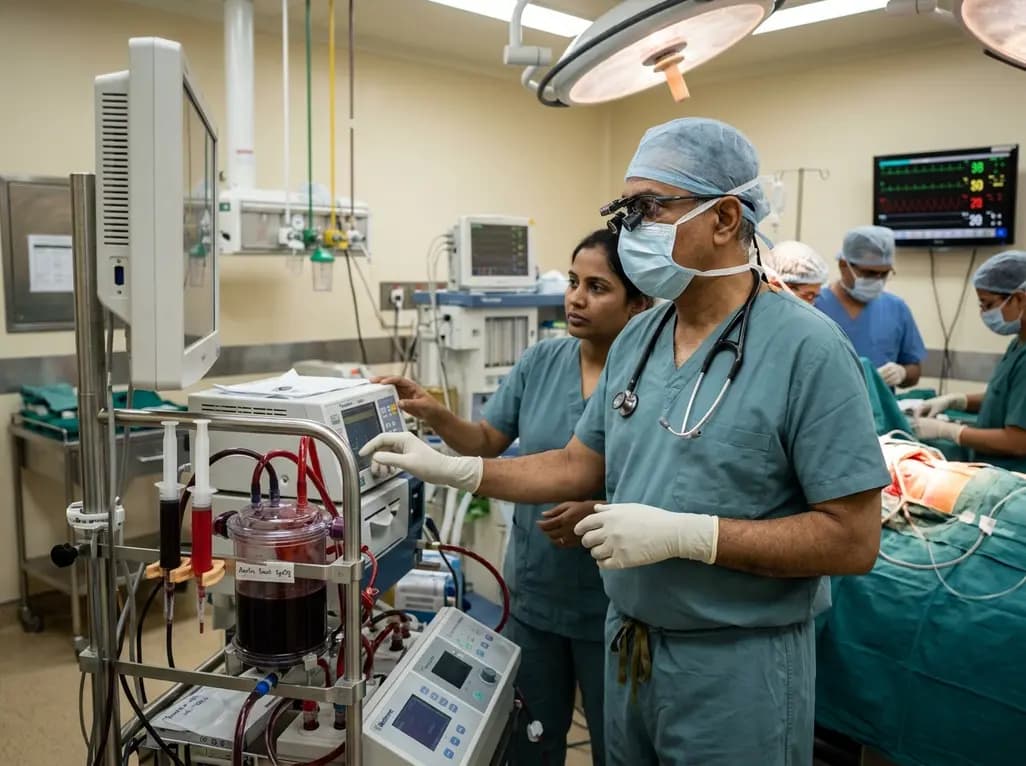
Differential oxygenation during peripheral TA-NRP can cause undetected coronary hypoxemia due to arch vessel clamping. A novel circuit with continuous aortic root monitoring detects desaturation early, facilitating left ventricular unloading and preventing allograft dysfunction and unnecessary heart discard.
Today

A randomized controlled trial compared ultrasound-guided intra-articular injections of PRP, hydrolyzed type I collagen, and hyaluronic acid in knee osteoarthritis. All therapies demonstrated significant improvements in WOMAC and pain scores at six months, supporting hydrolyzed collagen as a viable biological option.
Today

A scoping review evaluates 116 studies on AI in women's reproductive health, finding that 83.6% carry high risk of bias. While ensemble models show promise, disparities and lack of validation hinder LMIC deployment.
Today
