.webp&w=384&q=75)

Loading, please wait...
Loading, please wait...
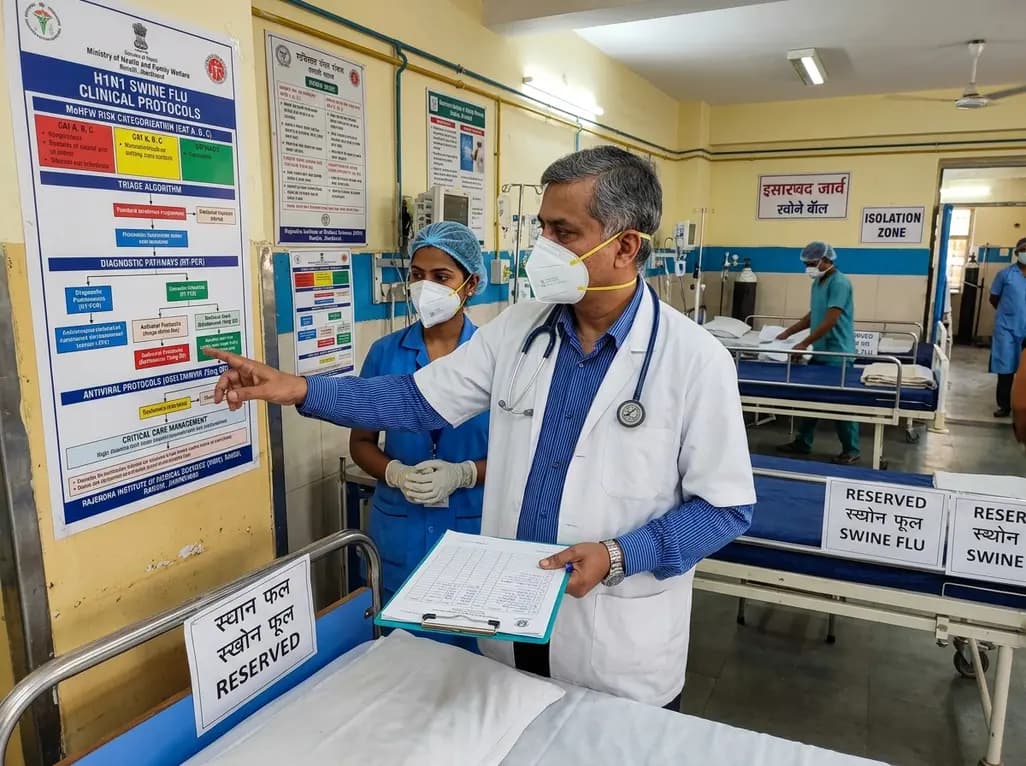
The Jharkhand Health Department has placed state healthcare infrastructure on high alert following the detection of H1N1 Swine Flu cases across regional medical hubs. Health Minister Irfan Ansari issued comprehensive directives to district surveillance officers, Sadar hospitals, and tertiary healthcare institutions to fortify emergency preparedness. Although seasonal spikes in influenza occur annually, prompt public health interventions and strict clinical protocols remain critical for mitigating adverse outcomes. Consequently, frontline clinicians across outpatient and emergency departments must maintain heightened vigilance to ensure early identification, accurate risk stratification, and timely therapeutic intervention for all presenting patients.
State authorities recently mandated the reservation of at least ten dedicated isolation beds across all medical college hospitals, including the Rajendra Institute of Medical Sciences (RIMS) in Ranchi. Sadar hospitals throughout the districts have also established similar isolation units to handle potential patient surges. In addition, Health Minister Irfan Ansari conducted high-level administrative reviews with medical college principals, civil surgeons, and senior health officials to ensure seamless coordination. Healthcare facilities must verify their stocks of essential medications, oxygen infrastructure, viral transport media, and personal protective equipment.
Furthermore, surveillance teams have initiated active clinical screening at high-density transit hubs, including regional airports, railway stations, and bus terminals. Health personnel stationed at these locations evaluate travelers presenting with fever, cough, and acute respiratory distress to facilitate rapid isolation. District surveillance officers are reporting all suspected cases of Influenza-Like Illness (ILI) and Severe Acute Respiratory Infection (SARI) through the Integrated Disease Surveillance Programme. Therefore, systematic tracking helps identify localized transmission clusters early. Public health officials emphasize that clear clinical communication prevents community panic while ensuring prompt presentation at designated fever clinics.
The influenza A (H1N1) subtype is an enveloped RNA virus belonging to the Orthomyxoviridae family that infects the upper and lower respiratory tract. Patients typically present with sudden onset of high-grade fever, non-productive cough, sore throat, severe malaise, headache, and myalgia. In some cases, individuals may also experience gastrointestinal symptoms such as persistent nausea, vomiting, and diarrhea. While uncomplicated infections usually resolve within one week, vulnerable hosts can experience rapid lower airway progression.
Therefore, physicians must carefully differentiate mild viral upper respiratory tract infections from early viral pneumonitis. The virus preferentially binds to alpha-2,6-linked sialic acid receptors in the human airway epithelium, causing direct cellular necrosis and secondary inflammatory responses. Consequently, severe cases often develop extensive alveolar damage, impaired gas exchange, and acute respiratory distress syndrome. Secondary bacterial superinfections, primarily caused by Streptococcus pneumoniae or Staphylococcus aureus, can further exacerbate morbidity. Clinicians must maintain a low threshold for clinical escalation when examining patients who exhibit tachypnea, chest discomfort, or altered mental status during initial evaluation.
The Ministry of Health and Family Welfare (MoHFW) provides a clear three-tier categorization framework to guide influenza management across Indian healthcare settings. Category A comprises patients who exhibit mild fever and cough or sore throat without significant systemic distress. These individuals do not require diagnostic testing or antiviral therapy; instead, clinicians recommend symptomatic care, hydration, and strict home isolation.
However, patients falling into Category B exhibit higher clinical vulnerability despite presenting with mild symptoms. Category B1 includes patients with high fever and severe sore throat who require close medical monitoring. Category B2 includes high-risk individuals, such as pregnant women, elderly adults over 65 years, young children, and immunocompromised patients with chronic cardiac, pulmonary, or renal disease. For Category B2 patients, guidelines mandate immediate initiation of oral oseltamivir without waiting for laboratory confirmation.
Conversely, Category C encompasses patients presenting with severe manifestations, including dyspnea, cyanosis, hemoptysis, hypotension, chest pain, or rapid clinical deterioration. Clinicians must immediately hospitalize Category C patients, collect respiratory samples for confirmatory testing, and start prompt antiviral therapy.
Accurate laboratory confirmation relies on real-time reverse transcription polymerase chain reaction (RT-PCR), which remains the gold standard diagnostic modality. Healthcare personnel must collect nasopharyngeal and oropharyngeal swabs using synthetic fiber swabs with plastic shafts. Immediately after collection, technicians must place the specimens into viral transport medium (VTM) and store them at four degrees Celsius during transit.
Furthermore, clinicians should avoid relying on rapid influenza diagnostic tests for definitive decision-making because these assays suffer from suboptimal sensitivity. In hospitalized patients with severe respiratory illness, medical teams must also perform baseline complete blood counts, renal function panels, hepatic panels, and chest radiography. Diffuse bilateral interstitial infiltrates or patchy consolidations on imaging indicate progressive viral pneumonia. In addition, microbiology teams should obtain blood cultures and sputum cultures to rule out secondary bacterial pneumonia. Point-of-care arterial blood gas analysis is crucial for patients demonstrating low peripheral pulse oximetry readings. Thus, structured laboratory protocols ensure rapid risk stratification and timely therapeutic decisions.
Neuraminidase inhibitors represent the cornerstone of targeted antiviral therapy against influenza A (H1N1). Oral oseltamivir remains the preferred first-line agent, and doctors should administer it as early as possible within 48 hours of symptom onset. The standard adult therapeutic dose is 75 milligrams twice daily for five consecutive days. However, in critically ill patients showing delayed clinical response, intensivists may extend the duration based on clinical judgment.
Moreover, weight-based pediatric dosing regimens ensure safety and efficacy in infants and young children. For patients who cannot tolerate oral medications or absorb enteral formulations, clinicians can consider intravenous peramivir or inhaled zanamivir where available. In addition to antivirals, comprehensive supportive management is vital for recovery. Practitioners should prescribe antipyretics like paracetamol for fever control while strictly avoiding aspirin in pediatric cohorts to prevent Reye syndrome. Judicious fluid administration prevents fluid overload, especially in patients at risk of pulmonary edema. Furthermore, empirical broad-spectrum antibacterial therapy is warranted whenever clinical signs suggest secondary bacterial infection.
Patients progressing to severe respiratory failure require immediate transfer to high-dependency units or intensive care units. Intensivists should implement lung-protective mechanical ventilation strategies, including low tidal volumes of 4 to 8 mL/kg of predicted body weight and titrated positive end-expiratory pressure. Prone positioning can significantly enhance oxygenation in patients with refractory hypoxemia secondary to acute respiratory distress syndrome.
In addition, stringent hospital infection control measures must be enforced to prevent nosocomial transmission. Healthcare workers must wear appropriate personal protective equipment, including N95 respirators, eye protection, gowns, and gloves during aerosol-generating procedures. Isolation wards must maintain adequate negative pressure or optimal natural ventilation with high air-exchange rates. Routine disinfection of high-touch surfaces with sodium hypochlorite solutions reduces environmental contamination. Finally, annual influenza vaccination remains the most effective prophylactic measure for healthcare personnel, high-risk patients, and household contacts. Promoting widespread seasonal immunization safeguards vulnerable populations and reduces community transmission burdens across the state.
Q1: What are the primary warning signs that indicate a patient with H1N1 requires emergency hospitalization?
Clinicians should immediately hospitalize patients who develop red flag symptoms such as persistent breathlessness, tachypnea, resting oxygen saturation below 94 percent, chest pain, hemoptysis, or sudden hypotension. Furthermore, altered sensorium, inability to maintain oral hydration, and worsening underlying comorbidities signify severe disease progression. Prompt admission to an intensive care or high-dependency unit enables continuous vital monitoring and advanced respiratory support.
Q2: When should clinicians initiate oseltamivir therapy in suspected H1N1 cases?
Physicians must initiate oral oseltamivir immediately for all patients classified under Category B2 and Category C, ideally within 48 hours of symptom onset. Doctors should never delay antiviral administration while awaiting laboratory RT-PCR confirmation, as early treatment substantially reduces viral replication, complications, and mortality. Category A patients with mild illness generally do not require antiviral therapy unless they develop progressive clinical deterioration.
Q3: How does the clinical management of H1N1 differ from other seasonal viral respiratory illnesses?
Unlike common viral upper respiratory infections that require only conservative care, H1N1 carries a heightened risk of rapid lower respiratory tract deterioration. Consequently, management requires strict risk stratification under established MoHFW protocols, targeted neuraminidase inhibitor therapy for vulnerable cohorts, and dedicated isolation protocols. Additionally, healthcare facilities must implement rigorous surveillance and maintain specific bed reservations to prevent nosocomial spread and system strain.
Disclaimer: This content is for informational and educational purposes only. It does not constitute medical advice or replace professional judgment. Refer to the latest local and national guidelines for clinical practice.
References

Read summarized clinical updates, watch expert medical content, and earn CME certifications right from your smartphone.
Open your smartphone camera to scan and install.





With Jharkhand on high alert for H1N1 Swine Flu, hospitals are reserving isolation beds and stepping up surveillance. This guide explores MoHFW risk categorization, diagnostic pathways, antiviral protocols, and critical care management to assist Indian clinicians in triaging and managing suspected influenza cases.
4 weeks back

According to WHO data, average lifespan reached 73.3 years in 2023, recovering from pandemic lows. However, healthy life expectancy lags at 62.8 years due to surging noncommunicable conditions like cardiovascular disease and dementia, demanding proactive primary screening and sustained chronic care.
Today

A scoping review reveals how pregnancy affects phonation through laryngeal edema and reduced phonation time rather than major acoustic pitch alterations. Learn how to identify, evaluate, and manage vocal symptoms in expectant mothers.
Today

Medical robotics is transitioning beyond operative suites into diagnostics, cardiology, and endocrinology. Explore how innovations in tele-robotics, AI integration, and nanomedicine are overcoming geographical barriers and transforming precision healthcare delivery across India's evolving disease landscape.
Today

Researchers have engineered an artificial sensory-pain integrated receptor using a multi-threshold organic synaptic transistor. The system distinguishes benign touch from noxious stimuli, enabling safer, more responsive prosthetic limbs with built-in memory and simplified hardware architecture.
Today

A qualitative meta-synthesis highlights the complex interplay between gender dysphoria, minority stress, and eating disorders in transgender and gender-diverse individuals. Clinicians must recognize these distinct drivers to offer supportive, gender-affirming, and interdisciplinary eating disorder care.
Today
