.webp&w=384&q=75)

Loading, please wait...
Loading, please wait...
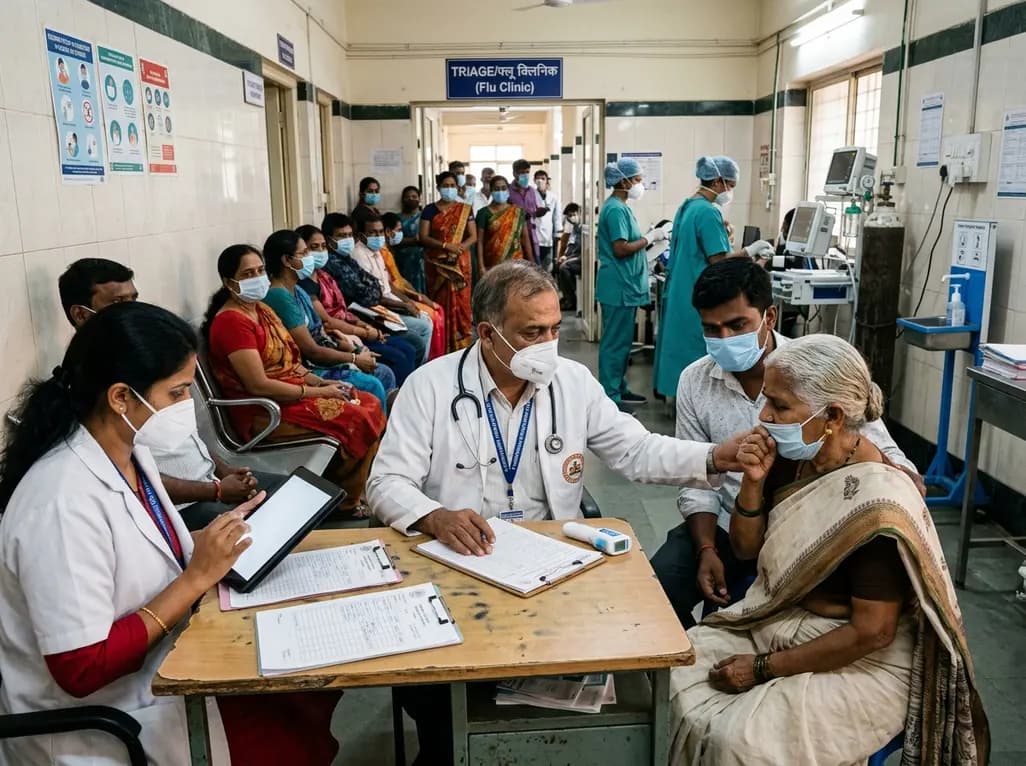
Public health authorities in Karnataka have convened high-level review meetings as cases of H1N1 seasonal flu continue to rise across the state. Official records indicate that infections have crossed the 4,000 mark this year, already rivaling the full-year tally of 2025. Bengaluru accounts for more than half of these recorded infections, driven by high population density and active urban mobility. In response, healthcare providers across outpatient clinics, emergency departments, and critical care units must reinforce structured screening and clinical management protocols.
Seasonal influenza outbreaks in southern India regularly peak during the monsoon months, frequently tapering off only toward late September. Consequently, Karnataka has documented 4,125 confirmed cases, with the Greater Bengaluru Authority and Bengaluru Urban district registering over 3,000 infections combined. Additionally, secondary clusters have emerged in districts such as Udupi and Mysuru. Because individuals with mild disease often forego molecular testing, clinicians suspect that community transmission is substantially broader than official tallies reflect.
Furthermore, surveillance data from the Integrated Disease Surveillance Programme (IDSP) show no evidence of novel antigenic shifts or anomalous viral mutations. Routine genomic and antigenic sequencing confirms that circulating influenza A (H1N1) strains remain antigenically consistent with seasonal expectations. Nevertheless, institutional transmission risks remain significant, as demonstrated by temporary school closures following pediatric clusters. Therefore, primary care practitioners and pediatricians must maintain high vigilance to identify vulnerable patients early, preventing rapid transmission cascades within households, educational institutions, and public healthcare environments.
To optimize hospital resources and avoid emergency room congestion, clinicians should strictly follow the standard risk-stratification framework issued by the Ministry of Health and Family Welfare (MoHFW). This tiered categorization classifies patients into three distinct groups based on clinical severity and underlying physiological vulnerability. Consequently, proper triage ensures that therapeutic interventions reach those who need them most without unnecessary laboratory burdens.
Category A encompasses patients presenting with mild fever, cough, sore throat, headache, body aches, and minor gastrointestinal discomfort. These individuals do not require molecular testing or antiviral therapy. Instead, clinicians should prescribe symptomatic relief, emphasize rigorous home isolation, and schedule reassessment within 24 to 48 hours. Conversely, Category B comprises two subgroups: Category B(i) includes patients with Category A symptoms combined with high-grade fever and severe pharyngitis; Category B(ii) involves patients of any age who possess recognized comorbid conditions, including chronic obstructive pulmonary disease, cardiac failure, diabetes, renal impairment, malignancy, or immunosuppression. Pregnant women and geriatric adults also fall automatically into Category B(ii). These vulnerable patients require immediate empirical antiviral treatment without awaiting laboratory confirmation. Finally, Category C includes any patient showing severe respiratory distress, hemoptysis, cyanosis, hypotension, or altered sensorium. These severe cases demand immediate hospitalization, isolation, and comprehensive supportive care.
Accurate diagnosis of influenza relies heavily on clinical acumen paired with judicious molecular confirmation. Real-time reverse transcription-polymerase chain reaction (RT-PCR) remains the gold standard diagnostic assay due to its superior sensitivity and specificity for differentiating influenza subtypes. Clinicians should prioritize RT-PCR testing for hospitalized Category C patients, institutional outbreak clusters, and atypical presentations. Nasopharyngeal and oropharyngeal swabs collected in viral transport media yield optimal results when obtained within the first three days of symptom onset.
Although rapid influenza diagnostic tests (RIDTs) provide quick point-of-care results, their lower diagnostic sensitivity can yield false-negative outcomes during peak community prevalence. Therefore, clinicians must not withhold antiviral therapy from symptomatic high-risk individuals based solely on a negative rapid antigen result. Moreover, institutional infection control teams must promptly report confirmed cases and cluster outbreaks to district surveillance officers through IDSP portals. Systematic data collection helps track local attack rates, hospital bed occupancy, and antiviral supply stability across both public and private sectors.
Neuraminidase inhibitors represent the cornerstone of medical therapy for complicated or progressive influenza infections. Oseltamivir remains the primary antiviral agent of choice, effectively halting viral replication when initiated early in the disease trajectory. For maximal clinical efficacy, clinicians should ideally start oseltamivir within 48 hours of symptom onset. However, treatment still provides meaningful mortality benefits when administered later to severely ill or deteriorating Category C patients.
Standard adult therapeutic dosing consists of oral oseltamivir 75 mg twice daily for five consecutive days, with weight-adjusted regimens utilized for pediatric cohorts. In severe cases progressing to Severe Acute Respiratory Infection (SARI) or Acute Respiratory Distress Syndrome (ARDS), treating teams may consider extended durations based on persistent viral shedding. Hospital administrators and critical care leads must verify adequate stockpiles of oseltamivir capsules, pediatric suspensions, and personal protective equipment. Additionally, intensive care units should review mechanical ventilation protocols, non-invasive ventilation capacity, and isolation ward allocations to manage potential surges in high-dependency admissions seamlessly.
Effective containment of influenza depends on robust community hygiene and hospital-level infection control. Influenza A spreads efficiently through large respiratory droplets expelled during coughing or sneezing, as well as via indirect contact with contaminated fomites. Therefore, healthcare facilities must enforce strict respiratory hygiene, universal masking in triage zones, and frequent hand decontamination with alcohol-based rubs. In addition, healthcare workers managing respiratory cohorts should receive annual quadrivalent influenza vaccination to protect themselves and prevent nosocomial transmission.
On a community level, public health messaging must educate the public on cough etiquette and prompt self-isolation during symptomatic periods. In addition, school administrators and workplace managers should establish non-punitive sick leave policies to discourage individuals from attending shared environments while infectious. By combining proactive outpatient triage, early antiviral deployment, and consistent hygiene practices, clinicians can dramatically reduce severe morbidity and alleviate healthcare strain across the state.
Q1: What are the primary red-flag signs that indicate progression to Category C H1N1 influenza?
Red-flag indicators in adults include breathlessness, chest pain, hemoptysis, persistent hypotension, confusion, and cyanosis. In pediatric populations, warning signs encompass somnolence, intractable vomiting, poor feeding, rapid breathing, intercostal retractions, and seizures. Any patient exhibiting these clinical features requires immediate hospitalization, diagnostic RT-PCR testing, supplemental oxygen, and prompt empirical oseltamivir initiation.
Q2: Is diagnostic confirmation mandatory before starting oseltamivir in high-risk individuals?
No, laboratory confirmation is not mandatory before starting oseltamivir. According to national clinical guidelines, Category B(ii) individuals—including pregnant women, elderly patients, and those with underlying chronic respiratory or metabolic conditions—must receive empirical oseltamivir immediately upon symptom presentation. Delaying antiviral therapy while awaiting laboratory results significantly increases the risk of severe complications and secondary hospitalizations.
Q3: How safe and effective is oseltamivir administration during pregnancy?
Oseltamivir is considered safe and essential during all trimesters of pregnancy and the early postpartum period. Physiological changes during pregnancy heighten the risk of rapid cardiopulmonary decompensation from influenza A. Observational evidence confirms that early oseltamivir treatment substantially reduces maternal mortality, severe pneumonia, and adverse fetal outcomes without increasing teratogenic risks.
Disclaimer: This content is for informational and educational purposes only. It does not constitute medical advice or replace professional judgment. Refer to the latest local and national guidelines for clinical practice.
References

Read summarized clinical updates, watch expert medical content, and earn CME certifications right from your smartphone.
Open your smartphone camera to scan and install.





With Karnataka recording over 4,000 H1N1 cases, state health authorities are escalating surveillance. Clinicians must implement MoHFW triage protocols, initiate early empirical antivirals in high-risk groups, and monitor for severe acute respiratory infections to prevent hospitalization bottlenecks.
last month

Top-down CSF peptidomics uncovers novel endogenous peptide signatures and oxidative modifications differentiating multiple sclerosis from NMOSD, highlighting secretogranin-5 loss as a key biomarker of disease progression.
Today

Fetal foramen ovale restriction typically emerges in the third trimester with right heart enlargement. Evidence demonstrates it does not independently mandate cesarean delivery, and over 93% of postnatal cardiac findings resolve spontaneously within one year, supporting conservative obstetric management.
Today

The latest WHO Global Health Estimates highlight India's life expectancy reaching 71 years alongside a healthy lifespan of 60.6 years. While longevity rebounds post-pandemic, non-communicable conditions now account for three-quarters of top mortalities, underscoring urgent clinical shifts in routine primary care.
Today

New biomechanical research reveals that foot-strike angle significantly influences knee energy absorption during cutting tasks in female soccer players. Understanding these kinematic patterns offers clinicians valuable pathways for targeted ACL injury prevention and athletic retraining.
Today

A comprehensive review analyzes periconceptional GLP-1 receptor agonist exposure, revealing reassuring data on congenital anomalies and adverse perinatal outcomes while emphasizing the need for cautious patient counseling.
Today
