.webp&w=384&q=75)

Loading, please wait...
Loading, please wait...
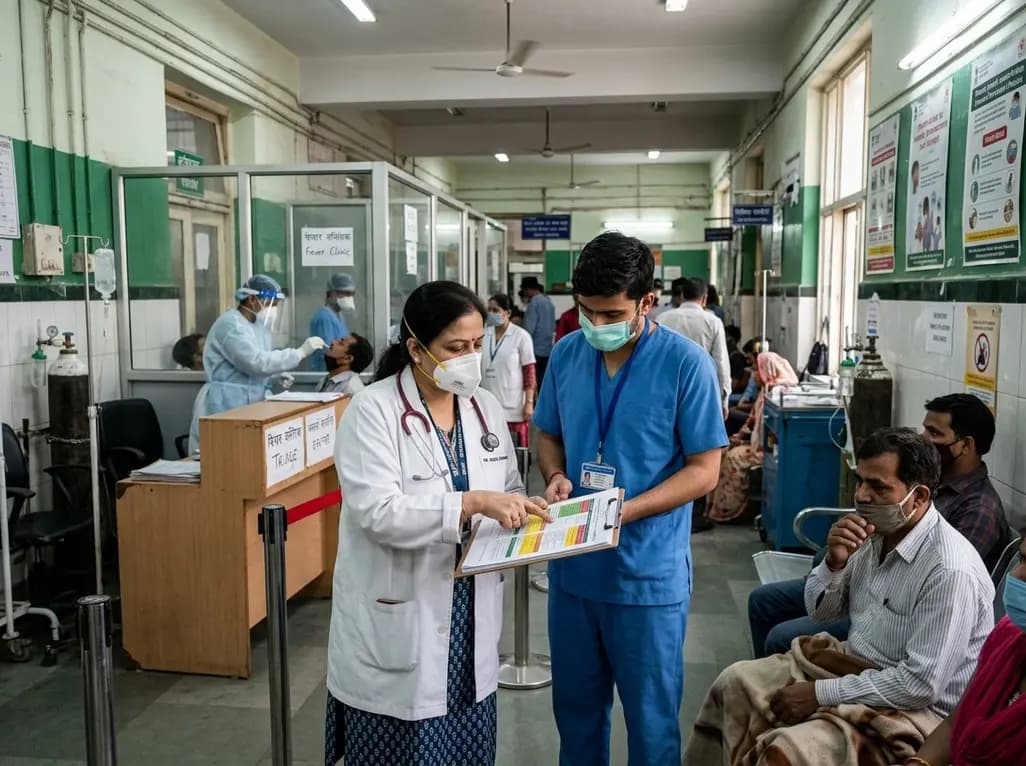
The national capital is witnessing a sharp escalation in viral respiratory illnesses as confirmed cases cross 2,300 this season. Consequently, health authorities have placed tertiary healthcare centers on high alert. This recent H1N1 influenza surge has prompted government hospitals to expand fever clinics and dedicated isolation facilities. Furthermore, clinicians must distinguish uncomplicated viral infections from progressive lower respiratory tract compromise. Early clinical recognition remains pivotal to prevent secondary pulmonary complications and systemic deterioration.
The current epidemiological data reveal over 2,308 confirmed H1N1 infections in Delhi. Moreover, cumulative influenza A and influenza B diagnoses have surpassed 3,000 cases across the region. In contrast to the previous season dominated by the H3N2 subtype, H1N1 has emerged as the principal circulating viral pathogen. Laboratory surveillance at major diagnostic reference centres demonstrates an H1N1 test positivity rate nearing 30 percent among symptomatic cohorts. Consequently, healthcare providers are experiencing a pronounced surge in outpatient visits for acute febrile respiratory illness. In addition, crowded urban environments and fluctuating indoor humidity significantly accelerate droplet transmission in public areas. Because symptoms often overlap with COVID-19, adenovirus, and respiratory syncytial virus, precise clinical suspicion must guide appropriate testing. Public health agencies are therefore strengthening active surveillance for both influenza-like illness (ILI) and severe acute respiratory infections (SARI). Furthermore, hospital administrative teams must monitor local epidemiological trends continuously. This systemic surveillance enables timely resource allocation, adequate staffing, and targeted antimicrobial stewardship across emergency and primary care networks. Timely reporting ensures public health officials maintain an accurate perspective on circulating viral phenotypes.
In response to rising patient footfalls, tertiary centers like Guru Tegh Bahadur Hospital and Baba Saheb Ambedkar Hospital have operationalized dedicated fever clinics. Furthermore, clinical administrators have demarcated specific isolation beds to cohort suspected and confirmed respiratory cases safely. Frontline healthcare workers must enforce standard, contact, and droplet precautions systematically across all clinical zones. Therefore, clinicians evaluating febrile patients should wear appropriate personal protective equipment, including well-fitted N95 respirators. In addition, hospitals must optimize ventilation systems in triage bays and outpatient waiting areas to diminish aerosol concentration. Segregating patient flow at initial entry points effectively prevents nosocomial exposure among vulnerable outpatient populations. For instance, high-risk individuals presenting for routine non-communicable disease consultations require strict physical separation from actively coughing patients. Moreover, environmental cleaning protocols using hospital-grade disinfectants must be intensified across all high-touch surfaces. Institutional leadership is also monitoring drug availability and ensuring that diagnostic sampling remains accessible without inflated patient costs. Through these coordinated institutional measures, healthcare facilities can manage sudden volume spikes while safeguarding clinical staff and non-respiratory admissions. Proactive administrative vigilance prevents institutional transmission cascades during seasonal epidemics.
Effectively managing the H1N1 influenza surge requires strict adherence to established clinical triage frameworks. The Ministry of Health and Family Welfare (MoHFW) categorizes patients into three distinct tiers to streamline testing and admission. Category A encompasses individuals with mild fever, cough, and sore throat without systemic red flags. Consequently, these patients do not require molecular testing or antiviral agents and should isolate at home with supportive symptomatic care. Conversely, Category B includes patients who exhibit high-grade fever or severe pharyngitis alongside defined vulnerability factors. Specifically, this group comprises pregnant individuals, children under five years, adults aged sixty-five or older, and patients with chronic comorbid conditions like diabetes, pulmonary disease, or immunosuppression. Category B individuals warrant prompt empiric antiviral therapy, close ambulatory monitoring, and home confinement. Finally, Category C consists of patients presenting with clear respiratory distress, cyanosis, hypotension, altered mentation, or worsening chest pain. Clinicians must immediately hospitalize Category C patients, collect respiratory specimens for RT-PCR confirmation, and initiate aggressive supportive and antiviral therapy without diagnostic delay. Structured triage avoids unnecessary emergency department congestion.
Accurate microbiological identification prevents unnecessary broad-spectrum antibiotic use and optimizes antiviral delivery. Real-time reverse transcription polymerase chain reaction (RT-PCR) remains the gold standard for confirming influenza A (H1N1) infection. Frontline clinicians should collect combined nasopharyngeal and oropharyngeal swabs using synthetic Dacron or polyester swabs with viral transport medium. Furthermore, clinicians must avoid calcium alginate or wooden-shaft swabs because they can inhibit PCR amplification. Samples should be refrigerated immediately at two to eight degrees Celsius and transported swiftly to accredited diagnostic laboratories. In patients with severe lower respiratory tract involvement, clinicians should also obtain deep endotracheal aspirates or sputum samples. Routine laboratory workup for hospitalized patients must include complete blood counts, serum electrolytes, renal function tests, and arterial blood gas analysis. Moreover, chest radiography helps identify primary viral pneumonitis or secondary bacterial consolidation. Notably, clinicians must not withhold empirical antiviral therapy while awaiting laboratory PCR confirmation in patients who demonstrate progressive pulmonary signs or severe underlying risk factors. Precise diagnostic collection ensures dependable molecular detection.
Oral oseltamivir remains the primary first-line neuraminidase inhibitor for treating clinically significant influenza A (H1N1) infections. Clinicians should administer standard dosing of 75 mg twice daily for five days in non-pregnant adults with normal renal function. Furthermore, treatment yields maximum clinical efficacy when initiated within 48 hours of symptom onset. However, in hospitalized Category C patients with severe pneumonia, clinicians should initiate oseltamivir even after the 48-hour window. In addition, patients experiencing rapid respiratory decompensation require structured oxygen therapy and early intensive care assessment. Non-invasive positive pressure ventilation or high-flow nasal cannula oxygen can support select hypoxemic patients, but clinicians must monitor closely for impending failure. If invasive mechanical ventilation becomes necessary, lung-protective ventilation strategies with low tidal volumes must be employed. Furthermore, secondary bacterial superinfections, frequently caused by Staphylococcus aureus or Streptococcus pneumoniae, require targeted empirical antibacterial coverage. Concurrently, clinicians must avoid routine high-dose systemic corticosteroids unless indicated for refractory septic shock or chronic obstructive pulmonary disease exacerbation. Close hemodynamic monitoring prevents multi-organ dysfunction.
Q1: What are the primary red flag signs indicating immediate hospital admission for H1N1?
Clinicians must advise patients to seek emergency evaluation if they develop persistent shortness of breath, chest pain, hemoptysis, or sudden dizziness. Furthermore, altered sensorium, persistent high fever unresponsive to antipyretics, cyanosis, or worsening chronic medical conditions represent critical warning indicators. In pediatric patients, grunting, stridor, poor feeding, lethargy, and chest retractions mandate urgent inpatient admission under Category C protocols.
Q2: Is diagnostic RT-PCR testing necessary for every outpatient presenting with flu-like symptoms?
No, routine molecular testing is not recommended for mild, uncomplicated cases categorized as Category A under national clinical guidelines. Instead, clinicians should reserve RT-PCR testing for hospitalized individuals with severe acute respiratory infections (Category C) and select high-risk patients. This targeted approach conserves laboratory resources, prevents unnecessary financial burdens on patients, and avoids delays in empirical clinical decision-making during seasonal surges.
Q3: How should clinicians manage pregnant patients diagnosed with suspected or confirmed H1N1?
Pregnancy represents a significant physiological risk factor for rapid respiratory deterioration and severe influenza-related complications. Therefore, clinicians must categorize pregnant women with influenza symptoms as high risk and initiate oral oseltamivir immediately without waiting for laboratory confirmation. Standard therapeutic dosing of 75 mg twice daily for five days is considered safe and effective during all trimesters of pregnancy, alongside close obstetric monitoring.
Disclaimer: This content is for informational and educational purposes only. It does not constitute medical advice or replace professional judgment. Refer to the latest local and national guidelines for clinical practice.
References

Read summarized clinical updates, watch expert medical content, and earn CME certifications right from your smartphone.
Open your smartphone camera to scan and install.





Delhi records over 2,300 H1N1 influenza cases amid expanding surveillance in hospitals. Healthcare providers are operationalizing fever clinics, intensifying respiratory sampling, and reinforcing MoHFW categorization protocols to ensure timely antiviral initiation and prevent critical respiratory decompensation.
last month

A large UK cohort study of 1.4 million women shows that pregnancy complications, including gestational diabetes, hypertension, and preterm birth, substantially raise long-term risks for hypertension, chronic kidney disease, type 2 diabetes, and cardiovascular events, highlighting early postpartum intervention needs.
Today

A landmark single-cell study reveals that MEHP, a major phthalate metabolite, damages human ovarian tissue beyond follicles. By disrupting glial-stromal communication, cellular adhesion, and mitochondrial respiration, environmental plasticizers impair ovarian integrity at realistic exposure levels.
Today

Neuberg Diagnostics has consolidated its Maharashtra operations with NM Medical, creating a unified clinical platform. The strategic alliance integrates high-end radiology, cardiology, and wellness screening with advanced molecular diagnostics, digital pathology, and genomics to elevate patient care statewide.
Today

A scoping review reveals severe gaps in long-term assistive technology provision following humanitarian emergencies. Addressing post-disaster rehabilitation requires systematic follow-up, workforce training, and integration into national health systems to sustain mobility and recovery.
Yesterday

The World Health Organization has issued its first global guidelines for managing child and adolescent obesity. The recommendations strongly endorse family-based dietary interventions, regular physical activity, and behavioral support as frontline therapy, reserving GLP-1 therapies and surgery for select cases.
Today
