.webp&w=384&q=75)

Loading, please wait...
Loading, please wait...
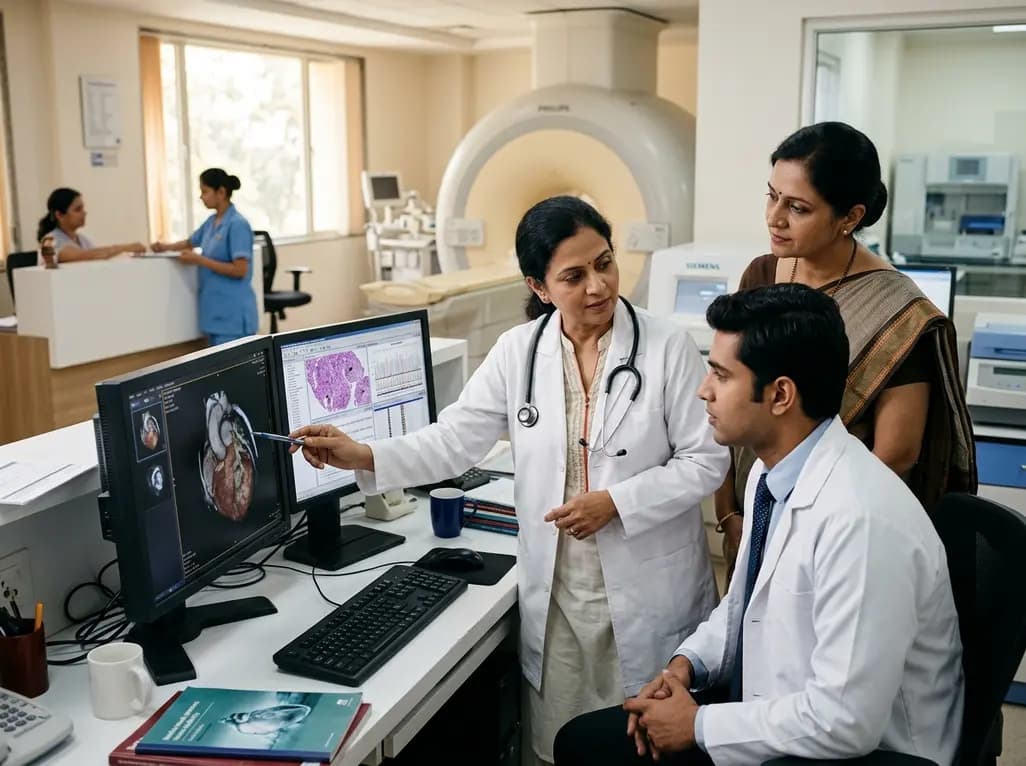
Neuberg Diagnostics recently finalized the consolidation of its Maharashtra operations with NM Medical to create a robust integrated diagnostics network across the region. This landmark merger unites two established diagnostic entities under a single umbrella. Consequently, the alliance will deliver an integrated clinical ecosystem that bridges high-precision laboratory investigations and advanced medical imaging. For clinicians and patients alike, this strategic move addresses the long-standing fragmentation between anatomical pathology, molecular diagnostics, and diagnostic radiology. Furthermore, the combined enterprise aims to elevate diagnostic accuracy, expedite patient management, and streamline referral pathways throughout urban and semi-urban Maharashtra.
Historically, Indian diagnostic healthcare has operated in isolated verticals. Standalone pathology labs often functioned separately from diagnostic imaging centers. However, modern clinical practice demands seamless coordination across diagnostic modalities. The merger between Neuberg Diagnostics and NM Medical establishes a unified platform designed to resolve this fragmentation. In addition, the alliance leverages NM Medical’s four decades of clinical experience in western India alongside Neuberg’s national technological infrastructure.
Therefore, clinicians can now access an uninterrupted diagnostic continuum from a single trusted partner. Patients will no longer need to travel between separate facilities for tissue biopsies, biochemical analyses, and cross-sectional imaging. Instead, integrated diagnostic centers will house comprehensive diagnostic capabilities under one roof. Moreover, this integration fosters standardized pre-analytical handling, rapid sample processing, and coordinated diagnostic reporting. Consequently, treating physicians will receive holistic diagnostic dossiers faster than ever before.
Additionally, the consolidated entity brings together several prominent regional diagnostic practices. These include Neuberg NM Medical, Neuberg Dr Ajay Shah, Neuberg Sehgal, Neuberg OncoPath, and Neuberg Star. Dr. Nilesh Shah leads this combined Maharashtra platform as Chairman. Thus, this structural alignment combines regional goodwill with scalable diagnostic technology, ensuring consistent test precision across all community touchpoints.
Modern diagnostic medicine requires deep convergence between macroscopic anatomical imaging and microscopic molecular signatures. Therefore, the combination of NM Medical’s radiology footprint with Neuberg’s specialized laboratory science marks a notable evolutionary step. NM Medical brings extensive clinical expertise in magnetic resonance imaging, computed tomography, advanced ultrasound, and cardiovascular diagnostics. Conversely, Neuberg Diagnostics contributes cutting-edge infrastructure in genomics, proteomics, metabolomics, digital pathology, and immunohistochemistry.
Consequently, clinicians gain access to concurrent anatomical and molecular disease evaluations. In oncology, for example, precise disease staging depends heavily on high-resolution imaging paired with molecular mutation analysis. Clinicians can evaluate primary tumor morphology through advanced imaging while simultaneously ordering next-generation sequencing from tissue biopsies. Furthermore, specialized pathology branches such as nephropathology and neuropathology will benefit directly from digital slide sharing and multi-expert review networks.
Additionally, this technological convergence accelerates turnaround times for complex diagnostic workups. Digital pathology platforms allow expert subspecialists to review histological specimens remotely without physical transit delays. As a result, critical therapeutic decisions in stroke, acute cardiac events, and metastatic malignancies experience fewer administrative bottlenecks. Ultimately, the unified testing menu provides physicians with nuanced diagnostic data that supports evidence-based therapeutic decisions.
Integrated diagnostic data fundamentally reshapes patient care across multidisciplinary medical teams. In routine clinical workflows, physicians often encounter discrepancies between radiological impressions and histopathological reports. However, an integrated diagnostic network enables direct peer-to-peer collaboration between practicing radiologists and pathologists. Specialists can correlate structural abnormalities directly with cellular biomarkers before finalizing their diagnostic conclusions.
Therefore, clinical teams can avoid diagnostic ambiguities that often delay definitive patient management. In chronic kidney disease, for instance, imaging findings of parenchymal thinning correlate seamlessly with specialized nephropathology biopsies. Similarly, complex neurodegenerative disorders benefit from combining volumetric neuroimaging with cerebrospinal fluid proteomics and targeted genomic screening. As a result, primary care physicians and subspecialists receive synchronized diagnostic interpretations rather than fragmented data points.
Moreover, this unified diagnostic approach substantially improves longitudinal disease monitoring. When patients undergo repeated surveillance scans and molecular tests within the same diagnostic architecture, clinicians observe fewer inter-laboratory analytical variations. In addition, standardized reference ranges and shared electronic medical archives facilitate effortless longitudinal tracking. Consequently, oncologists and cardiologists can monitor treatment responses, drug toxicities, and early recurrences with elevated diagnostic certainty and minimal logistical friction.
Beyond managing acute and chronic illness, modern healthcare systems must prioritize proactive wellness and early disease detection. Notably, NM Medical has spent over forty years developing comprehensive preventive health screening protocols. Neuberg Diagnostics complements this preventive legacy by introducing advanced predictive genomic profiling and metabolic testing panels. Together, these entities are expanding structured longevity programs, such as the newly unveiled Atlas longevity initiative.
Therefore, asymptomatic individuals can now undergo stratified risk assessments tailored to their personal genetic and metabolic profiles. For example, clinicians can assess cardiovascular disease risk by combining coronary calcium scoring with specialized lipid subfraction testing and genetic markers. In addition, metabolic screening profiles identify early insulin resistance, subclinical inflammation, and hepatic steatosis long before symptomatic onset occurs. Thus, preventive wellness transitions from generic health packages to individualized, biomarker-driven lifestyle interventions.
Furthermore, community-based early detection initiatives will identify malignant and cardiovascular lesions at treatable stages. High-risk populations across Maharashtra will access low-dose lung CT screenings, digital mammography, and non-invasive liquid biopsy platforms. Consequently, physicians can initiate preventive measures or targeted therapies early in the natural history of disease. Ultimately, prioritizing proactive screening reduces chronic disease morbidity and relieves pressure on downstream hospital resources.
Achieving high clinical diagnostic standards across a large geographic state requires experienced leadership and robust logistics. The newly consolidated Maharashtra leadership team unites prominent medical figures under Dr. Nilesh Shah’s chairmanship. In this structure, Dr. Ajay Shah serves as Chief Mentor for Pathology, while Dr. Asish Atre leads Diagnostic Radiology. Additionally, Dr. Kunal Sehgal and Dr. Jay Mehta head specialized Pathology divisions, ensuring rigorous subspecialty quality control.
Meanwhile, Rahil Shah assumes the role of Chief Executive Officer for Maharashtra, Preventive Wellness, and Africa Operations. Under this executive direction, the organization plans rapid diagnostic infrastructure growth throughout Maharashtra. The group will deploy fully integrated diagnostic hubs, advanced pathology reference laboratories, and comprehensive wellness clinics across municipal centers. Furthermore, a dense network of suburban and rural collection centers will channel biospecimens directly into centralized analytical hubs.
Consequently, healthcare practitioners in tier-two and tier-three districts will access the same diagnostic accuracy as tertiary hospital centers. Standardized temperature-controlled specimen logistics ensure sample integrity across extended transit distances. Moreover, automated laboratory information systems integrate diagnostic imaging results with pathology reports in secure patient portals. Thus, the expanded network strengthens healthcare infrastructure while broadening equitable access to specialized medical testing.
Q1: Why is the merger between Neuberg Diagnostics and NM Medical significant for doctors in Maharashtra?
This consolidation establishes a unified diagnostics network that combines advanced radiology, molecular genetics, and specialized pathology under one platform. Consequently, clinicians gain immediate access to cross-modality diagnostic correlations, which significantly eliminates diagnostic discrepancies between imaging and laboratory tests. Furthermore, direct collaboration between subspecialty radiologists and pathologists accelerates turnaround times. As a result, treating physicians receive synchronized, highly accurate diagnostic reports that simplify multidisciplinary clinical management and improve therapeutic decisions.
Q2: How does integrating genomics and digital pathology enhance diagnostic precision?
Combining genomics, digital pathology, and immunohistochemistry enables clinicians to explore disease pathophysiology at the microscopic cellular level. Traditional histopathology identifies morphological tissue alterations, whereas genomics reveals underlying oncogenic mutations and inherited predispositions. Additionally, digital pathology allows expert subspecialists to review tissue slides instantly from remote locations. Therefore, multidisciplinary medical teams can diagnose complex malignancies, nephropathies, and neurological conditions with exceptional accuracy, facilitating personalized targeted therapy selection and improving clinical outcomes.
Q3: What specific role does preventive wellness play in the newly expanded diagnostic network?
The expanded network emphasizes proactive wellness by integrating advanced cross-sectional imaging with specialized metabolic and genetic biomarkers. Through comprehensive longevity programs, clinicians can detect preclinical cardiovascular disease, occult metabolic dysregulation, and nascent oncological conditions long before clinical symptoms emerge. Furthermore, standardized longitudinal health records allow doctors to track dynamic biomarker shifts across follow-up consultations. Consequently, clinicians can tailor lifestyle interventions, prescribe preventive pharmacotherapy, and improve long-term patient health trajectories across Maharashtra communities.
Disclaimer: This content is for informational and educational purposes only. It does not constitute medical advice or replace professional judgment. Refer to the latest local and national guidelines for clinical practice.
References

Read summarized clinical updates, watch expert medical content, and earn CME certifications right from your smartphone.
Open your smartphone camera to scan and install.





Neuberg Diagnostics has consolidated its Maharashtra operations with NM Medical, creating a unified clinical platform. The strategic alliance integrates high-end radiology, cardiology, and wellness screening with advanced molecular diagnostics, digital pathology, and genomics to elevate patient care statewide.
Today
A large UK cohort study of 1.4 million women shows that pregnancy complications, including gestational diabetes, hypertension, and preterm birth, substantially raise long-term risks for hypertension, chronic kidney disease, type 2 diabetes, and cardiovascular events, highlighting early postpartum intervention needs.
Today
A landmark single-cell study reveals that MEHP, a major phthalate metabolite, damages human ovarian tissue beyond follicles. By disrupting glial-stromal communication, cellular adhesion, and mitochondrial respiration, environmental plasticizers impair ovarian integrity at realistic exposure levels.
Today
A scoping review reveals severe gaps in long-term assistive technology provision following humanitarian emergencies. Addressing post-disaster rehabilitation requires systematic follow-up, workforce training, and integration into national health systems to sustain mobility and recovery.
Yesterday

The World Health Organization has issued its first global guidelines for managing child and adolescent obesity. The recommendations strongly endorse family-based dietary interventions, regular physical activity, and behavioral support as frontline therapy, reserving GLP-1 therapies and surgery for select cases.
Today
