.webp&w=384&q=75)

Loading, please wait...
Loading, please wait...
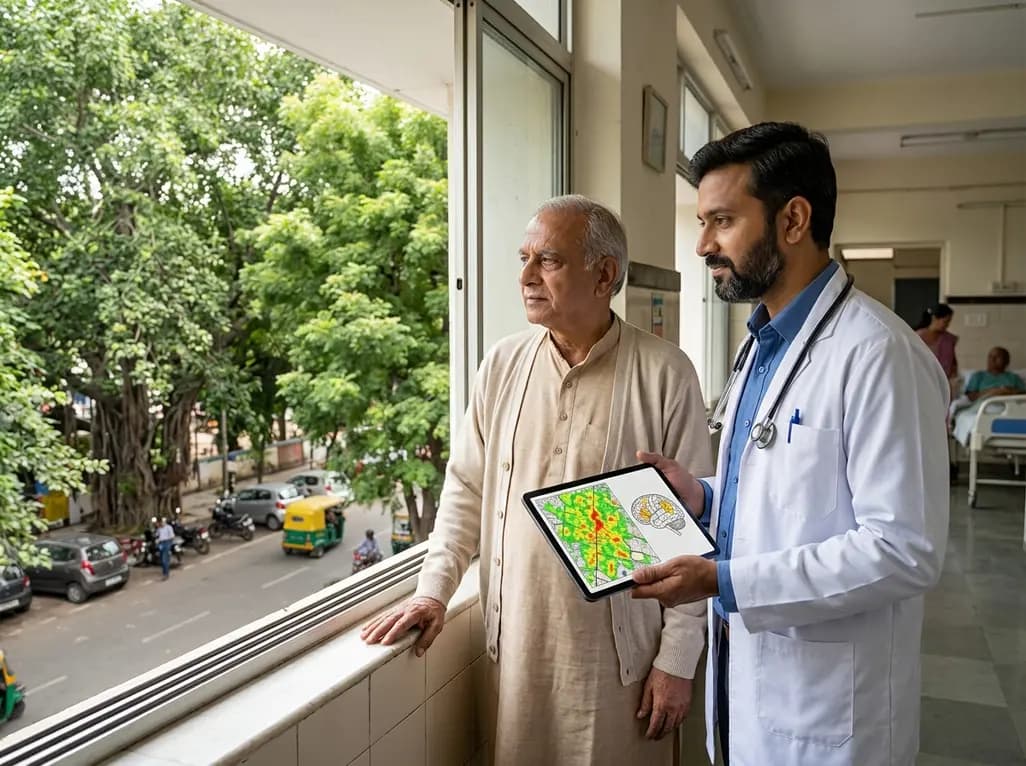
New evidence suggests that the specific type of vegetation in your neighborhood may influence your greenspace and dementia risk. While previous research often relied on broad satellite data, a recent longitudinal study utilized advanced deep learning to analyze Google Street View images. This innovative approach allowed researchers to distinguish between different types of greenery, such as trees and grass, from a human-level perspective. Consequently, this provides a more accurate representation of what residents actually see and experience in their daily lives.
The Multi-Ethnic Study of Atherosclerosis (MESA) followed over 6,700 participants for nearly two decades. By evaluating the environmental composition within 500 meters of each residence, the study identified a clear correlation between tree density and cognitive preservation. Specifically, higher percentages of tree cover were associated with a significant reduction in incident dementia. In contrast, other forms of greenery like grass did not provide the same level of protective benefit. Therefore, the vertical presence of trees appears to be a critical factor in urban health.
Understanding the mechanisms behind greenspace and dementia risk requires looking beyond mere aesthetic value. Trees provide essential ecosystem services that flat grasslands cannot match. For instance, dense tree canopies effectively reduce urban heat islands, mitigate noise pollution, and filter air pollutants. Moreover, trees create a more immersive psychological environment that encourages outdoor physical activity and social interaction. These factors are well-known to support brain health and delay the onset of cognitive decline.
Notably, the study also highlighted socioeconomic disparities in environmental exposure. Participants with lower household incomes were significantly more likely to live in areas with minimal tree cover. This finding suggests that the lack of urban trees is not just an environmental issue but a matter of health equity. Improving access to tree-rich environments could serve as a viable public health intervention to protect aging populations across diverse demographic groups.
Healthcare providers should consider the residential environment when discussing lifestyle modifications with elderly patients. While diet and exercise remain fundamental, the quality of the surrounding neighborhood also plays a pivotal role. Doctors might encourage patients to spend more time in parks or streets with substantial tree canopies. Furthermore, urban planners must prioritize the planting of trees over simple lawn maintenance to maximize the neuroprotective potential of city landscapes.
Street-view metrics capture the eye-level perspective of a person on the ground, reflecting the actual visibility of plants. Satellite data measures overall greenness (NDVI) from above, which often includes backyard vegetation or flat lawns that may not be visible or accessible to the public.
According to the MESA study, tree cover shows a much stronger association with reduced dementia risk than grass or other low-lying plants. The multifaceted benefits of trees, including shade and pollution reduction, contribute to this effect.
Yes, urban design directly influences environmental stressors like heat, noise, and air quality. By increasing tree density, cities can create a healthier atmosphere that supports cognitive longevity and reduces the burden of neurodegenerative diseases.
Disclaimer: This content is for informational and educational purposes only and does not constitute professional medical advice, diagnosis, or treatment. Always seek the advice of your physician or other qualified health provider with any questions you may have regarding a medical condition. Refer to the latest local and national guidelines for clinical practice.
References
Jimenez MP et al. Streetview greenspace types and dementia risk in older adults: The Multi-Ethnic Study of Atherosclerosis. Am J Epidemiol. 2026 Jun 10. doi: undefined. PMID: 42267521.
Jimenez MP, et al. Residential Green Space and Cognitive Function in a Large Cohort of Middle-Aged Women. JAMA Netw Open. 2022;5(4):e229306.
Mmako NJ, et al. Green spaces, dementia and a meaningful life in the community: A mixed studies review. Health & Place. 2020;63:102344.

Read summarized clinical updates, watch expert medical content, and earn CME certifications right from your smartphone.
Open your smartphone camera to scan and install.





A new study using Street View metrics reveals that specific types of urban greenery, particularly tree cover, are associated with a significantly lower risk of dementia in older adults. This research highlights the importance of eye-level vegetation in urban planning for cognitive health.
4 months ago

Review how tailored exercise programs benefit frail older patients with heart failure. Explore pathophysiological mechanisms, individualized training prescriptions, and strategies to overcome adherence barriers in clinical practice.
Today

Recent clinical studies reveal maternal autoantibodies targeting IL-1RA as potential triggers for preterm labor, opening avenues for targeted cytokine therapies. Concurrently, new perioperative findings show inhaled cannabis increases propofol requirements during upper endoscopy compared to oral edible consumption.
Today

In high-risk pulmonary embolism complicated by severe anemia and active uterine bleeding, systemic thrombolysis is contraindicated. Large-bore aspiration thrombectomy provides rapid hemodynamic rescue without fibrinolysis, supported by inferior vena cava filter placement and multidisciplinary critical care.
Today

This comparative study evaluates posterior labral tears with and without glenohumeral instability, highlighting distinct demographic patterns, MRI underestimation in stable shoulders, and successful arthroscopic repair outcomes.
Today

A clinical study demonstrates that early intervention with tocilizumab, either as monotherapy or bridged with corticosteroids, achieves significant proptosis reduction and resolves active inflammation in treatment-naive thyroid eye disease.
Today
