

Loading, please wait...
Loading, please wait...

Urbanization rapidly alters modern living environments, creating unique psychological stressors for middle-aged and older individuals across global cities. Consequently, clinicians encounter rising rates of depressive illness in community practices. Researchers increasingly explore how residential vegetation counterbalances urban stressors. Recent epidemiological analyses emphasize the vital link between residential greenspace and depressive symptoms in vulnerable urban populations. Rather than viewing nature exposure as merely an aesthetic bonus, contemporary neurobiology and preventive medicine treat green infrastructure as an active determinant of mental well-being.
Traditional psychiatric epidemiology frequently relies on conventional regression models. However, standard linear approaches struggle to capture non-linear relationships and multifaceted environmental interactions. To resolve these methodological limitations, investigators recently applied machine learning algorithms to examine 1,542 urban middle-aged adults from the China Health and Retirement Longitudinal Study. They evaluated depressive symptoms using the validated 10-item Center for Epidemiological Studies Depression Scale. Additionally, researchers quantified residential vegetation through high-resolution NASA satellite databases, computing the Enhanced Vegetation Index within immediate home buffers. Among five distinct algorithmic architectures, the Support Vector Machine achieved superior predictive capability, recording an impressive area under the curve of 0.776. Furthermore, the application of Shapley Additive Explanations revealed that residential vegetation ranked prominently among the strongest health-related predictors. This analytical breakthrough demonstrates that machine learning effectively distinguishes subtle environmental influences from overarching socioeconomic variables. Therefore, advanced computational analytics provide clinicians and public health planners with reliable evidence regarding non-pharmacological, population-level protective factors. Urban practitioners can consequently interpret these findings as robust empirical confirmation that environmental greenness directly influences psychological stability.
The study uncovered critical insights regarding exposure thresholds and geographic proximity. Specifically, the predictive models identified that residential greenness within a 250-meter buffer, captured by the Enhanced Vegetation Index, showed the strongest inverse correlation with depressive symptoms. Closer proximity to green canopy yielded substantially greater psychological benefits than distant parklands. Thus, having trees, community gardens, or landscaped grounds right outside the residential doorstep provides immediate relief from everyday cognitive depletion. In contrast, peripheral municipal parks located kilometers away fail to provide comparable routine mental rejuvenation. Satellite remote sensing allowed the team to measure actual photosynthetic biomass rather than relying on subjective participant questionnaires. Consequently, the data objectively establishes that immediate neighborhood greenness shields individuals against emotional distress. Furthermore, the steep protective gradient observed at close proximity emphasizes that urban micro-environments dictate individual emotional health. For general practitioners and geriatricians, this spatial reality carries direct diagnostic relevance. When middle-aged adults present with persistent dysthymia, evaluating their direct living environment provides invaluable context regarding unaddressed environmental strain. Integrating built-environment evaluations therefore enriches holistic primary care practice.
Although green vegetation emerged as a paramount predictor, machine learning models placed it within a broader network of interconnected somatic and psychosocial determinants. Indeed, Shapley value analyses demonstrated that life satisfaction, social engagement, nocturnal sleep duration, somatic pain, and functional independence in instrumental activities of daily living all interacted dynamically with greenspace exposure. For example, urban middle-aged adults dealing with unmanaged musculoskeletal pain and fragmented sleep experienced higher vulnerability to mood disorders. However, individuals residing in lush, vegetated neighborhoods demonstrated greater emotional resilience despite functional physical limitations. Moreover, daily social connectivity acted as a powerful mediator between outdoor nature exposure and improved mood scores. Because green neighborhood corridors encourage regular community interaction and physical activity, they simultaneously address the sedentary isolation that accelerates geriatric depression. Therefore, environmental greenness does not operate in an isolated biological vacuum. Instead, it functions as an ecological catalyst that promotes restorative sleep cycles, attenuates pain-related catastrophizing, and preserves psychological autonomy. Clinical teams must consequently adopt integrated assessment strategies that evaluate environmental assets alongside physical complaints.
How does proximity to leafy canopy transform clinical neurobiology? Multiple physiological mechanisms explain why nature exposure mitigates depressive pathology. First, the biophilia hypothesis suggests that humans maintain an innate evolutionary affinity for natural ecosystems. Exposure to natural fractals rapidly activates parasympathetic tone while downregulating sympathetic hyperactivity and systemic cortisol output. Furthermore, urban greenery substantially diminishes exposure to ambient particulate air pollution and chronic traffic noise, two established drivers of systemic neuroinflammation and hypothalamic-pituitary-adrenal axis dysregulation. In addition, immersion in green environments facilitates attention restoration, interrupting the rumination cycles that characteristically perpetuate major depressive episodes. Physical exercise in vegetated surroundings also stimulates brain-derived neurotrophic factor, enhancing neuroplasticity and hippocampal volume in aging brains. Meanwhile, exposure to diverse environmental microbiomes in soil and plant foliage may support gut-brain axis homeostasis through immunomodulatory bacterial signaling. Thus, neighborhood vegetation provides multi-target neurobiological defense against mood deterioration. By buffering chronic daily stressors, residential greenness acts as a chronic neuroprotective intervention that supports baseline emotional regulation across middle-aged cohorts.
Integrating these environmental findings into everyday medical practice offers exciting opportunities for clinicians. Physicians caring for middle-aged and older adults often encounter mild-to-moderate depressive symptoms that resist standard lifestyle advice. Therefore, healthcare providers should incorporate targeted residential history into comprehensive psychiatric and geriatric assessments. Inquiring about daily outdoor habits, window views, and neighborhood walkability provides essential insight into a patient's daily neurosensory exposures. When patients inhabit highly concrete, nature-deprived neighborhoods, clinicians can deliberately prescribe nature-based interventions, commonly termed green prescriptions. For instance, recommending thirty minutes of daily walking in botanical gardens, local parks, or tree-lined avenues stimulates physical activity while delivering necessary sensory rejuvenation. Moreover, family physicians can actively collaborate with local municipal authorities, housing associations, and urban planners to advocate for equitable greenspace distribution. Because rapid urban densification threatens remaining pocket parks, medical advocacy for ecological urban design directly advances public mental health. Ultimately, combining evidence-based pharmacotherapy, cognitive therapies, and nature-based lifestyle modifications equips doctors with a powerful, multidimensional toolkit to combat urban depression effectively.
Proximity to greenspace reduces depressive symptoms by dampening autonomic stress, lowering cortisol levels, and interrupting repetitive negative rumination. Furthermore, nearby vegetation encourages outdoor physical activity, fosters social interactions, and attenuates urban noise and air pollution, which directly stabilizes neuroendocrine functioning and promotes sustained psychological well-being.
Researchers utilized the Enhanced Vegetation Index calculated from high-resolution NASA satellite databases within residential buffers. The machine learning model identified that vegetative density within an immediate 250-meter perimeter served as the most impactful predictor, demonstrating that immediate doorstep nature access protects emotional health more effectively than distant public parklands.
Clinicians can systematically evaluate residential environments by taking a brief environmental history during routine assessments. When managing mild depressive symptoms, physicians can write structured green prescriptions that recommend daily 30-minute walks in tree-lined areas, community gardening, or active park visits, complementing standard pharmacological and cognitive behavioral therapies.
Disclaimer: This content is for informational and educational purposes only and is not intended to serve as a substitute for professional medical advice, diagnosis, or treatment. Refer to the latest local and national guidelines for clinical practice.
References

Read summarized clinical updates, watch expert medical content, and earn CME certifications right from your smartphone.
Open your smartphone camera to scan and install.





A machine learning analysis from the CHARLS cohort demonstrates that residential greenspace proximity significantly reduces depressive symptoms among urban middle-aged adults. Proximity within 250 meters emerged as a key predictor alongside sleep quality, pain control, and social participation.
Today

Review how tailored exercise programs benefit frail older patients with heart failure. Explore pathophysiological mechanisms, individualized training prescriptions, and strategies to overcome adherence barriers in clinical practice.
Today
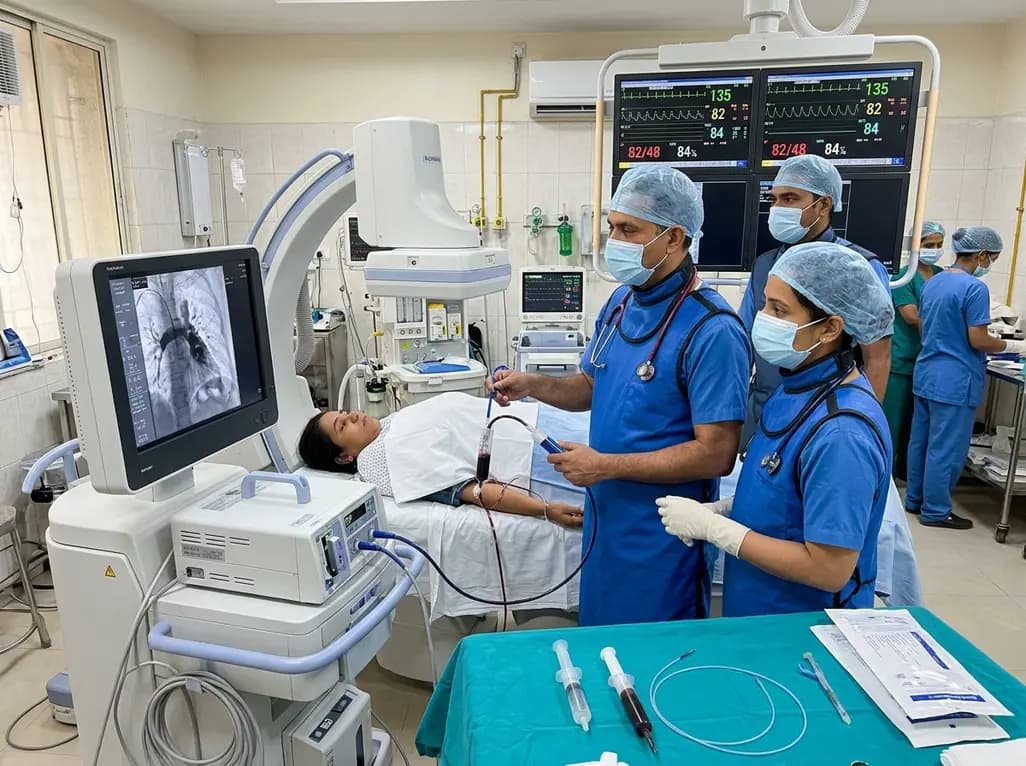
In high-risk pulmonary embolism complicated by severe anemia and active uterine bleeding, systemic thrombolysis is contraindicated. Large-bore aspiration thrombectomy provides rapid hemodynamic rescue without fibrinolysis, supported by inferior vena cava filter placement and multidisciplinary critical care.
Today

A cross-sectional study in Zanzibar reveals that 46.5% of adults with type 2 diabetes experience multidomain autonomic dysfunction on the COMPASS-31 tool, primarily orthostatic intolerance, while 45.9% exhibit cardiovascular autonomic neuropathy, highlighting the urgent need for structured clinical screening.
Today

This comparative study evaluates posterior labral tears with and without glenohumeral instability, highlighting distinct demographic patterns, MRI underestimation in stable shoulders, and successful arthroscopic repair outcomes.
Today

A recent case-control study reveals that urinary clusterin provides superior diagnostic performance for early diabetic kidney disease detection in pediatric type 1 diabetes mellitus, identifying tubular damage before conventional microalbuminuria occurs.
Today
