

Loading, please wait...
Loading, please wait...

Spontaneous subarachnoid hemorrhage represents a catastrophic neurological emergency with high mortality and severe morbidity. A major contributor to secondary brain injury is delayed cerebral ischemia, which typically occurs between four and fourteen days following aneurysm rupture. Consequently, neurointensivists and stroke clinicians constantly seek validated prognostic tools to anticipate clinical worsening. Early risk stratification allows clinicians to optimize cerebral perfusion, escalate neurological monitoring, and initiate timely endovascular rescue when vasospasm develops. Over past decades, numerous grading scales have emerged to predict both functional independence and ischemic complications. However, clinical teams frequently debate whether specialized disease-specific models outperform generalized intensive care severity indices. While specialized models incorporate radiographic clot volume, systemic physiology often drives secondary organ failure and systemic inflammatory responses. Therefore, determining the precise predictive accuracy of novel scores remains vital for modern intensive care units managing acute vascular brain injury.
To improve predictive precision, investigators created specialized tools such as the HATCH score and the VASOGRADE scale. The HATCH score incorporates hemorrhage volume, age, treatment modality, clinical status on admission, and acute hydrocephalus. Therefore, it provides a comprehensive assessment of baseline structural and physiological damage. Conversely, the VASOGRADE simplifies risk stratification for delayed cerebral ischemia by combining the modified Fisher scale with the World Federation of Neurosurgical Societies score. Clinicians stratify patients into green, yellow, or red categories depending on neurological deficits and subarachnoid blood thickness. Consequently, this stratified triage guides clinical vigilance and monitoring intensity. Both scores aim to streamline clinical decision-making during early resuscitation. Moreover, their bedside simplicity offers practical value in fast-paced emergency settings. However, validating these metrics against established physiological benchmarks remains essential before teams rely entirely on them for critical neurovascular prognostication.
A rigorous single-center study by Degrassi and colleagues analyzed 262 consecutive patients admitted to the intensive care unit with non-traumatic subarachnoid hemorrhage. The investigators assessed the ability of the HATCH score and VASOGRADE to predict three-month unfavorable neurological outcomes, hospital mortality, and delayed cerebral ischemia. Overall, delayed cerebral ischemia occurred in 31.3% of the cohort, while 29.8% died during hospitalization and 51% experienced unfavorable functional outcomes at three months. Receiver operating characteristic analyses revealed that the HATCH score independently predicted poor three-month outcomes with an odds ratio of 1.61. Furthermore, the HATCH score achieved an area under the curve of 0.83, demonstrating strong discriminative accuracy. Similarly, the VASOGRADE demonstrated significant capability in identifying patients susceptible to secondary ischemic deficits. These findings confirm that baseline neurological presentation and initial radiological blood volume directly influence both long-term recovery and immediate vasospasm vulnerability.
Interestingly, the study demonstrated that disease-specific scores did not significantly surpass general physiological scales. For predicting unfavorable neurological recovery, the HATCH score showed an area under the curve of 0.83, whereas the Acute Physiology and Chronic Health Evaluation II scale achieved 0.84. In addition, the Sequential Organ Failure Assessment score exhibited a comparable area under the curve of 0.83. This equivalent performance highlights an essential clinical reality in neurocritical care. Systemic multiorgan dysfunction, inflammatory disruption, and physiological derangements substantially modify brain injury pathways. Consequently, while neurovascular grading captures primary central nervous system insults, general intensive care scoring systems effectively capture non-neurological organ failures that ultimately dictate survival. Therefore, neurointensivists should not ignore systemic physiology when evaluating neurological prognosis, because multiorgan failure heavily compounds local ischemic injury.
These comparative observations carry practical ramifications for daily bedside intensive care management. First, clinicians should continue utilizing straightforward clinical and radiological scores to identify patients facing elevated risks for delayed cerebral ischemia. Because the VASOGRADE reliably triages patients into meaningful risk categories, teams can allocate advanced neuromonitoring, such as continuous electroencephalography and transcranial Doppler ultrasound, to high-risk cohorts. Meanwhile, clinicians should avoid relying exclusively on neurological metrics when estimating global survival. Instead, incorporating systemic assessments like the Sequential Organ Failure Assessment score ensures early detection of cardiopulmonary compromise, sepsis, and metabolic instability. Furthermore, this dual focus prevents premature therapeutic nihilism in patients with severe initial presentations who maintain stable extracranial organ function. Structured protocols integrating both neurological and systemic markers streamline resource utilization across busy tertiary intensive care units.
Although existing clinical scores provide helpful roadmaps, future risk prediction requires multimodal approaches. Contemporary investigators are actively evaluating circulating inflammatory biomarkers, advanced vessel imaging, and automated parenchymal volumetry to refine predictive algorithms. In addition, combining hemodynamic variables with continuous brain tissue oxygen monitoring may alert clinicians to microvascular compromise before macroscopic ischemia develops. As artificial intelligence models integrate physiological feeds with admission imaging, dynamic forecasting will likely supersede static admission scores. Nevertheless, validated clinical metrics remain the foundation of bedside neurocritical care. Clinicians must apply these grading instruments judiciously, recognizing that while specialized scores identify cerebral complications, systemic physiological stability ultimately dictates comprehensive functional survival.
The VASOGRADE categorizes subarachnoid hemorrhage patients into three distinct risk tiers using admission clinical status and radiological blood distribution. Consequently, clinicians utilize this tool to predict the risk of delayed cerebral ischemia and guide the intensity of bedside neuromonitoring and prophylactic hemodynamic strategies.
The HATCH score evaluates hemorrhage volume, patient age, treatment strategy, admission neurological status, and hydrocephalus. By combining structural and clinical determinants, the model reliably estimates three-month unfavorable functional recovery, demonstrating strong discriminative performance that matches comprehensive physiological scoring systems in intensive care cohorts.
General ICU scores like APACHE II and SOFA capture systemic inflammation, metabolic derangements, and extracranial organ failures. Because secondary brain injury and mortality frequently stem from systemic physiological breakdown rather than localized vascular damage alone, these broad physiological tools deliver comparable predictive accuracy for overall recovery.
Disclaimer: This content is for informational and educational purposes only and should not be taken as professional medical advice. It is not intended for use in the diagnosis or treatment of any health condition. Clinicians should verify all data and consider clinical presentation before deciding on therapeutic pathways. Refer to the latest local and national guidelines for clinical practice.
References
Degrassi A et al. Grading Scores for Identifying Patients at Risk of Delayed Cerebral Ischemia and Neurological Outcome in Spontaneous Subarachnoid Hemorrhage: A Comparison of Receiver Operator Curve Analysis. Neurocrit Care. 2025 Oct. doi: 10.1007/s12028-025-02270-9. PMID: 40293695.
Charpentier C et al. The VASOGRADE: A simple grading scale for prediction of delayed cerebral ischemia after subarachnoid hemorrhage. Stroke. 2015;46(8):2063-2067.
de Rooij NK et al. Prediction of delayed cerebral ischemia and poor outcome after aneurysmal subarachnoid hemorrhage: A systematic review and meta-analysis. Neurocrit Care. 2020;32(2):588-598.
Macedo NM et al. The Role of VASOGRADE as a Simple Grading Scale to Predict Delayed Cerebral Ischemia and Functional Outcome After Aneurysmal Subarachnoid Hemorrhage. Neurocrit Care. 2022;37(3):717-724.

Read summarized clinical updates, watch expert medical content, and earn CME certifications right from your smartphone.
Open your smartphone camera to scan and install.





Explore how disease-specific scales like HATCH and VASOGRADE compare with general physiological scores like APACHE II and SOFA in predicting delayed cerebral ischemia and functional neurological outcomes following spontaneous subarachnoid hemorrhage.
Today

Review how tailored exercise programs benefit frail older patients with heart failure. Explore pathophysiological mechanisms, individualized training prescriptions, and strategies to overcome adherence barriers in clinical practice.
Today
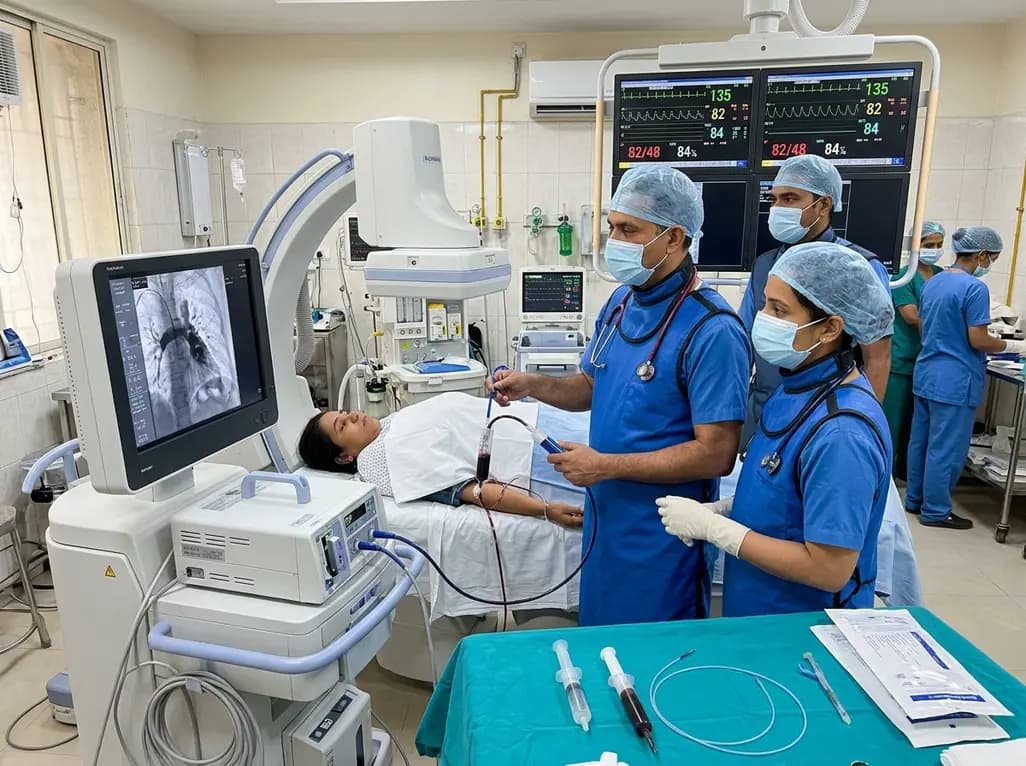
In high-risk pulmonary embolism complicated by severe anemia and active uterine bleeding, systemic thrombolysis is contraindicated. Large-bore aspiration thrombectomy provides rapid hemodynamic rescue without fibrinolysis, supported by inferior vena cava filter placement and multidisciplinary critical care.
Today

A cross-sectional study in Zanzibar reveals that 46.5% of adults with type 2 diabetes experience multidomain autonomic dysfunction on the COMPASS-31 tool, primarily orthostatic intolerance, while 45.9% exhibit cardiovascular autonomic neuropathy, highlighting the urgent need for structured clinical screening.
Today

This comparative study evaluates posterior labral tears with and without glenohumeral instability, highlighting distinct demographic patterns, MRI underestimation in stable shoulders, and successful arthroscopic repair outcomes.
Today

A recent case-control study reveals that urinary clusterin provides superior diagnostic performance for early diabetic kidney disease detection in pediatric type 1 diabetes mellitus, identifying tubular damage before conventional microalbuminuria occurs.
Today
