.webp&w=384&q=75)

Loading, please wait...
Loading, please wait...

Recent advances in Grade 5 spondylolisthesis management have made it possible to address even the most complex spinal deformities through specialized techniques. A groundbreaking case study illustrates the success of a single-stage posterior approach for a patient with neurofibromatosis type 1 (NF1) and dural meningocele. Clinicians often refer to this severe anterior displacement of the L5 vertebra as spondyloptosis.
Initially, the 18-year-old female patient suffered from severe low back pain and radicular symptoms in both lower limbs. Imaging revealed the L5 vertebra had slipped entirely past the sacrum. Magnetic resonance imaging furthermore showed a dural meningocele extending through multiple spinal foramina. Despite undergoing three months of halo traction, her condition failed to improve significantly. Consequently, the surgical team decided on a bold operative strategy.
The surgeons performed a single-stage posterior L5 vertebrectomy and a sacral dome osteotomy. Additionally, they utilized L2-S1 pedicle screw fixation for stabilization. While the patient experienced a temporary inability to raise her legs immediately post-surgery, she regained full function within three days. At the 1.5-year follow-up, CT scans confirmed solid bone fusion and stable hardware placement without any cage dislocation.
Traditionally, such high-grade slips required complex multi-stage procedures involving both anterior and posterior incisions. However, this case demonstrates that a posterior-only approach achieves excellent clinical outcomes while minimizing surgical trauma. This technique proves particularly valuable when managing patients with concurrent conditions like NF1, where dural abnormalities increase surgical risk. This adaptation of established techniques offers a promising alternative for complex spinal reconstruction.
Grade 5 spondylolisthesis involves the complete displacement of a vertebra, which surgeons call spondyloptosis. This condition causes significant neurological risk, severe deformity, and technical difficulties in achieving stable reduction and fusion.
A single-stage posterior approach avoids the morbidity of an additional anterior abdominal incision. It allows for direct decompression of neural elements and a more efficient reduction of the deformity during a single operative session.
Disclaimer: This content is for informational and educational purposes only. It does not constitute medical advice or establish a doctor-patient relationship. Always seek the advice of a qualified healthcare provider regarding any medical condition. Refer to the latest local and national guidelines for clinical practice.
References
Ye C et al. Single-stage posterior surgical management of grade 5 L5 spondylolisthesis in a patient with neurofibromatosis type 1 and dural meningocele: illustrative case. J Neurosurg Case Lessons. 2026 Feb 16. doi: undefined. PMID: 41698199.
Ganesh A et al. Surgical management of high-grade spondylolisthesis: A review of current techniques and outcomes. Indian Journal of Orthopaedics. 2023;57(4):512-520.
Laouissat F et al. One-stage posterior spinal shortening by L5 partial spondylectomy for spondyloptosis or L5-S1 high-grade spondylolisthesis management. European Spine Journal. 2016;25(10):3063-3071.

Read summarized clinical updates, watch expert medical content, and earn CME certifications right from your smartphone.
Open your smartphone camera to scan and install.





A case report on the successful single-stage posterior surgical management of grade 5 spondylolisthesis in a patient with NF1 and dural meningocele....
8 months ago

Recent epidemiological data reveals a dramatic surge in summer heat mortality driven by human-induced climate warming. This analysis explores the pathophysiological impacts on cardiac and renal systems, diagnostic dilemmas in death certification, and essential emergency cooling protocols for acute clinical care.
Today
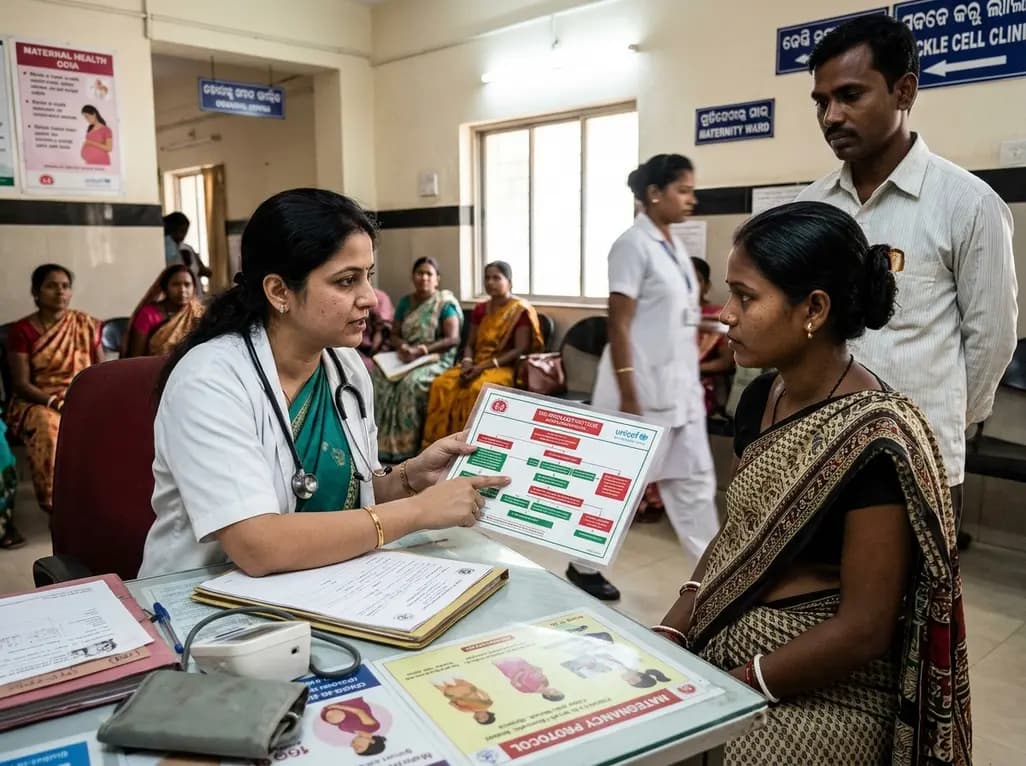
Odisha has established India's first state-level clinical protocol specifically tailored for pregnant women with sickle cell disease. Developed with NHM and UNICEF, the framework provides structured antenatal screening, crisis mitigation, standardized referral pathways, and specialized interdisciplinary care.
Today

India is advancing preventive healthcare by integrating genomics, artificial intelligence, and quantum technologies. With the SANGAM programme sequencing one million Indian genomes, clinicians can unlock personalized therapies, detect cardiometabolic risks early, and curb the burden of diabetes and heart disease.
Today

A randomized controlled trial demonstrates that an eight-week dual-task training intervention significantly improves static and dynamic postural control over standard balance exercises in individuals with chronic ankle instability, addressing critical neurocognitive deficits during athletic and daily activities.
Today

A retrospective cohort study of 7,716 ICU patients from the MIMIC-IV database demonstrates that Gradient Boosting Decision Trees significantly outperform traditional SOFA scores in predicting in-hospital mortality among patients with sepsis and diabetes, with SHAP analysis providing clinical interpretability.
Today
