.webp&w=384&q=75)

Loading, please wait...
Loading, please wait...

Immunotherapy targeting the PD-1/PD-L1 pathway has transformed breast cancer treatment. However, clinicians often struggle to predict which patients will benefit most. While immunohistochemistry (IHC) is the standard tool, it frequently misses glycosylated PD-L1 (gPD-L1) due to glycan-mediated epitope shielding. To bridge this gap, researchers recently introduced the CAP-g bioplatform for ultrasensitive gPD-L1-sEV detection. This breakthrough offers a more accurate way to assess immune-checkpoint blockade (ICB) response.
The CAP-g platform utilizes a specialized 3D CF/DPEDOT:PSS/Au nanoflexible scaffold. This design significantly improves electron transfer efficiency by minimizing charge-transfer resistance. Furthermore, the system employs a dual-recognition-driven proximity cascade amplification. Specifically, the co-anchoring of a PD-L1 aptamer and a glycan probe triggers a hybridization chain reaction (HCR). Consequently, this method achieves a limit of detection 100 times lower than conventional immunological strategies.
Early clinical validation indicates that this technology reliably distinguishes breast cancer patients from healthy individuals. Because gPD-L1 regulates tumor progression and immune suppression, accurate gPD-L1-sEV detection provides vital prognostic data. Most importantly, the platform operates effectively across a broad linear dynamic range. Therefore, it addresses the \"detection blind spot\" that currently hinders precision oncology in India and globally.
Standard immunohistochemistry often fails because glycans physically shield the PD-L1 epitope. This shielding prevents diagnostic antibodies from binding, leading to false-negative results and poor immunotherapy predictions.
The platform uses a 3D nanonetwork scaffold combined with a dual-aptamer proximity cascade. This setup minimizes electrical resistance and triggers a hybridization chain reaction, allowing for 100 times greater sensitivity than existing tests.
Disclaimer: This content is for informational and educational purposes only. It does not constitute medical advice, diagnosis, or treatment. Always seek the advice of your physician or another qualified healthcare provider with any questions you may have regarding a medical condition. Refer to the latest local and national guidelines for clinical practice.
References
Qiu X et al. Flexible Dual-Apt Scaffolds Reveal gPD-L1-sEVs in Breast Cancer. Anal Chem. 2026 May 01. doi: 10.1021/acs.analchem.6c01173. PMID: 42065221.
Li H et al. The impact of PD-L1 N-linked glycosylation on cancer therapy and clinical diagnosis. J Hematol Oncol. 2020;13(1):1. doi: 10.1186/s13045-019-0841-8.
Yang Q et al. Circulating sPD-L1 as a tumor microenvironment-derived biomarker: enhancing diagnostic discrimination accuracy in breast cancer. Front Oncol. 2024. doi: 10.3389/fonc.2024.1354210.
"
Read summarized clinical updates, watch expert medical content, and earn CME certifications right from your smartphone.
Open your smartphone camera to scan and install.





A new ultrasensitive CAP-g platform detects glycosylated PD-L1 in breast cancer, overcoming IHC limitations to improve immunotherapy response prediction....
5 months ago
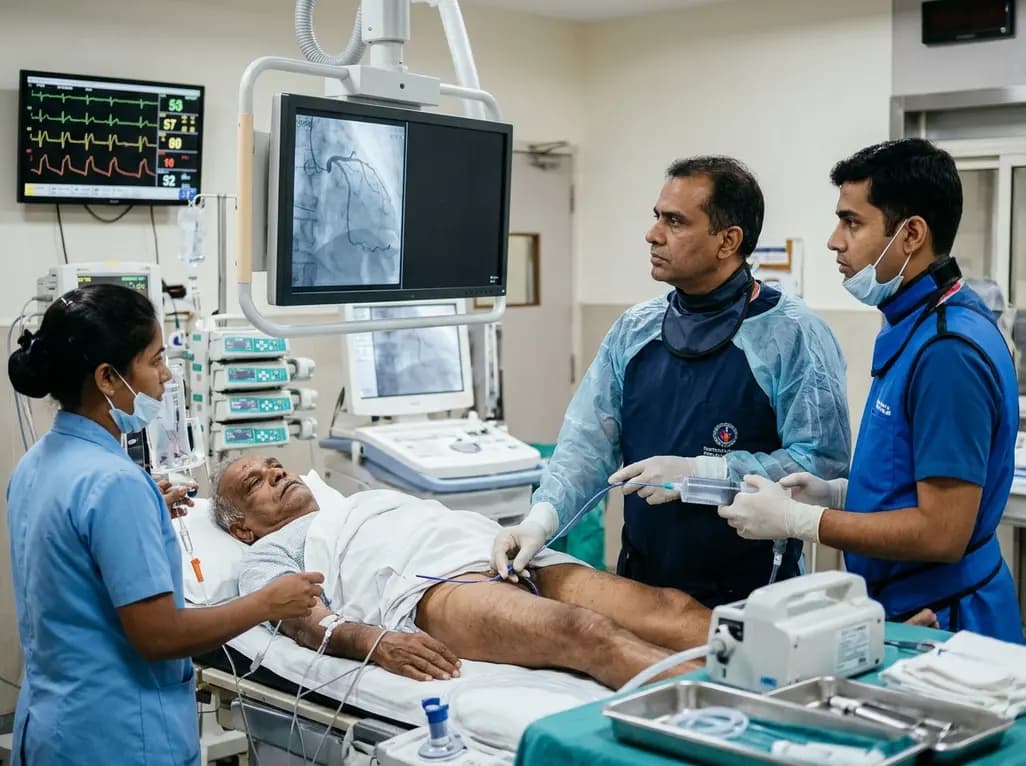
An elderly man with partially repaired Tetralogy of Fallot presented with STEMI caused by coronary embolism rather than atherosclerosis. Successful treatment with sustained mechanical aspiration thrombectomy underscores the vital need for high clinical vigilance in adult congenital heart disease.
Today

Demanding exhaustive hormonal profiling can inadvertently discourage clinical studies involving females. Methodological standards must align with the specific scientific question to expand, not restrict, equitable evidence for women.
Today

A recent study demonstrates that spinal oxygen sensors do not require mitochondrial electron transport to trigger sympathetic excitation during acute hypoxia, revealing new insights into how mitochondrial oxidative stress modulates autonomic tone in cardiovascular and neurological diseases.
Today

A comparative review of tension band wiring and intramedullary screw fixation in thumb metacarpophalangeal arthrodesis, evaluating union rates, hardware complications, and clinical outcomes.
Today

Following regulatory scrutiny from FSSAI regarding promotional representations and lean muscle preservation claims, Dr. Reddy's Laboratories and Nestlé Health Science are currently reviewing the branding and marketing strategy for their joint nutritional supplement Celevida GLP+.
Today
