.webp&w=384&q=75)

Loading, please wait...
Loading, please wait...

Recent research explores how specific lipids influence the textural properties of starch-based food products. The study specifically examined the effects of glyceryl monostearate (GMS) and glyceryl monooleate (GMO) on Japonica rice starch. Achieving optimal starch-lipid complex stability is essential for maintaining freshness and quality during storage. Furthermore, the incorporation of these amphiphilic lipids provides a promising method to enhance the shelf-life of starch gels.
The study utilized a Rapid Visco Analyzer to determine pasting profiles. Consequently, the researchers found that GMS significantly retarded the gelatinization process. In contrast, GMO decreased the final viscosity of the starch. Moreover, rheological analysis indicated that both JS-GMS and JS-GMO complexes exhibited elastic-like characteristics. These findings suggest that the structural differences between saturated and unsaturated lipid chains dictate their interaction with amylose helices.
The research highlighted that GMS and GMO reduced the hardness and elasticity of rice starch gels during cold storage. Specifically, at 4°C, GMS showed a more pronounced effect than GMO. This difference likely stems from the fact that GMS forms orderless type I complexes, whereas GMO forms semi-crystalline type II complexes. Therefore, food manufacturers can select specific emulsifiers to modulate the mechanical properties of rice-based products. This study offers novel insights into managing the retrogradation of starch through lipid incorporation.
GMS significantly retards gelatinization and increases final viscosity, while GMO tends to decrease the final viscosity. GMS is also more effective at reducing gel hardness during refrigerated storage.
These complexes help to enhance the storage stability of starch gels by preventing rapid aging and maintaining the desired texture of food products over time.
Disclaimer: This content is for informational and educational purposes only. It is not intended as a substitute for professional medical advice, diagnosis, or treatment. Refer to the latest local and national guidelines for clinical practice.
References
Yang Y et al. Effect of glyceryl monostearate and glyceryl monooleate on gelatinization, aging, and rheological properties of Japonica rice starch. J Sci Food Agric. 2026 Mar 01. doi: 10.1002/jsfa.70537. PMID: 41766028.
Cui L, et al. Interactions between amylose and different lipids: A review of formation and functions. Food Chem. 2021.
Wang S, et al. Starch-lipid complexes: Formation, structure, and functionality. Trends Food Sci Technol. 2022.

Read summarized clinical updates, watch expert medical content, and earn CME certifications right from your smartphone.
Open your smartphone camera to scan and install.





New research highlights how glyceryl monostearate and monooleate modulate the gelatinization and storage properties of Japonica rice starch....
7 months ago

Recent epidemiological data reveals a dramatic surge in summer heat mortality driven by human-induced climate warming. This analysis explores the pathophysiological impacts on cardiac and renal systems, diagnostic dilemmas in death certification, and essential emergency cooling protocols for acute clinical care.
Today

Odisha has established India's first state-level clinical protocol specifically tailored for pregnant women with sickle cell disease. Developed with NHM and UNICEF, the framework provides structured antenatal screening, crisis mitigation, standardized referral pathways, and specialized interdisciplinary care.
Today

India is advancing preventive healthcare by integrating genomics, artificial intelligence, and quantum technologies. With the SANGAM programme sequencing one million Indian genomes, clinicians can unlock personalized therapies, detect cardiometabolic risks early, and curb the burden of diabetes and heart disease.
Today
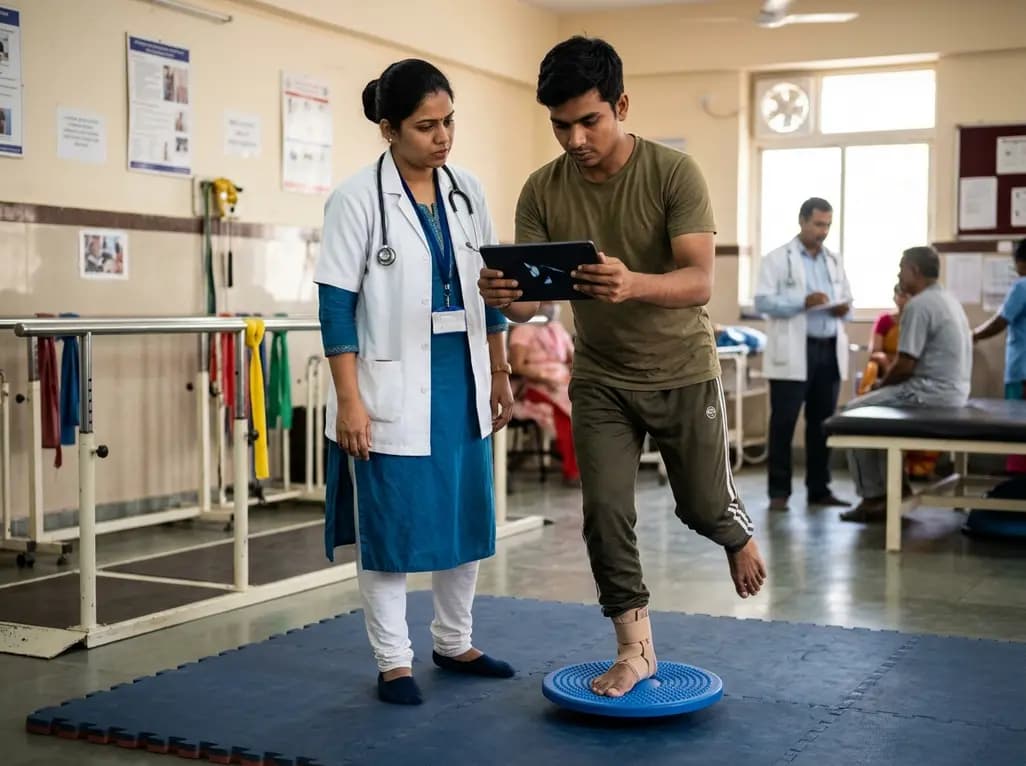
A randomized controlled trial demonstrates that an eight-week dual-task training intervention significantly improves static and dynamic postural control over standard balance exercises in individuals with chronic ankle instability, addressing critical neurocognitive deficits during athletic and daily activities.
Today

A retrospective cohort study of 7,716 ICU patients from the MIMIC-IV database demonstrates that Gradient Boosting Decision Trees significantly outperform traditional SOFA scores in predicting in-hospital mortality among patients with sepsis and diabetes, with SHAP analysis providing clinical interpretability.
Today
