.webp&w=384&q=75)

Loading, please wait...
Loading, please wait...

UN reports indicate that Global Child Mortality Trends are facing a significant and worrying slowdown. Specifically, approximately 4.9 million children died before reaching their fifth birthday in 2024. This figure highlights a stagnation in survival gains that were hard-won over the last two decades. However, health experts maintain that most of these deaths remain preventable through low-cost medical interventions. These include better management of preterm birth complications and improved access to treatments for diseases like malaria.
UNICEF, the World Bank, and the World Health Organization produced this latest data collaboratively. While preventable deaths have halved since 2000, the pace of reduction has slowed dramatically since 2015. Consequently, the international community faces a critical turning point in pediatric health. Fragile health systems and economic instability further exacerbate the challenge of maintaining past achievements in child survival.
In 2024, under-five mortality reached 4.9 million, which mirrors the record-low figures seen in 2022. Although the 2023 estimate was slightly lower at 4.8 million, the UN warns against direct comparisons due to evolving data calculation methods. Newborn deaths currently account for nearly half of all under-five mortalities. These cases primarily stem from preterm birth complications and issues during labor. Furthermore, infectious diseases like malaria and pneumonia continue to be major killers beyond the neonatal period.
The recent decline in international health assistance presents a severe threat to these Global Child Mortality Trends. Overall, global development assistance for health fell by nearly 27% in 2025 compared to the previous year. As a result, the Gates Foundation warns that progress may actually go into reverse. Moreover, budget cuts from major donors like the United States and the United Kingdom hinder data collection. Weakened data systems make it increasingly difficult for agencies to track progress and identify high-risk regions accurately.
Q1: Why is progress in reducing child mortality currently stalling?
Progress is stalling due to a combination of factors including conflict, economic instability, and climate change. Additionally, significant cuts to global health aid budgets have weakened the health systems necessary to deliver life-saving interventions.
Q2: What are the primary causes of death for children under five?
The leading causes include complications from preterm birth, birth asphyxia, and infectious diseases such as malaria, diarrhea, and pneumonia. Most of these conditions are manageable with basic, low-cost healthcare access.
Q3: How much has global health aid declined recently?
According to reports, global development assistance for health dropped by just under 27% in 2025. This reduction in funding threatens to undermine decades of progress in child survival rates globally.
Disclaimer: This content is for informational and educational purposes only. It does not constitute medical advice or replace professional judgment. Refer to the latest local and national guidelines for clinical practice.
References

Read summarized clinical updates, watch expert medical content, and earn CME certifications right from your smartphone.
Open your smartphone camera to scan and install.





UN report reveals 4.9 million child deaths in 2024, warning that aid cuts and weak health systems are stalling global progress in reducing mortality rates....
7 months ago
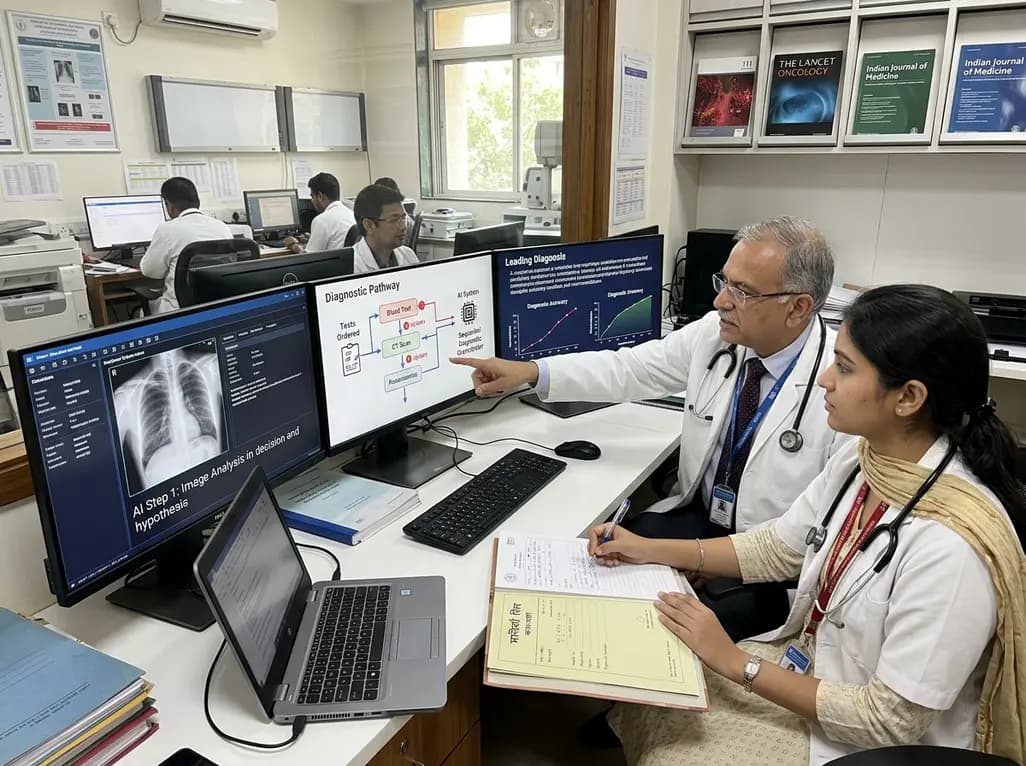
A breakthrough peer-reviewed study demonstrates that a sequential AI diagnosis system can mirror real-world clinical reasoning. By ordering stepwise tests and updating hypotheses dynamically, this multi-agent orchestrator achieved superior diagnostic accuracy while reducing investigative costs.
Today

A prenatal case highlights severe glutaric acidemia type II presenting as bilateral hyperechoic cystic kidneys at 18 weeks. Whole-exome sequencing revealed a novel homozygous ETFDH frameshift variant, demonstrating the power of rapid genetic testing in fetal renal anomalies.
Today

Review how tailored exercise programs benefit frail older patients with heart failure. Explore pathophysiological mechanisms, individualized training prescriptions, and strategies to overcome adherence barriers in clinical practice.
Yesterday

This comparative study evaluates posterior labral tears with and without glenohumeral instability, highlighting distinct demographic patterns, MRI underestimation in stable shoulders, and successful arthroscopic repair outcomes.
Yesterday

A clinical study demonstrates that early intervention with tocilizumab, either as monotherapy or bridged with corticosteroids, achieves significant proptosis reduction and resolves active inflammation in treatment-naive thyroid eye disease.
Yesterday
