.webp&w=384&q=75)

Loading, please wait...
Loading, please wait...

Glenohumeral instability often leads to premature physiological fatigue, significantly altering muscle activation patterns in the shoulder. Researchers recently used glenohumeral instability EMG techniques to explore these changes in the middle deltoid. Understanding neural control variability is essential for improving rehabilitation outcomes in patients who have suffered shoulder dislocations. This study offers a technical look at how contraction intensity affects motor unit recruitment and signal stability.
The study recruited 58 adults who had experienced at least one episode of shoulder dislocation. Participants performed isometric lateral abduction at five different contraction levels. These levels included maximal voluntary contraction (MVC) and submaximal loads at 10%, 30%, 50%, and 70% MVC. To capture detailed neural data, the researchers used a grid of 64 electrodes for high-density electromyography (HD-EMG).
The results demonstrated high variability in the number of identified motor units. This variability showed a progressive decrease as contraction levels increased. Specifically, the number of motor units was significantly lower at 50%, 70%, and 100% MVC compared to the 10% and 30% levels. Furthermore, the coefficient of variation (CV) for the Root Mean Square (RMS) reached its peak at the 10% MVC level. Consequently, low-intensity tasks appear to produce less stable neural signals in these patients.
Clinicians can use these findings to refine assessment and training protocols. The study identified 30% and 50% MVC as the most stable levels for recording muscle activity. These intensities showed moderate CV(RMS) and low standard error of measurement (SEM). Therefore, focusing on these submaximal ranges might provide more reliable data for monitoring progress. Additionally, understanding these thresholds helps practitioners design exercises that better target neural control without causing excessive fatigue.
Higher contraction intensities generally result in fewer identifiable motor units. In contrast, very low intensities (around 10% MVC) produce high signal variability, making measurements less reliable for clinical assessment.
According to the research, 30% and 50% of maximum voluntary contraction (MVC) offer the best balance of stability and reliability. These levels are recommended for clinicians using glenohumeral instability EMG to monitor patient recovery.
Disclaimer: This content is for informational and educational purposes only. It does not constitute professional medical advice, diagnosis, or treatment. Always seek the advice of your physician or other qualified healthcare provider with any questions you may have regarding a medical condition. Refer to the latest local and national guidelines for clinical practice.
References
Ramírez-Pérez L et al. Stability and error measurements in high-density electromyography of the middle deltoid in glenohumeral instability patients. Technical and practical implications of the experimental set-up. Biomed Phys Eng Express. 2026 Mar 04. doi: 10.1088/2057-1976/ae4d4e. PMID: 41780073.
Merletti R, Muceli S. Tutorials on neural interfaces: Surface electromyography. J Neural Eng. 2019;16(4):041001.
Jaggi A, Lambert S. Rehabilitation for shoulder instability. Br J Sports Med. 2010;44(5):333-340.

Read summarized clinical updates, watch expert medical content, and earn CME certifications right from your smartphone.
Open your smartphone camera to scan and install.





This study examines motor unit variability in the middle deltoid of glenohumeral instability patients using high-density EMG to optimize rehabilitation prot...
7 months ago

Novel glucose-responsive mPEG-PSA nanocarriers deliver insulin aspart on demand, achieving dual postprandial and basal glycemic control without hypoglycemia in diabetic models. This biomaterial breakthrough offers promising clinical implications for physiologic diabetes management.
Today

A novel folate-conjugated tecto-dendrimer nanoplatform successfully delivers siRNA to achieve targeted HK2 silencing, disrupting ovarian cancer glycolysis and suppressing lactate output.
Today
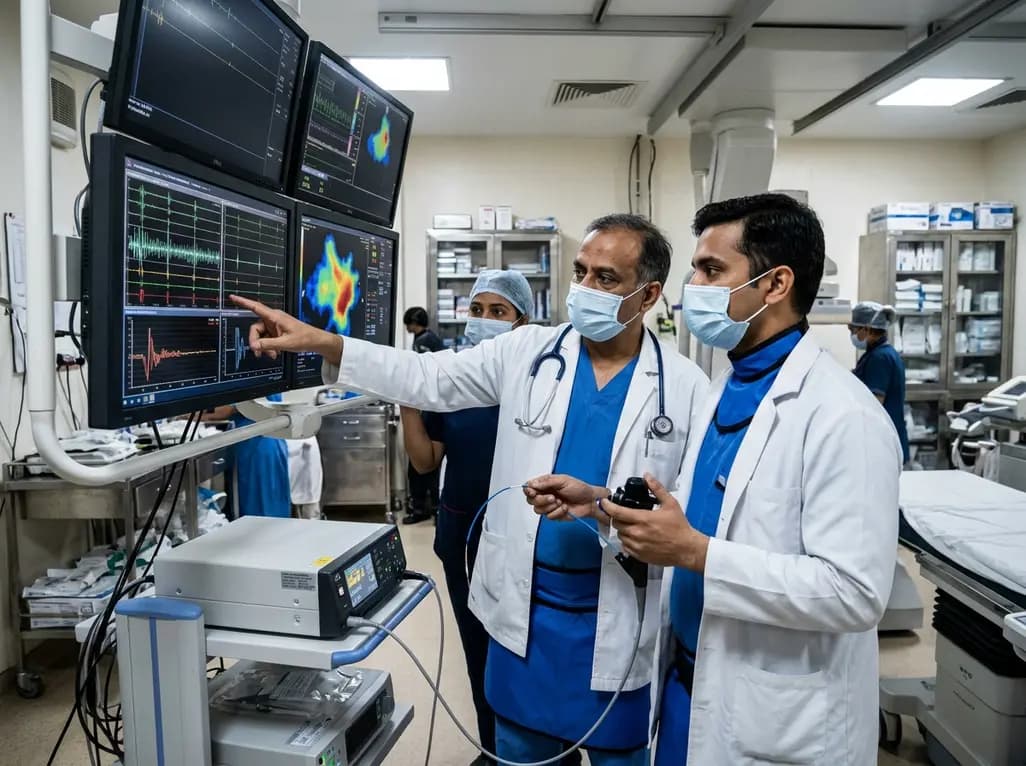
A comparative non-contact study reveals that high-power radiofrequency delivery with the QDOT MICRO catheter induces an artifactual contact force rise. Electrophysiologists must understand this power-dependent thermal and electrical phenomenon to avoid inadvertent catheter withdrawal and ineffective ablation.
Today
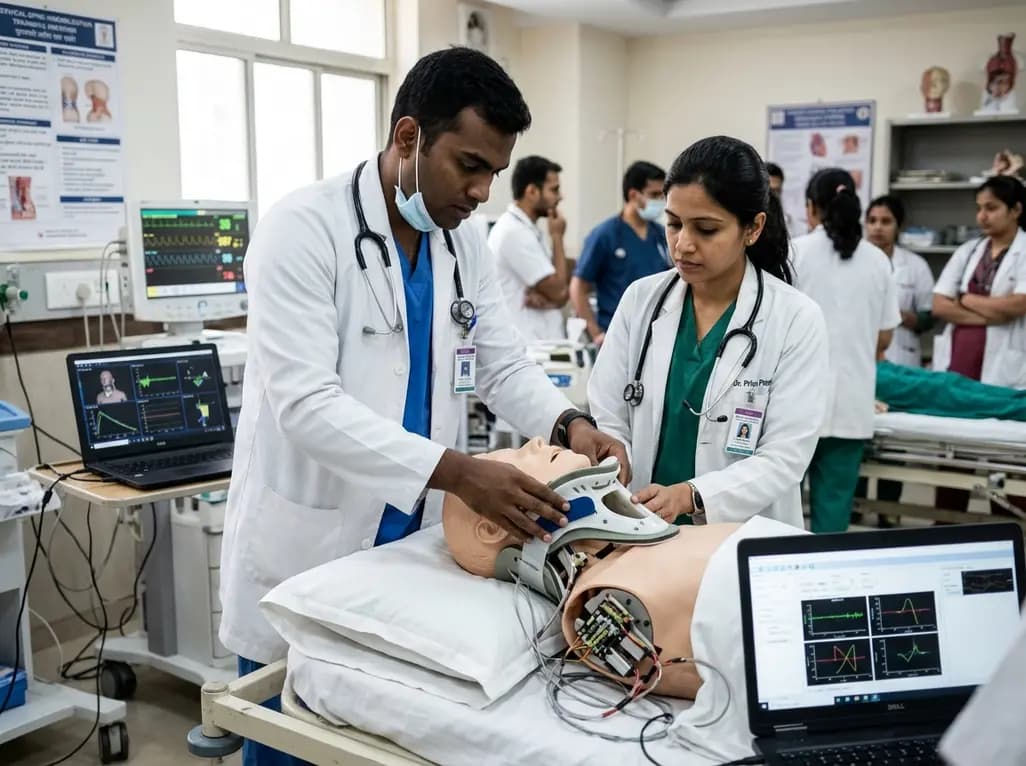
A novel proof-of-concept study presents a six-degree-of-freedom articulated manikin neck equipped with linear potentiometers. The system provides real-time kinematic motion feedback during cervical immobilisation, delivering sub-degree tracking accuracy to improve pre-hospital trauma training and patient safety.
Today

A retrospective comparative cohort study evaluated genitourinary safety in HFpEF between dapagliflozin and empagliflozin over six months. Rates of symptomatic UTI and asymptomatic bacteriuria showed no statistically significant differences, supporting comparable safety profiles across both SGLT2 inhibitors.
Today
