.webp&w=384&q=75)

Loading, please wait...
Loading, please wait...
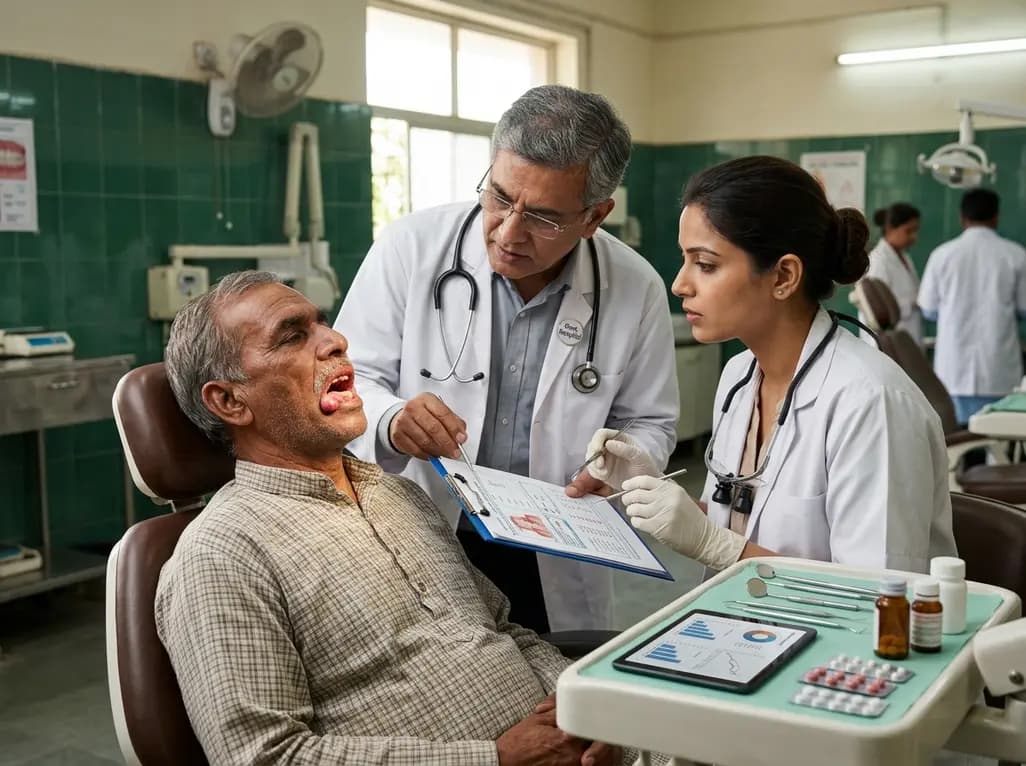
Gingival enlargement (GE) remains a significant concern for dental and medical clinicians in India. Therefore, effective gingival enlargement management requires identifying specific risk factors and drug-induced triggers early in the diagnostic process. Specifically, recent meta-analyses confirm that certain systemic medications significantly increase the risk of gingival tissue overgrowth. Patients using phenytoin, calcium-channel blockers (CCBs), and cyclosporine A (CsA) show the highest incidence rates. For instance, individuals on CCBs experience more severe enlargement than patients on other antihypertensive classes. Similarly, cyclosporine users face a significantly higher risk compared to those taking tacrolimus. Furthermore, fixed orthodontic treatments and poor oral hygiene consistently exacerbate the condition by promoting plaque retention.
Clinicians must prioritize professional mechanical plaque removal (PMPR) to treat this condition effectively. Because biofilm accumulation drives localized inflammation, oral hygiene instructions (OHIs) are essential for all patients starting high-risk medications. Moreover, systemic azithromycin serves as a valid adjunctive treatment for severe or recurrent cases. Alternatively, physicians may consider changing the offending medication to a safer alternative to reduce symptoms. Consequently, combining local hygiene protocols with systemic drug adjustments offers the best prognosis for long-term recovery. Furthermore, regular clinical monitoring helps prevent recurrence in high-risk pediatric and adult patients.
The primary risk factors include the chronic use of phenytoin, calcium-channel blockers, or cyclosporine A, alongside fixed orthodontic appliances and poor oral hygiene.
No, many cases respond well to non-surgical professional plaque removal and improved home care protocols. However, specialists may recommend surgical intervention for severe cases that interfere with speech or mastication.
Disclaimer: This content is for informational and educational purposes only and does not constitute professional medical advice, diagnosis, or treatment. Always seek the advice of your physician or other qualified healthcare provider with any questions you may have regarding a medical condition. Refer to the latest local and national guidelines for clinical practice.
References

Read summarized clinical updates, watch expert medical content, and earn CME certifications right from your smartphone.
Open your smartphone camera to scan and install.





A comprehensive review of risk factors like phenytoin and calcium-channel blockers, plus evidence-based gingival enlargement management strategies....
4 months ago

Recent epidemiological data reveals a dramatic surge in summer heat mortality driven by human-induced climate warming. This analysis explores the pathophysiological impacts on cardiac and renal systems, diagnostic dilemmas in death certification, and essential emergency cooling protocols for acute clinical care.
Today

Odisha has established India's first state-level clinical protocol specifically tailored for pregnant women with sickle cell disease. Developed with NHM and UNICEF, the framework provides structured antenatal screening, crisis mitigation, standardized referral pathways, and specialized interdisciplinary care.
Today

India is advancing preventive healthcare by integrating genomics, artificial intelligence, and quantum technologies. With the SANGAM programme sequencing one million Indian genomes, clinicians can unlock personalized therapies, detect cardiometabolic risks early, and curb the burden of diabetes and heart disease.
Today

A randomized controlled trial demonstrates that an eight-week dual-task training intervention significantly improves static and dynamic postural control over standard balance exercises in individuals with chronic ankle instability, addressing critical neurocognitive deficits during athletic and daily activities.
Today

A retrospective cohort study of 7,716 ICU patients from the MIMIC-IV database demonstrates that Gradient Boosting Decision Trees significantly outperform traditional SOFA scores in predicting in-hospital mortality among patients with sepsis and diabetes, with SHAP analysis providing clinical interpretability.
Today
