.webp&w=384&q=75)

Loading, please wait...
Loading, please wait...

Accurate mental health screening in correctional environments remains a significant challenge for psychiatric clinicians worldwide. The recent GHQ-28 psychometric evaluation conducted in an archived South African recidivist sample provides crucial insights into how widely used self-report tools perform under institutional conditions. The 28-item General Health Questionnaire assesses psychological distress across four theoretical domains: somatic symptoms, anxiety and insomnia, social dysfunction, and severe depression. Correctional populations experience disproportionately high rates of psychiatric morbidity, yet standard instruments often exhibit measurement variance when applied outside general community samples. Therefore, investigating the structural validity and reliability of these instruments in forensic contexts is critical for establishing effective triage pathways and targeted psychiatric interventions.
In this investigation of 385 respondents, researchers examined item descriptives, corrected item-total correlations, and confirmatory factor analysis models. Among all tested full-scale models, the correlated four-factor structure demonstrated the best relative statistical fit, recording a comparative fit index of 0.944, a Tucker-Lewis index of 0.939, and a root mean square error of approximation of 0.042. However, the standardized root mean square residual remained elevated at 0.105. Additionally, several items displayed weak or negative factor loadings. These statistical discrepancies suggest residual structural misfit, potentially stemming from item-direction ambiguities or scoring artifacts within specific subscales. Consequently, while the four-domain model receives partial validation, clinicians must interpret specific subscale composites with appropriate caution.
Internal consistency analyses revealed noticeable variation across individual domains. The overall instrument showed acceptable reliability with a total Cronbach's alpha of 0.747. Nevertheless, subscale alpha coefficients ranged considerably from 0.403 to 0.733. Specifically, the Anxiety/Insomnia and Severe Depression subscales exhibited strong psychometric consistency, whereas the Somatic Symptoms and Social Dysfunction subscales performed poorly. Furthermore, an exploratory Ising network analysis of 327 complete cases showed mixed alignment with latent-variable constructs. Rather than demonstrating uniform convergence, the network model highlighted complex item-level interactions. Thus, while core affective distress items cluster reliably, institutional factors may alter how individuals endorse somatic and social functional impairments.
Post hoc sensitivity analyses explored reduced-item models to optimize psychometric performance. Although these truncated configurations produced superior descriptive fit indices, they relied on data-driven modifications and disparate item sets. Consequently, they do not constitute a universally validated short form. A critical limitation of this study involved the unavailability of original item labels and scoring keys for independent verification. Because domain-level interpretations for somatic and social impairment remain provisional, researchers emphasize the necessity of reproducing analyses using original archived syntax. Replicating these findings across diverse, prospective correctional cohorts will clarify whether observed measurement anomalies reflect instrument design or sample-specific characteristics.
These findings provide important guidance for mental health professionals working in correctional, forensic, and primary care environments. The GHQ-28 remains a valuable initial screening tool for acute affective distress, particularly for detecting major depressive features and severe anxiety. However, clinicians should avoid relying solely on aggregate or subscale scores for definitive diagnostic formulation. Because somatic symptoms in custody frequently overlap with environmental deprivations, physical illnesses, or institutional stress, symptom reports require thorough clinical correlation. Similarly, social dysfunction items may reflect institutional constraints rather than intrinsic psychiatric deficits. Therefore, comprehensive clinical interviews must supplement standardized questionnaires to ensure accurate diagnostic triage.
Enhancing psychiatric care in institutional settings demands rigorously validated screening instruments tailored to vulnerable populations. Future psychometric research must prioritize open science practices, transparent scoring keys, and cross-cultural measurement invariance testing. Additionally, longitudinal designs should assess the predictive validity of the GHQ-28 regarding treatment response, self-harm risk, and post-release community reintegration. By refining measurement precision, mental health services can allocate scarce resources more effectively. Ultimately, integrating robust psychometric screening with individualized psychiatric assessment supports better therapeutic outcomes and upholds standards of care across forensic mental health systems.
The evaluation demonstrated that the GHQ-28 correlated four-factor model provides reasonable structural fit in a correctional cohort. However, while anxiety and depression subscales showed high reliability, the somatic symptom and social dysfunction subscales exhibited significant measurement inconsistencies, warranting cautious clinical interpretation.
Institutional environments often confound somatic complaints and social functioning. Physical symptoms may stem from prison living conditions or general medical illness, while social dysfunction questions may reflect institutional restrictions rather than true psychiatric impairment, leading to poor factor stability and lower internal consistency.
Clinicians should use the GHQ-28 primarily as a broad, rapid screening tool for acute emotional distress, anxiety, and depression. It should never replace comprehensive psychiatric evaluations, and subscale scores must be interpreted alongside clinical interviews and collateral medical information.
Disclaimer: This content is for informational and educational purposes only. It is not intended to be a substitute for professional medical advice, diagnosis, or treatment. Always seek the advice of your physician or other qualified health provider with any questions you may have regarding a medical condition. Never disregard professional medical advice or delay in seeking it because of something you have read here. The authors and publishers are not responsible for any adverse effects or consequences resulting from the use of any suggestions, preparations, or procedures discussed in this article. Refer to the latest local and national guidelines for clinical practice.
References

Read summarized clinical updates, watch expert medical content, and earn CME certifications right from your smartphone.
Open your smartphone camera to scan and install.





A psychometric evaluation of the GHQ-28 in a South African recidivist sample reveals key strengths in assessing depression and anxiety alongside structural limitations in somatic and social domains.
last month

A new PPMI cohort study demonstrates that combining blood microRNA-7-5p with CSF alpha-synuclein seed amplification assay significantly improves the prediction of Parkinson's disease phenoconversion, offering clinicians and researchers a powerful tool for patient risk stratification and clinical trial enrichment.
Today

A large retrospective study evaluates the screening accuracy, positive predictive value, and test failure rates of noninvasive prenatal testing (NIPT) in assisted reproductive technology (ART) pregnancies compared to spontaneous conceptions, highlighting key considerations for pretest counseling.
Today
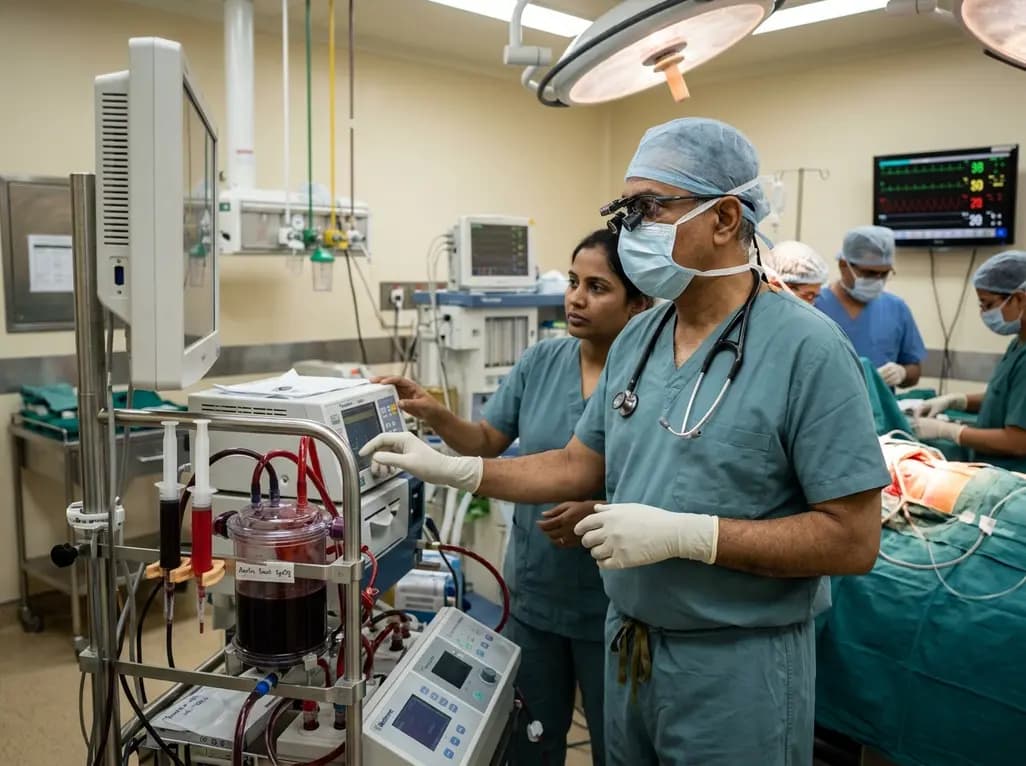
Differential oxygenation during peripheral TA-NRP can cause undetected coronary hypoxemia due to arch vessel clamping. A novel circuit with continuous aortic root monitoring detects desaturation early, facilitating left ventricular unloading and preventing allograft dysfunction and unnecessary heart discard.
Today
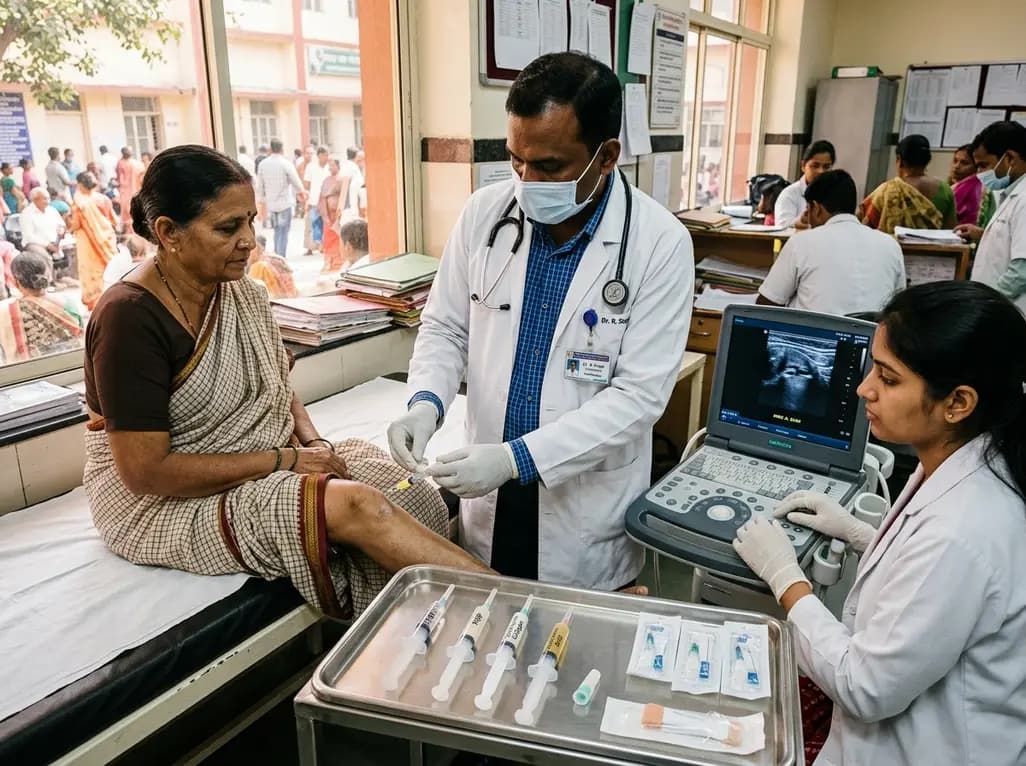
A randomized controlled trial compared ultrasound-guided intra-articular injections of PRP, hydrolyzed type I collagen, and hyaluronic acid in knee osteoarthritis. All therapies demonstrated significant improvements in WOMAC and pain scores at six months, supporting hydrolyzed collagen as a viable biological option.
Today

A scoping review evaluates 116 studies on AI in women's reproductive health, finding that 83.6% carry high risk of bias. While ensemble models show promise, disparities and lack of validation hinder LMIC deployment.
Today
