.webp&w=384&q=75)

Loading, please wait...
Loading, please wait...

Healthcare professionals recently established a critical consensus on physical activity for seniors during geriatric non-weight-bearing rehabilitation. Because inactivity leads to rapid functional decline in the elderly, experts emphasize the need for structured movement despite weight-bearing restrictions. This study provides a foundational framework for clinicians working with older adults after lower extremity injuries. Furthermore, it addresses the previous lack of evidence-based guidance for this vulnerable population.
The primary goal during this phase is to preserve overall physiological health while bone healing occurs. Since prolonged bed rest causes muscle atrophy and loss of independence, therapists focus on maintaining cardiovascular fitness and psychological well-being. Furthermore, regular movement helps prevent severe complications such as deep vein thrombosis and pressure sores. Healthcare teams must therefore prioritize active engagement even while the affected limb remains protected.
The consensus highlights that frequency and intensity must strictly align with individual patient goals and abilities. Consequently, experts generally recommend daily light exercises to maintain joint mobility and muscle tone. Professionals agreed that content should primarily include upper-body training and range-of-motion exercises for the unaffected leg. Additionally, clinicians should adapt interventions based on the patient’s cognitive baseline and pre-injury fitness levels. Ultimately, this tailored approach successfully bridges the gap between acute injury and functional recovery.
In the Indian clinical context, where family caregivers play a major role, educating the household is vital. Therefore, physiotherapists should provide simple, safe exercise protocols that can be supervised at home. Regular monitoring ensures that the patient remains motivated without exceeding safety limits. By focusing on what the patient can do rather than just their restrictions, healthcare providers can significantly improve post-rehabilitation outcomes.
Maintaining activity prevents rapid muscle wasting, improves cardiovascular health, and reduces the risk of secondary medical complications during the long recovery phase.
Most experts suggest daily sessions, though the specific intensity and duration must be tailored to the patient's stamina and medical status.
Rehabilitation usually focuses on upper-body strengthening, core stability, and maintaining range of motion in the joints of the unaffected limbs.
Disclaimer: This content is for informational and educational purposes only and does not constitute medical advice or a professional relationship. Always seek the advice of a physician or other qualified health provider with any questions regarding a medical condition. Refer to the latest local and national guidelines for clinical practice.
References
van Garderen E et al. Healthcare professionals consensus on purpose, content and frequency of physical activity for older adults during the non-weight-bearing rehabilitation: an iterative consensus study. Eur Geriatr Med. 2026 Apr 12. doi: 10.1007/s41999-026-01463-5. PMID: 41966672.
Sherrington C, et al. Physical activity and exercise for health and functional ability that can be delivered in various settings. J Physiother. 2020;66(2):1-10.
Cunningham C, et al. Physical activity for health for older adults: a systematic review. BMC Geriatrics. 2020;20(1):131.
"
Read summarized clinical updates, watch expert medical content, and earn CME certifications right from your smartphone.
Open your smartphone camera to scan and install.





A new consensus study establishes essential guidelines for physical activity in older adults during non-weight-bearing rehabilitation to prevent functional ...
6 months ago
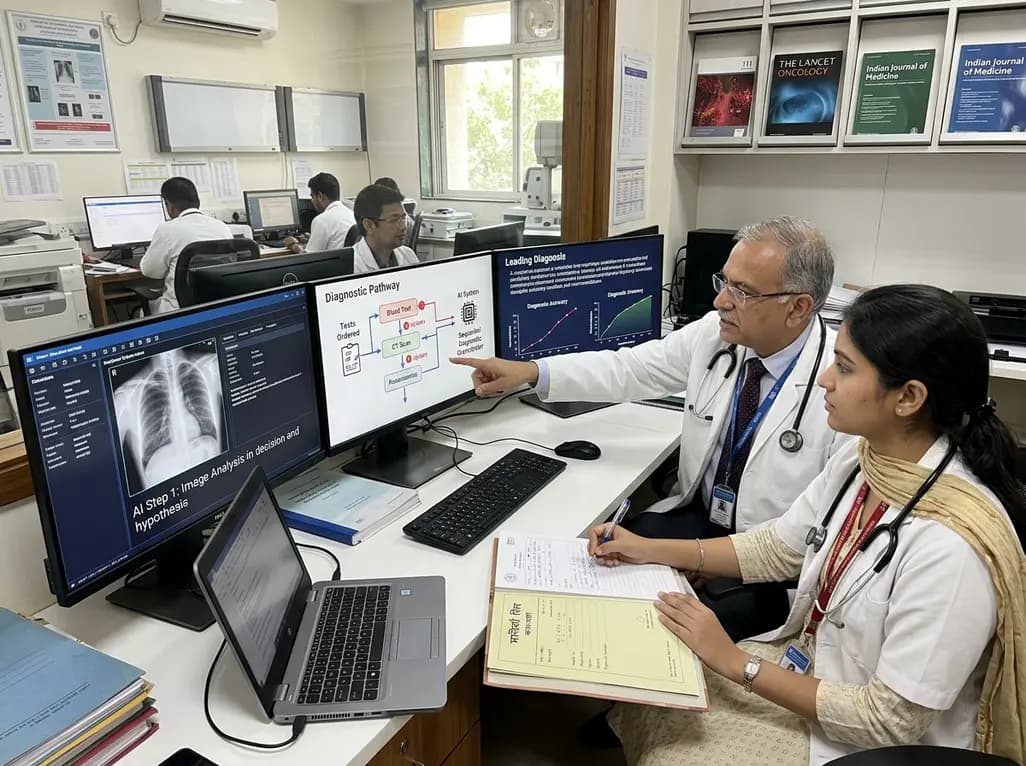
A breakthrough peer-reviewed study demonstrates that a sequential AI diagnosis system can mirror real-world clinical reasoning. By ordering stepwise tests and updating hypotheses dynamically, this multi-agent orchestrator achieved superior diagnostic accuracy while reducing investigative costs.
Today

A prenatal case highlights severe glutaric acidemia type II presenting as bilateral hyperechoic cystic kidneys at 18 weeks. Whole-exome sequencing revealed a novel homozygous ETFDH frameshift variant, demonstrating the power of rapid genetic testing in fetal renal anomalies.
Today

Review how tailored exercise programs benefit frail older patients with heart failure. Explore pathophysiological mechanisms, individualized training prescriptions, and strategies to overcome adherence barriers in clinical practice.
Yesterday

This comparative study evaluates posterior labral tears with and without glenohumeral instability, highlighting distinct demographic patterns, MRI underestimation in stable shoulders, and successful arthroscopic repair outcomes.
Yesterday

A clinical study demonstrates that early intervention with tocilizumab, either as monotherapy or bridged with corticosteroids, achieves significant proptosis reduction and resolves active inflammation in treatment-naive thyroid eye disease.
Yesterday
