.webp&w=384&q=75)

Loading, please wait...
Loading, please wait...

General paresis represents a severe parenchymal neurosyphilitic disorder that clinicians frequently misdiagnose due to its protean manifestations. Historically known as dementia paralytica, this condition arises years after the initial treponemal exposure. Because it mimics primary neurodegenerative and psychiatric illnesses, diagnostic delays remain commonplace across healthcare systems. Recent prospective cohort evidence from memory referral centers provides crucial insights into the clinical, neuroimaging, and biomarker profiles of general paresis. Consequently, recognizing these distinctive hallmarks allows clinicians to intervene before irreversible cerebral damage develops.
General paresis frequently presents with an insidious onset that complicates timely identification. In a comprehensive observational cohort of seventy-eight individuals, ninety percent of affected patients were male. Furthermore, the median latency from initial symptom emergence to definitive diagnostic assessment was fifteen months. This significant diagnostic delay highlights how easily non-specific early signs deceive evaluating clinicians. Cognitive decline emerged as the universal hallmark across the patient population, affecting memory, processing speed, and executive function. In addition, half of all evaluated patients exhibited concomitant motor disturbances, including tremors, dysarthria, pupillary anomalies, and brisk tendon reflexes. Psychiatric disturbances frequently accompanied these cognitive changes, presenting as mania, personality alterations, delusions of grandeur, and marked emotional lability. Therefore, clinicians must maintain heightened suspicion when middle-aged individuals present with combined neuropsychiatric and motor symptoms. Because secondary neurosyphilis can resurface decades later, physicians should routinely probe remote sexual exposures. Furthermore, initial misdiagnoses frequently steer patients toward psychiatric units rather than infectious disease services. Ultimately, identifying this characteristic dual presentation helps practitioners order appropriate treponemal tests early.
Differentiating general paresis from primary neurodegenerative diseases poses a significant clinical dilemma in cognitive neurology clinics. For instance, Alzheimer's disease primarily targets episodic memory before degrading other functional cognitive domains. Conversely, general paresis causes widespread, simultaneous impairment across all cognitive realms alongside prominent positive psychiatric symptoms. While frontotemporal dementia showcases early behavioral disinhibition, it rarely presents with the rapid pan-cognitive disintegration observed in neurosyphilis. Furthermore, clinicians frequently confuse treponemal dementia with autoimmune encephalitis, such as anti-LGI1 encephalitis. However, general paresis lacks the characteristic faciobrachial dystonic seizures that typically define LGI1 encephalopathy. Moreover, the simultaneous emergence of motor signs like ataxia or Argyll Robertson pupils provides vital bedside discriminatory clues. Standard screening panels often omit nontreponemal and treponemal serologies during routine dementia workups in older adults. Consequently, many patients undergo prolonged symptomatic psychotropic treatment before receiving an accurate infectious diagnosis. Additionally, rapid progression over mere months strongly argues against typical sporadic neurodegeneration. Clinicians should therefore perform comprehensive treponemal antibody screening in all atypical, rapidly progressive dementia syndromes.
Neuroimaging provides essential structural and physiological clues that aid the diagnosis of general paresis. Magnetic resonance imaging commonly reveals prominent global cerebral atrophy along with marked cortical hypointensity on T1-weighted or susceptibility-weighted sequences. Advanced machine learning models, such as Subtype and Stage Inference models, have uncovered two distinct morphological patterns. Specifically, patients display either a hippocampus-predominant atrophy pattern or a hippocampus-sparing cerebral atrophy pattern. In the hippocampus-predominant subtype, structural volume loss mirrors the temporal patterns typically observed in typical Alzheimer's disease. In contrast, the hippocampus-sparing variant predominantly impacts frontoparietal neocortical structures, producing executive dysfunction and pronounced behavioral abnormalities. Additionally, clinicians frequently detect asymmetric cortical hyperintensities on T2-FLAIR sequences that resemble limbic or paraneoplastic encephalitis. These inflammatory cortical signals often resolve following adequate parenteral antibiotic therapy. Hence, recognizing these two radiological patterns prevents physicians from prematurely assigning an irreversible neurodegenerative diagnosis. Consequently, careful neuroimaging review allows clinicians to differentiate infectious inflammatory changes from classic neurodegenerative tauopathies. Incorporating volumetric magnetic resonance imaging enhances diagnostic precision substantially.
Recent investigations reveal surprising pathological overlap between general paresis, secondary neuroinflammation, and classical neurodegenerative cascades. Remarkably, eleven percent of patients with general paresis harbored concurrent autoimmune encephalitis antibodies in their serum or cerebrospinal fluid. This finding indicates that treponemal central nervous system invasion can trigger secondary autoantibody-mediated inflammatory responses. Furthermore, researchers identified pathological beta-amyloid alterations in twenty-six percent of individuals within the cohort. In addition, thirty percent of patients exhibited elevated total tau levels, indicating concurrent axonal injury. These biomarker elevations demonstrate that chronic treponemal infection accelerates neurodegenerative processes and destabilizes neuronal integrity. Consequently, clinicians encountering elevated tau or amyloid markers must not instantly exclude treatable infectious etiologies. Instead, physicians should measure cerebrospinal fluid treponemal antibodies, leukocyte counts, and total protein concentrations concurrently. Moreover, resolving the underlying infection may attenuate downstream secondary autoimmune cascades. Thus, comprehensive cerebrospinal fluid profiling remains the diagnostic cornerstone in suspected neurosyphilis cases.
Timely administration of high-dose intravenous aqueous penicillin G produces dramatic clinical recovery in most individuals with general paresis. In the tracked cohort, seventy percent of patients achieved noticeable clinical improvement following standard antimicrobial protocols. Moreover, all treated patients demonstrated an overall reduction in total symptom burden during long-term clinical monitoring. Beneficial outcomes depend heavily on the interval between symptom onset and therapy initiation. When clinicians initiate therapy within the first few months of symptom presentation, patients recover substantial cognitive function. Conversely, protracted diagnostic delays allow severe cortical necrosis and irreversible neuronal loss to establish fixed neurological deficits. Even when motor symptoms persist, antimicrobial treatment halts active neuroinflammatory disease progression and prevents catastrophic cognitive decay. In addition, post-treatment cerebrospinal fluid monitoring ensures that cellular pleocytosis and protein elevations resolve completely. Clinicians should systematically repeat lumbar punctures at six-month intervals until parameters normalize. Furthermore, structured rehabilitation programs complement antibiotic regimens to maximize post-treatment physical and neurocognitive recovery. Therefore, prompt diagnosis remains the single most critical determinant of functional preservation.
General paresis causes rapid, pan-domain cognitive impairment alongside positive psychiatric symptoms like mania or delusions. In contrast, Alzheimer's disease initially produces isolated amnestic deficits. Furthermore, general paresis frequently features co-existing motor abnormalities, such as tremor, dysarthria, and altered pupillary reflexes, which rarely occur during early Alzheimer's disease.
Cranial magnetic resonance imaging typically demonstrates generalized cerebral atrophy and cortical hypointensity. Additionally, quantitative modeling reveals two distinct anatomical patterns: a hippocampus-predominant atrophy subtype and a hippocampus-sparing subtype. Patients may also display transient, asymmetric T2-FLAIR cortical hyperintensities that mimic autoimmune encephalitis before resolving with targeted antimicrobial therapy.
Approximately seventy percent of patients show meaningful clinical improvement following high-dose intravenous penicillin therapy. While antimicrobial treatment consistently reduces overall symptom burden and halts active parenchymal inflammation, complete cognitive recovery depends on prompt intervention. Prolonged diagnostic delays frequently leave fixed functional deficits due to permanent neocortical neuronal loss.
Disclaimer: This content is for informational and educational purposes only and does not constitute medical advice, diagnosis, or treatment recommendations. Clinical decisions must always be guided by qualified healthcare professionals based on individual patient assessments and established diagnostic criteria. Treatment regimens, drug dosages, and diagnostic procedures should follow institutional protocols and official guidelines. The authors and publishers assume no liability for errors, omissions, or clinical outcomes resulting from the use of this information. Refer to the latest local and national guidelines for clinical practice.
References
1. Wang RZ et al. Clinical, radiological, pathological and prognostic features of general paresis: a cohort study. Brain. 2025 Aug 01. doi: 10.1093/brain/awae389. PMID: 40036706.
2. Workowski KA, Bachmann LH, Chan PA, et al. Sexually Transmitted Infections Treatment Guidelines, 2021. MMWR Recomm Rep. 2021;70(4):1-187.
3. Ropper AH. Neurosyphilis. N Engl J Med. 2019;381(14):1358-1363.

Read summarized clinical updates, watch expert medical content, and earn CME certifications right from your smartphone.
Open your smartphone camera to scan and install.





A recent cohort study highlights key clinical, neuroimaging, and biomarker hallmarks of general paresis, a treatable neurosyphilitic dementia. Pan-domain cognitive decline, psychiatric symptoms, distinctive atrophy subtypes, and positive penicillin responses underscore the vital need for early diagnostic screening.
last month

A rare case of homozygous deletional hereditary persistence of fetal hemoglobin (HPFH) in Ghanaian twins reveals 100% HbF and erythrocytosis with normal red cell indices, providing key insights into globin gene regulation, differential diagnosis from delta-beta thalassemia, and clinical implications.
Today
The 2026 KASID guidelines provide comprehensive clinical recommendations on sexuality, fertility, pregnancy, and lactation for patients with inflammatory bowel disease, prioritizing sustained remission and multidisciplinary care to optimize maternal and neonatal outcomes.
Today
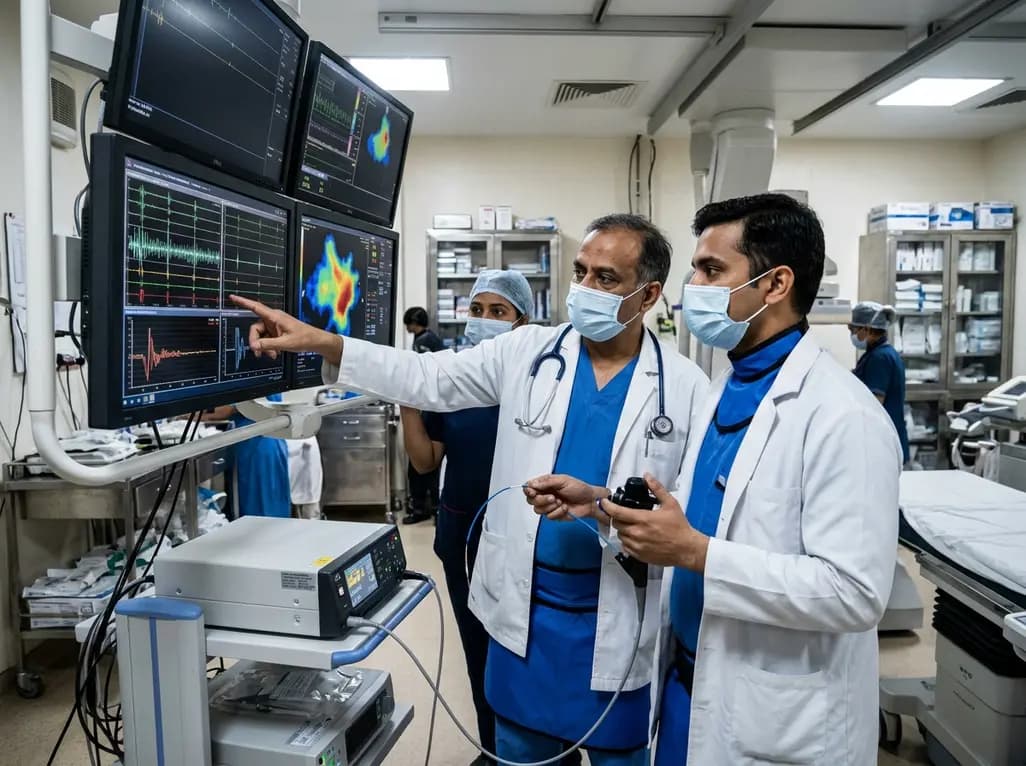
A comparative non-contact study reveals that high-power radiofrequency delivery with the QDOT MICRO catheter induces an artifactual contact force rise. Electrophysiologists must understand this power-dependent thermal and electrical phenomenon to avoid inadvertent catheter withdrawal and ineffective ablation.
Today

A novel proof-of-concept study presents a six-degree-of-freedom articulated manikin neck equipped with linear potentiometers. The system provides real-time kinematic motion feedback during cervical immobilisation, delivering sub-degree tracking accuracy to improve pre-hospital trauma training and patient safety.
Today

Novel glucose-responsive mPEG-PSA nanocarriers deliver insulin aspart on demand, achieving dual postprandial and basal glycemic control without hypoglycemia in diabetic models. This biomaterial breakthrough offers promising clinical implications for physiologic diabetes management.
Today
