.webp&w=384&q=75)

Loading, please wait...
Loading, please wait...
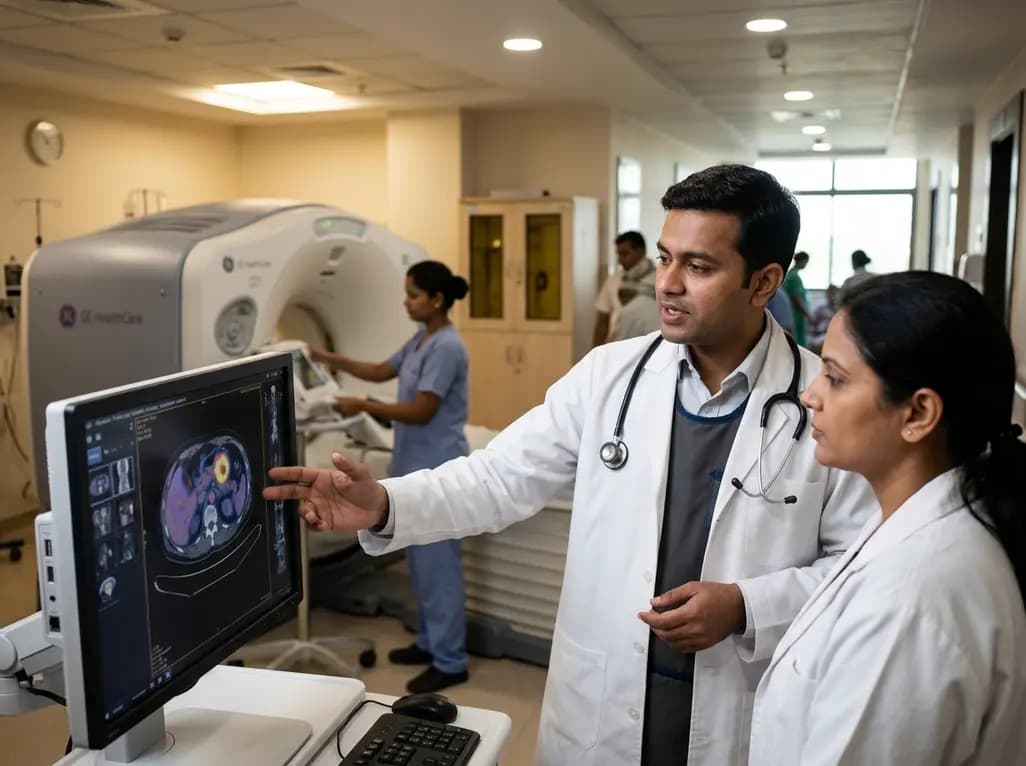
Recent reports reveal that GE HealthCare Technologies is currently evaluating a potential acquisition of Sofie Biosciences for approximately $1 billion. Consequently, this strategic negotiation represents a major development in modern oncology and diagnostic radiology. Sofie Biosciences has earned significant recognition as a pioneering developer and manufacturer of novel radiopharmaceuticals. Therefore, securing this asset would grant GE HealthCare substantial intellectual property and manufacturing capabilities. Medical oncologists and nuclear medicine physicians rely heavily on precision diagnostic tools to detect microscopic malignancies. By integrating advanced molecular compounds directly into its broader medical portfolio, the imaging giant aims to transform comprehensive cancer detection worldwide.
Diagnostic oncology relies upon targeted molecular agents that localize within malignant tissues. Therefore, Sofie Biosciences focused its research pipeline on novel positron emission tomography tracers that bind to unique tumor microenvironment proteins. Notably, fibroblast activation protein inhibitors, widely designated as FAPI, represent a transformative breakthrough across nuclear medicine. Fibroblast activation protein shows strong overexpression on cancer-associated fibroblasts within diverse solid tumors. For instance, clinicians identify substantial FAP activity in epithelial malignancies such as pancreatic, gastric, and colorectal carcinomas. Consequently, FAPI agents demonstrate remarkable diagnostic promise where standard fluorodeoxyglucose imaging exhibits diagnostic limitations.
Conventional imaging modalities frequently fail to detect diffuse peritoneal seeding or subtle gastrointestinal tumors. However, novel FAP-targeted tracers deliver superior tumor-to-background contrast ratios during clinical evaluations. As a result, radiologists achieve rapid, unambiguous lesion identification even in anatomically dense regions. Furthermore, these diagnostic molecules do not depend on baseline glucose metabolism. Thus, patients avoid rigorous fasting protocols before undergoing imaging procedures. Clinicians also observe that FAPI tracers demonstrate minimal physiological uptake within normal brain, liver, and myocardial tissues. Because of these distinct biochemical advantages, oncologists can precisely characterize primary tumors, accurately stage complex cancers, and promptly detect occult metastatic deposits.
Although diagnostic tracers provide exquisite clinical value, their clinical deployment requires exceptionally robust manufacturing infrastructure. Most positron-emitting isotopes feature very short physical half-lives. For example, fluorine-18 exhibits a half-life of roughly 110 minutes, whereas gallium-68 decays within just 68 minutes. Therefore, radiopharmacists must synthesize, test, and release these finished injectable compounds within strict operational windows. Sofie Biosciences resolved this geographical bottleneck by establishing an expansive radiopharmacy manufacturing network. Consequently, production facilities deliver finished patient-ready doses directly to clinical centers on stringent daily schedules.
By acquiring this operational network, GE HealthCare directly mitigates historical supply chain vulnerabilities that frequently disrupt nuclear medicine departments. In addition, localized cyclotron and radiopharmacy facilities guarantee reliable access for regional healthcare networks. Radiochemists operate sophisticated automated synthesis modules to ensure strict radiochemical purity and sterile injectable quality. Moreover, centralized distribution networks reduce costly tracer decay during prolonged transit times. When clinical facilities maintain dependable radiotracer deliveries, scanning schedules proceed without delays. Ultimately, this operational reliability prevents postponed imaging sessions, minimizes institutional overhead, and improves diagnostic throughput for critical oncology patients across diverse medical centers.
Historically, medical device companies primarily prioritized physical scanner hardware development, leaving pharmaceutical production to independent biotechnology laboratories. However, integrated diagnostics represents the modern paradigm of precision oncology. GE HealthCare manufactures high-resolution positron emission tomography and computed tomography platforms worldwide. Nevertheless, cutting-edge hardware requires equally sophisticated molecular tracers to maximize clinical sensitivity. By unifying scanner manufacturing with proprietary molecular tracer development, the company establishes a seamless theranostic ecosystem.
Consequently, hardware engineers and radiochemists can collaborate directly to optimize imaging protocols and reconstruction algorithms. Specifically, specialized digital detectors capture faint scintillation signals generated by newly engineered tracers. Furthermore, tailored reconstruction software reduces imaging acquisition times while simultaneously minimizing overall radiation exposure for vulnerable patients. This synergistic alignment ensures that oncologists extract maximum qualitative and quantitative data from every examination. As commercial healthcare systems prioritize integrated diagnostic workflows, comprehensive hardware and tracer solutions will streamline clinical adoption. Therefore, hospital networks can procure unified imaging solutions from a single established partner, accelerating the standard clinical implementation of emerging diagnostic technologies.
The proposed transaction represents GE HealthCare's second major acquisition since its successful separation from General Electric. Furthermore, global pharmaceutical giants have steadily acquired radiopharmaceutical developers over recent years. This industry-wide consolidation highlights the rapid evolution of cancer theranostics. In clinical practice, theranostics bridges molecular diagnosis and targeted radiation delivery through identical biological targets. Clinicians first administer diagnostic tracers to visualize cancer-specific cell surface receptors. Subsequently, oncologists replace the diagnostic radionuclide with a therapeutic alpha or beta emitter to deliver lethal localized radiation.
Although Sofie Biosciences concentrates heavily on diagnostic imaging agents, precise diagnostics serve as the mandatory foundation for targeted radionuclide therapies. Consequently, oncologists cannot prescribe advanced radioligand therapies without definitive PET localization. As pharmaceutical innovators validate novel therapeutic radioligands, demand for companion diagnostic tracers will expand exponentially. Therefore, securing innovative diagnostic compounds positions GE HealthCare as an indispensable leader within multi-stage oncology care. In addition, established diagnostic platforms enable pharmaceutical developers to stratify prospective clinical trial candidates effectively. Ultimately, expanding diagnostic access ensures that patients receive appropriate targeted therapies based strictly on validated molecular receptor density.
Cancer incidence across India continues to rise, placing enormous demands on tertiary oncology centers and diagnostic imaging providers. Consequently, leading Indian institutions increasingly invest in advanced digital PET-CT scanners to address complex clinical caseloads. However, limited local radiotracer synthesis often restricts molecular imaging to basic fluorodeoxyglucose scans. Therefore, many patients suffering from gastrointestinal, neuroendocrine, or peritoneal cancers face diagnostic ambiguity. Expanding international production networks and licensing arrangements will gradually catalyze domestic radiopharmaceutical access across Asian healthcare markets.
Moreover, Indian medical centers possess world-class nuclear medicine physicians who actively participate in multinational clinical trials. When multinational corporations scale radiotracer production, technology transfer agreements and regulatory pathways accelerate domestically. Consequently, Indian hospitals can soon incorporate novel FAPI imaging into standard gastrointestinal and hepatobiliary cancer staging pathways. Furthermore, earlier and more accurate tumor detection significantly reduces overall oncology management costs by eliminating futile interventions. Because modern molecular imaging detects recurrent disease when tumor volume remains small, surgical teams and radiation oncologists can deliver curative salvage therapies. Thus, global industry consolidation will eventually improve clinical accessibility and patient outcomes across Indian tertiary cancer networks.
Q1: Why are radiopharmaceuticals becoming increasingly vital in modern clinical oncology?
Radiopharmaceuticals deliver targeted radioisotopes directly to cellular biomarkers expressed on tumor cells. Consequently, positron emission tomography scans reveal biological activity and metastatic disease before conventional anatomic imaging detects structural alterations. This molecular precision enables oncologists to stage malignancies accurately, monitor therapeutic efficacy in real time, and tailor individualized clinical regimens for complex patients.
Q2: How do novel FAPI tracers compare to standard fluorodeoxyglucose PET imaging?
Fluorodeoxyglucose relies strictly on cellular glucose metabolism, which frequently causes elevated background uptake in inflamed tissues, brain matter, and liver parenchyma. In contrast, FAPI tracers target fibroblast activation protein within the tumor microenvironment. This biological selectivity provides superior image contrast, avoids false-positive metabolic noise, and detects subtle gastrointestinal and peritoneal metastases effectively.
Q3: What clinical benefits arise from integrating imaging hardware with radiopharmacy networks?
Uniting imaging hardware development with tracer production streamlines clinical workflows and optimizes scanning protocols. Because short-lived radioisotopes decay rapidly, coordinated manufacturing networks guarantee reliable on-time clinic deliveries. Additionally, scanner algorithms can be customized for specific isotope emissions, significantly reducing scan durations, minimizing patient radiation dosage, and enhancing diagnostic clarity.
Disclaimer: This content is for informational and educational purposes only. It does not constitute medical advice or replace professional judgment. Refer to the latest local and national guidelines for clinical practice.
References

Read summarized clinical updates, watch expert medical content, and earn CME certifications right from your smartphone.
Open your smartphone camera to scan and install.





GE HealthCare is currently in advanced discussions to acquire Sofie Biosciences in a potential one billion dollar transaction. This acquisition seeks to accelerate oncology diagnostics and expand production networks for specialized PET imaging tracers, significantly transforming molecular imaging and cancer care pathways.
Today

Over 60 international public health researchers have advised FSSAI to mandate front-of-pack warning labels for any packaged product high in even one critical nutrient: sugar, saturated fat, or sodium. This reform counters phased rollouts to accelerate consumer protection and address India's chronic disease burden.
Today

A comprehensive meta-analysis of over 278,000 women demonstrates that maternal atopic dermatitis significantly increases risks of premature rupture of membranes and low birth weight. Discover essential clinical insights on disease mechanisms, serial antenatal growth monitoring, and safe therapeutic interventions.
Today

A comprehensive single-center analysis reveals that slow pathway ablation for AVNRT in octogenarians maintains high acute procedural success (98.1%) but carries significantly higher complication rates compared to younger cohorts, underscoring the need for careful risk-benefit evaluation.
Today

Apollo Global Management is in talks to acquire Johnson & Johnson's DePuy Synthes orthopedics unit in a potential $20 billion transaction. This comprehensive analysis reviews the MedTech restructuring, product lines in joint reconstruction, ongoing legal issues, and key implications for global orthopedic surgery.
Today
A cross-sectional study reveals that elevated METS-IR is independently associated with higher myopia odds in adolescents, showing biological synergy with obesity and highlighting the need for metabolic screening in pediatric eye care.
Today
